It is funny how “tongue in cheek” movies can be despised. I remember going to the cinema to see “True Lies”, and completely missing the point, to the level of leaving the cinema nearly furious about it. Then I saw the point, and now is one of my favourite comedies. If it’s on (although in these days were streaming is taking over, hardly anything is ever on, unless you pick it to screen) I’d happily watch it.
With “Starship Troopers” or say, “Inglorious Basterds” I could see the point straight away, and took the comedic side of it to heart. I know people that hate “Inglorious” because of how it portrays WW2 and how it changes it. I see their point, but I also can see where the author wanted to get to.
Besides that, I am watching The Boys new series, and really enjoying it. Although I admit that it has been three out of three episodes with gory overkill, and thanks to @Benkyo for pointing out the bad Japanese accent, I wouldn’t have noticed otherwise. I wonder if the same happens to audience that do not speak Spanish when I hear terrible attempts at it. Specially when the character tries to disguise themselves as fluent speaker (Bond, I am looking at you in Quantum of Solace) and sounds like Pope John Paul II on post-dentist anaesthetics.
1 Like
I think that film is like newspapers: when they deal with something that one knows about first-hand, they always get it painfully wrong. Eventually one may wonder about all the things that one doesn’t know about.
1 Like
Inside Out is indeed really good. I put it alongside Frozen as a kids’ animation that was clearly written by people who think and care about how people work, and were prepared to put the work into transmitting that through a story that works fine as a children’s entertainment, yet with no dumbing down. I also love the way that Frozen gives its central character a triumphant, air-punching moment of personal triumph, transmitted through song, in which she gets her situation completely, disastrously wrong.
(Does anyone complain about what Frozen did in adapting the plot of The Snow Queen?)
The Incredibles movies come close to those two, as do the Toy Story movies at times. The thing that got me about TS 3 was the realisation, at a key point in the plot, that if you remembered the first movie properly, you knew that you’d just watched a bunch of small green plastic disposable toys ascend to benevolent godhood.
Up was an entertaining comedy animation — with ten minutes of heart-rending existential tragedy stuck on the beginning in an effective if slightly manipulative form. The tragedy slightly modifies the comedy plot, but it was a weird exercise that way. Moana struck me as really good, with some lovely moments, but a bit routine by the standards that modern animation is setting itself.
3 Likes
Opinions may differ regarding Blade Runner 2049, though I realise that I’m in a minority. I just thought there were far too many dangling plot points and far too much orange murk, and I fear that Arrakis may give him an excuse for yet more orange murk. I much prefer the original. I was mildly irritated because I thought that Arrival was really, really good. I’m a sucker for stories where one line turns the whole prior narrative inside out.
4 Likes
I don’t actually think of The Incredibles as a kids’ movie. To start with, the subplot about Helen thinking Bob is having an affair with Mirage seems aimed at an adult audience. And I’m not sure that the political theme is one many kids will get.
My big issue with Inside Out was that the set up was the most interesting thing about the film. Booting out two emotions and forcing them on a generic Alice in Wonderland adventure almost completely outside of the core conceit ended up circumventing all the interesting takes on psychology etc. that everyone was applauding it for.
I’d love an entire movie of the opening 10-15 minutes.
It reminded me a lot of Wreck It Ralph with a reskin, which did a similar thing of having all the jokes and references to the theme in the opening before it moved on to generic kids film. In terms of story beats and the hero’s journey, the two films are virtually identical.
2 Likes
I quite enjoyed WIR in spite of that – I thought there was enough interesting stuff later on to keep things going. The sequel, on the other hand, even though it was by the same writers, seemed to throw away all the development of #1 in order to tell the exact same emotional story.
3 Likes
I enjoyed both films, but they both played it far too safe. Could’ve been great, massively unique films, but ended up fine. I keep hoping Disney could bottle up that early Pixar magic, but they, er, bottle it.
2 Likes
I’m always surprised to see anyone dismiss Up as simply an entertaining comedy animation. But I shouldn’t be, because I keep meeting people who feel this way. Perhaps because there are altogether too many dogs in it? There are too many dogs. I like dogs, too. But my goodness, there are so many dogs.
The message is, I feel, one of the most significant of any Pixar film. It’s one of my favourite films ever, actually. It’s something that everyone needs to hear at least once in their life.
Brief unprofessional analysis (spoilered for those who haven’t seen it):
Up is about a man who is leaving the world, metaphorically choosing to die (on his own terms with a last hurrah, instead of being shunted away into a nursing home), because he believes there is nothing left for him here. He’s already had a full life in so many ways - one that ended in his heart when Ellie died. But someone stumbles into his life - someone annoying and helpless. Someone who simply needs him. Through interacting with Russel, watching over him, and receiving Russel’s respect and trust, Carl begins to see that perhaps he still does have a reason to remain in this world. He still has love to share with someone who needs it, and there is joy and love to experience in return. We - whatever we have lost/how old we are/how lonely we are - still have love, and people around us who still need our love (even if we don’t yet know who that is).
At least, that’s what I got from it. It’s a message that resonates with me strongly.
4 Likes
The Incredibles pulled off the classic Pixar something-for-all-the-family trick. All that stuff about strained marriages and politics was there, certainly, but if younger kids let that wash over them, they still had an enormously entertaining pair of superhero cartoons.
(Personally, it was the visual design that I appreciated most. The '60s-futurist feel was nigh perfect.)
3 Likes
My big issue with Inside Out was that the set up was the most interesting thing about the film. Booting out two emotions and forcing them on a generic Alice in Wonderland adventure almost completely outside of the core conceit ended up circumventing all the interesting takes on psychology etc. that everyone was applauding it for.
But - aside from the fact that the adventure in the subconscious was enormously fun and managed that weird moment of tear-jerking pathos - it was both necessary to make Inside Out a salable blockbuster feature film rather than a 15-minute exercise, and carried the metaphor through just fine. The core conceit had Riley initially functioning reasonably well, with all of her core emotions active, but in attempting to repress her Sadness, she also lost her capacity for Joy. And those two had to be removed from the control room for at least some of the film, to give us a portrait of a young teenage girl motivated entirely by Anger, Fear, and Disgust. (Now there’s an unusual sight…) Then the plot could be about restoring balance before her personality crumbled away - a danger that was actually reified in the quest plot, as Riley became lost in her memories.
Though the best bits of the movie were possibly the mass adult audience facepalm over Joy’s “It’s probably not important” near the end, and the end credits sequence…
I’m always surprised to see anyone dismiss Up as simply an entertaining comedy animation.
Well, aside from the dogs, it had things like two old codgers attempting to duel with walking frames. I think one can safely call much of it comedy. It was certainly a comedy, in some kind of strict classical sense, by comparison with the first ten minutes. And the conclusion, while resonant enough, was rather what one would expect given that it was comedy not tragedy.
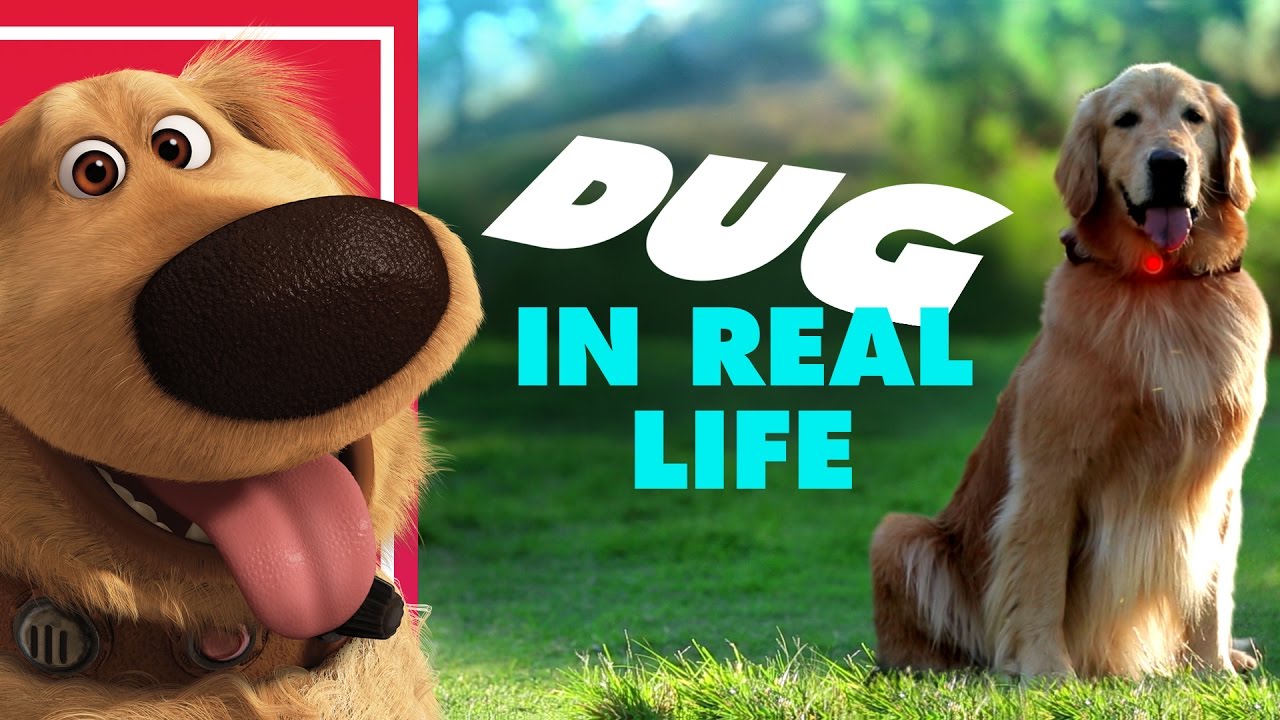
I think how much Up manages to do both comedy / tragedy is fascinating. I spent the whole time watching it thinking “Don’t the public realise this entire film is about death?”, and yet it also gave us this:
1 Like
Moana is great. I’m forced to watch Disney princess films a little too often for my liking, but I don’t mind watching Moana again.
6 Likes
Sure. I don’t disagree with that at all.
If we’re talking classical comedy, I can hardly think of a western cartoon that falls outside of that umbrella. Not a particularly useful category for modern media.
But yeah, I get your point about the silliness. It’s a silly movie. Though, even the walker-fight is in service to the underlying theme - the antagonist provides a different reason to continue to live, but one based on selfishness and resentment towards the world.
Did you ever see The Iron Giant? It seemed to me to be closer to tragedy than comedy. And Watership Down, if not tragedy, was epic, and didn’t have a lot of comedy.
1 Like
Death and comedy is a difficult but beautiful combination to pull off.
1 Like
Re: Iron Giant as comedy or tragedy:
I think the Iron Giant might still be a comedy in the classical sense - because the IG doesn’t truly die. And even the boy learns of this fact, removing the tragedy for him as well as the audience.
But I’m not learned enough in the classical definition to actually give a truly educated opinion. I just googled the classical definition, and wikipedia says it’s not exactly what I think it is, and that the Greeks also had different opinions on what ‘comedy’ entailed (and that Plato got angry when people laughed).The Iron Giant certainly makes me cry the same amount as any tragedy. It’s an underrated masterpiece. It’s what I consider the best Superman story in any motion medium.
Watership Down is an excellent example of not-comedy, for sure. It’s one-part political allegory, one part epic quest, and a hefty dose of scarring children for life with rabbit-death in a cartoon.
I think there’s probably a lot more examples, but I could make a massive list of Japanese non-comedy cartoons with little effort. But I suppose that’s because they are squarely aimed at adults.
Or aimed at children, but they’re about adventures and fighting and whatnot; some of those have comedic elements, some don’t.