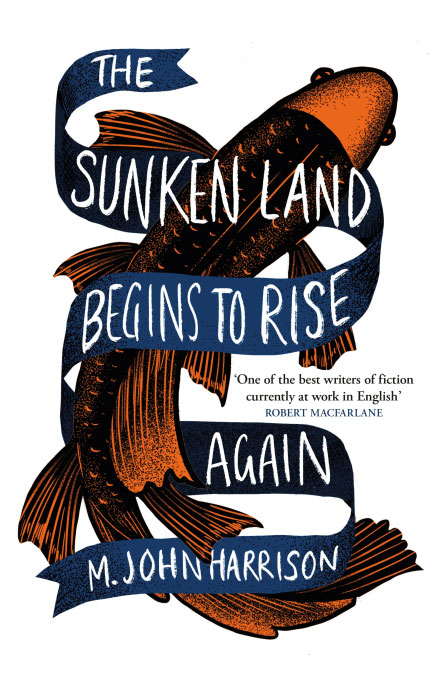
Recently finished The Sunken Land Begins to Rise Again by M. John Harrison. Exquisitely written, full of magical turns of phrase and perfectly observed moments, contrasting starkly with the strange, dank and lost atmosphere of the story itself. Hard to describe without spoiling it; hard to spoil as it’s not the sort of novel that hangs on a twist of plot. Altogether captivating, while also being genuinely weird and disturbing.
Tina started reading this one after I did and found it much harder going with little to maintain her interest, in case you need an alternative opinion.
From an economic point of view, the aftermath of the Black Death was the starting point of the concept of workers being valued rather than “throw you out to starve, get in someone else who won’t complain as much”. Sure enough, I’ve seen a bunch of articles in Stupid CEO Magazine* in the last month or so complaining that workers don’t actually want to be locked in the office for eight or ten hours a day and commuting for two more, what’s wrong with the kids these days, too much life in their work-life balance.
* a generic term for the sort of thing that’s read by people who want to think that they’re important international businessmen
Just bought this on Audible based on your recommendation. Looks like my kind of thing (some glowing reviews and the negative reviews say things like ‘nicely written but nothing ever happens’ which is normally fine by me).
Just finished “George Eliot” (Mary Anne Evans) Silar Marner.
Well. English fiction has come a long way in the last century-and-a-half. An interesting historical perspective, certainly, and definitely more upbeat than I expected. But I wasn’t impressed.
That stated, I think I am mentally comparing it to stuff like The Three Muskateers and The Count of Monte Cristo as contemporary works, which I don’t know if is true and, more importantly, I found very difficult reads but the stories were compelling enough to propel me through them. Silas Marner the story was borderline idiotic, but it was a highly crushable book.
Granted, if I didn’t have to read it, I definitely would’ve stopped. So take from that what you will.
(Aside: I looked it up. Dumas was publishing in the late 1800s, same time as Evans)
Wikipedia puts his famous romances—Monte Cristo and the d’Artagnan novels—in the 1840s, though. That’s not quite the late 1800s. Whereas the first work by “George Eliot” seems to have been 1857. So they’re not exactly contemporaries.
I think the different type of publishing might be important to note when considering stylistic differences. Dumas also wrote his stories as serials for newspapers, so there’s a definite driver for the story to keep moving with more regular story beats and hooks. I believe Silas Marner was published as a full novel.
That’s a slightly larger gap than, say, A Game of Thrones and A Dance with Dragons. And definitely shorter than with Fire and Blood, to put it in perspective.
I remember Silas Marner being the first proper novel I had to read in English, in high school, for my English lessons. Back then (I think I was 14-15) it felt like quite the accomplishment. Then I moved on to The Lord of the Rings (that I had read in Spanish already). I gave up before the hobbits left the Shire. I did learn a lot of tree and plant names, though. I did not tackle it again until I was living in the UK in the mid 2000s.
PS
By the way, regarding Silas Marner, very unremarkable. I hardly remember anything from the plot. Just the character Duncan Dhu, as we had a pop band in Spain named after him.
PPS
See how unremarkable it was? Duncan Dhu is from Kidnapped, another book I had to read in English in high school…
I’ve started reading it, and while I can’t yet judge whether its thesis is well substantiated, I do think it has lots of useful information that would serve well in setting up a historical RPG. And it does seem to be a nice complement to Carl Dahlmann’s The Open Field System and Beyond, which I read some time ago and need to reread.
Well, I’ve just finished The Children of Odin, and it’s definitely the compilation I remember from childhood. It has some of the obscurer bits of Norse myth, such as the killing of Gulveig or the presence of Freya’s daughter Hnossa—though I see that my memory of Hnossa as surviving Ragnarok is not supported by the text—as well as the familiar stories such as Thor and Loki’s visits to Jötunheim and the stories of the Volsungs. It does mention such things as Odin begetting the founder of the Volsungs on a mortal woman, but it writes around some of the more outré sexual encounters, such as Loki’s mating with a giant’s horse and giving birth to Sleipnir, Odin’s eight-legged horse, or Signy’s incest with her brother Sigmund, which led to the birth of Sinfjotli; that may be because it was aimed at children.
I don’t think the narrative order is chronological, though when I read it as a child I didn’t expect it to be and didn’t notice that it wasn’t. I was surprised at how brief an account it gave of Ragnarok—only a single chapter at the end.
One thing that kept jumping out at me was bits that Tolkien either stole (such as the Sword That Was Broken, belonging here to Sigurd rather than Aragorn, or the lust for dragon-gold) or alluded to (such as killing a dragon from a hidden pit, a strategy Thorin and Company reject). Of course it’s hardly surprising that Tolkien was steeped in Norse myth, but I can see why The Hobbit seemed so familiar when I read it at twelve.
I’ve read more than half of The Worlds of J.R.R. Tolkien, and I’m sorry to say that it’s not making that good an impression on me. It doesn’t give sufficiently detailed descriptions of the places it cites, and while it is illustrated, the illustrations from Tolkien and the illustrations from the primary world don’t match up closely enough to make the comparison clear. It really seems to be a coffee table book, though I’ll admit it’s more scholarly than usual for that genre. But it’s not as fascinating as I thought it might be—it doesn’t match Fonstad’s Atlas of Middle-Earth, for example.
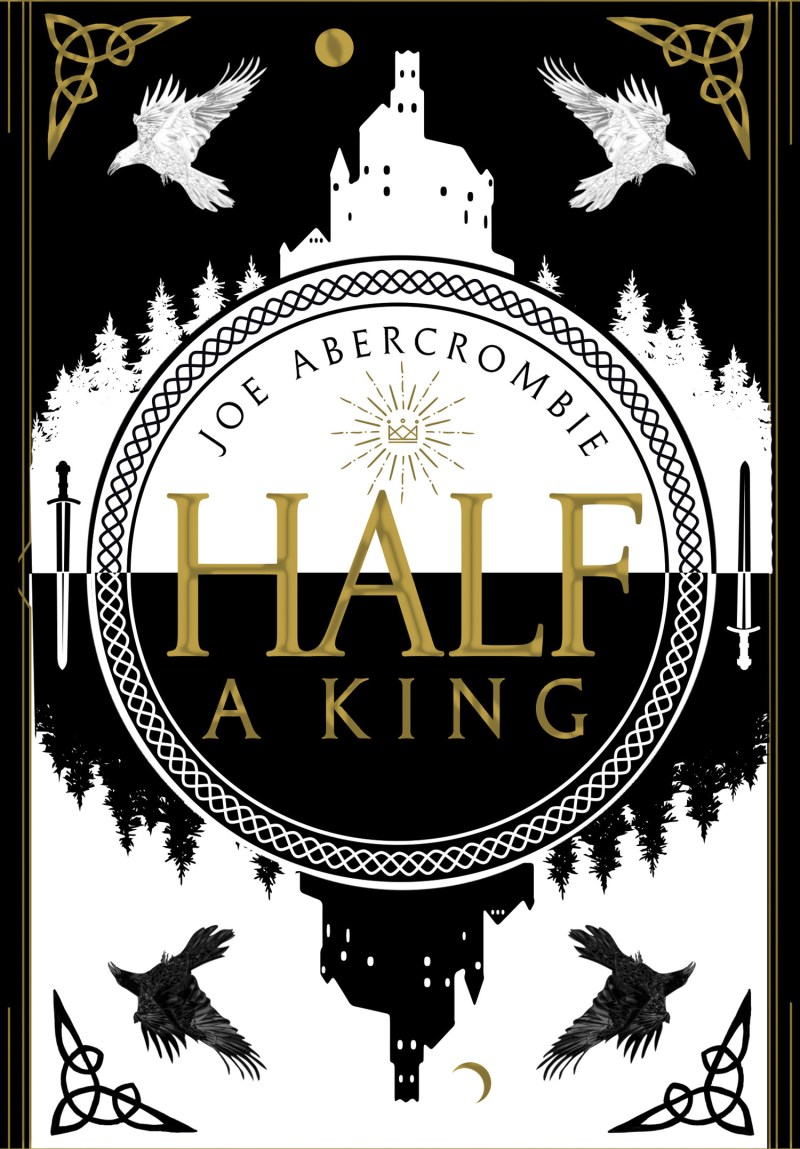
The third part of the Joe Abercrombie trilogy that began with Half a King popped up for 99p on Kindle, prompting me to complete the set and actually start reading the first book.
No surprises yet - very much by the book revenge story in a fantasy (or probably far post-apocalypse, judging from a few clues early on) setting - but Abercrombie is awfully good at this sort of thing.
I did enjoy those books more than I expected. But when I moved to NZ, they did not make the cut, and I gave them away to a friend of mine that was a bit behind me on the Abercrombie collection. I particularly enjoyed most the second volume, Half a World
I finished in less than a week Dark Forge, from Miles Cameron. Really enjoyed it, back to the usual campaign games in his style like in the Traitor’s Son cycle. Yesterday I went to the library and got the third in the series Bright Steel. So far so good.
Jaws, because I’ve never seen the film but we’re going to be talking about it soon on Ribbon of Memes so this was my last chance to read the book without having seen the film. My word it’s very 1970s; the class-cringe inverted snobbery is particularly blatant. This should give me a better appreciation of what Spielberg and Gottlieb changed for the film…