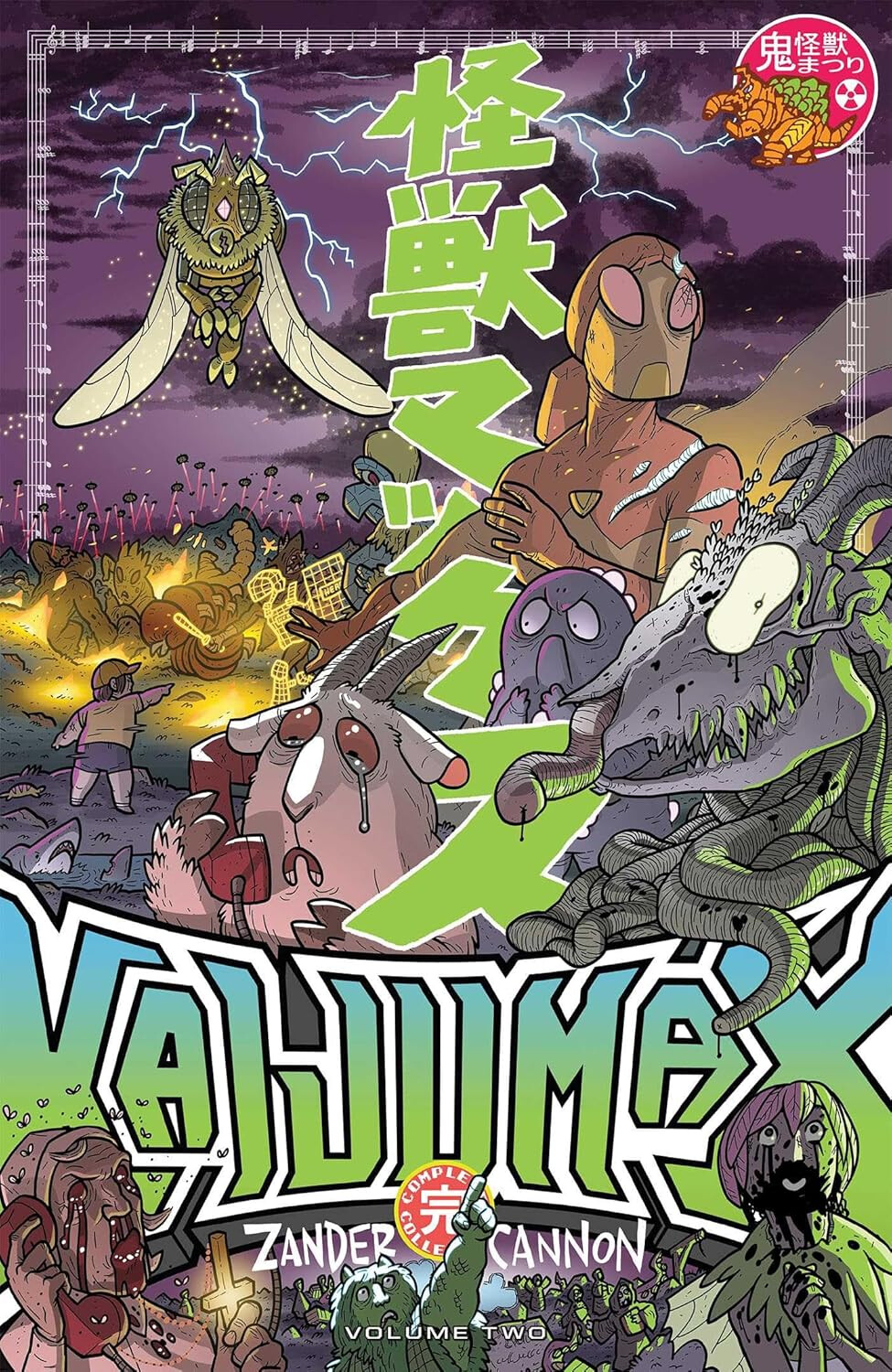
What do you mean?? Garth Marenghi is a real person!  ha yep he was in character, did a talk for a good hour as Garth and then signed tons of books! Top evening.
On the recommendation (not personal, in an interview) of Sir Richard Dearlove, former ‘C’ of the SIS, I started to read books by Alan Judd, a pseudonym for a man who served in the British Army and then went to work for the Foreign Office. According to Sir Richard, the pseudonymous Judd is his favorite writer of ‘spy fiction’, because he’s the only one who gets it right.
I have no idea whether Judd’s abbreviated biography is designed to make potential readers assume that he really worked for the SIS, but of course they cannot confirm or deny, etc., or if Judd actually was an SIS employee. I suspect that having experience of Whitehall bureaucracy and the Foreign and Commonwealth Office would allow writing about the SIS with reasonable accuracy, given that the actual experience of working in any branch of government bureaucracy exposes one to considerably more office politics than geopolitics, no matter what the notional purpose of the institution in question happens to be.
I decided to start with the first novel in Judd’s series about his most recognised character, Charles Thoroughgood, A Breed of Heroes. It actually isn’t a spy story at all, as the protagonist, Thoroughgood, is an Oxford graduate who joined the British Army as an officer. His regiment is the fictional No. 1 Assault Commando (Airborne), which has definite similarities to the 59 Independent Commando Squadron, Royal Engineers, as well as other units of Commando Sappers, but is elevated to battalion size and regimental nature in the novel, despite the regular Commando Sapper units at the time having been only of company-size.
I suspect this was done to allow the unit to serve in Northern Ireland for a four-month tour in place of a battalion of a real regiment and to allow them to have regimental traditions, a suitably senior Commanding Officer, mess dinners and a battalion HQ which provided the protagonist with an opportunity to explore certain staff duties of British Army officers, for which Company HQ would not have provided quite enough scope.
The book is not a thriller. It is more Joseph Heller than Andy McNab. The inner life of the protagonist is on display in a way that I suspect fits the espionage genre well and other characters are psychologically complex in a way that feels authentic.
I liked the book and hope that in the twenty years which passed from this debut effort to Legacy, where he picks up the thread of Charles Thoroughgood’s life after he left the Army and joined the SIS, the author has developed from a promising writer into a superb one.
Didn’t get anything read in May, but I think my reading in June more than made up for it.
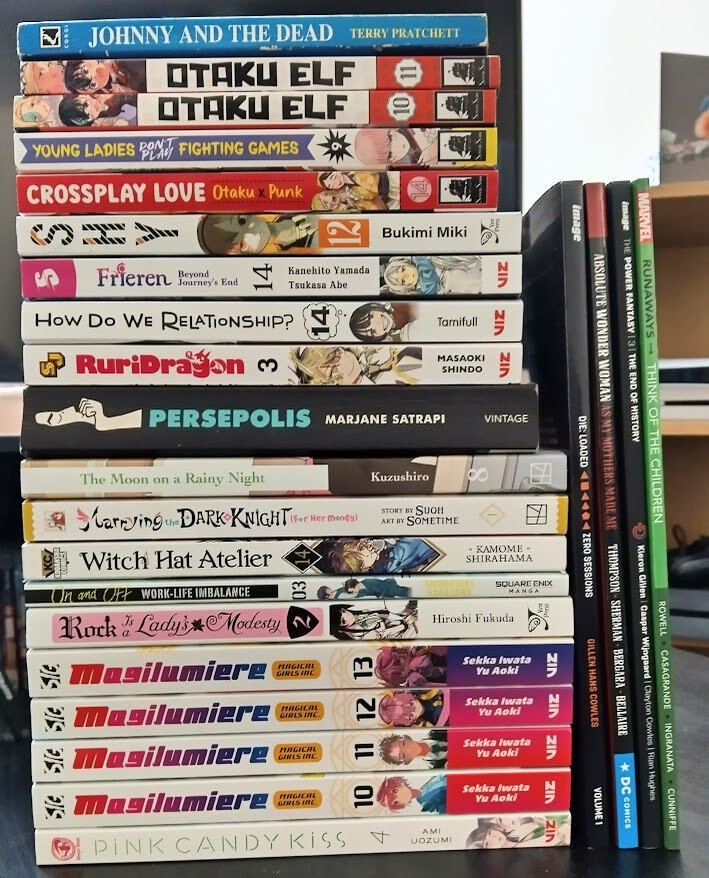
(Having my birthday meant I had lots of new comics ready to be read.)
In an odd Independence Day 250 miracle, I hit a stride and burned through over 400 pages since July 2 and finished Thomas Pynchon’s Mason & Dixon
Definitely a couple false starts and had to go back and re-read at least a half dozen chapters in the first quarter but once it clicked it really clicked
Your mileage will absolutely vary so consider this volume most if you have: read some on the history of the colonial US, the Royal Society, and hollow earth fads; visited colonial Williamsburg; and recognize a random reference of “Fine, Howard, and Howard” after someone is comically electrocuted by Benjamin Franklin
Also a help to have read John Barth’s The Sot-Weed Factor which is if anything a more difficult read
I read Mason & Dixon when it was first published in paperback. I am pretty sure I bought it the day it was released, even. I remember discussing it with the bookseller who rung me up, and saying I had been waiting for the paperback, because I knew I wass going to be carrying it around for a while.
As I recall, it was great fun once it got going, even if I didn’t get the “fine, howard, and hwoard” reference.
Started reading The Terminal Man (Michael Crichton). And why have I picked this to read? Well, I bought a new Kindle and this was the first book it listed. For some reason I can’t copy all my books straight from my pc to the Kindle (no error or anything, it just doesn’t copy them). Maybe it’s a sign I have too many books. So ended up picking a few favourites (King, Pratchett, Asimov) and copying them, seemed to go ok.
I wish collections on Kindle were a bit easier to use. Like if you select a book it will show you the last collection you created, rather than forcing you to go thru the list of all your collections.
I just re-read Neuromancer for the first time in many years and MY GOODNESS it’s so good. Somehow Gibson built a whole genre in one book.
Cyberpunk 2077 straight up stole huge chunks of this (not just the setting), and when they go to the rich orbital you can immediately see Iain M Banks.
I’ve read the other “founding texts” of cyberpunk like Hardwired and Synners (everything else like Snow Crash and Altered Carbon was years later) and no, it’s all 95% Neuromancer.
What an unbelievable classic. Apple TV series coming soon.
I would have loved to have read Neuromancer before encountering anything else cyberpunk, to see what I would have made of it if I came at it with no prior knowledge.
However, I’d already had a decent amount of exposure to Shadowrun, which meant I spent a fair amount of time thinking it was cool that this book is where all those ideas came from, rather than thinking about it on its own merits.
I’d also love to have time to read literature which was contemporary with it, to get a better appreciation for just how revolutionary it was. Maybe something for when I retire!
I’ll have to ask my wife again what she thought of it. My recollection is that she mostly thought it was weird and didn’t make much sense!
Count Zero and Mona Lisa Overdrive are worth checking out. I had to take notes reading Count Zero to keep the characters in line as they were introduced. Burning Chrome is good but more hit and miss. As far as I know it also introduces the Gernsback Continuum idea in its modern form so got that going for it also
I’m a huge fan of Gibson (in general, and Neuromancer in specific). For a few years I liked Snow Crash more than Neuromancer, but in retrospect, many aspects of SC are almost like a fan-fic of Neuromancer.
And the Raven - Y.T. thing is super icky.
Anyway! I’m reading Heir to the Dragon by Robert N. Charrette, and so far it’s pretty good! For sci-fi written in the 80s, it’s surprisingly good (a little casual sexism aside, all the women described by how attractive they are immediately because, obviously, they’re all drop-dead gorgeous). As far as Battletech novels go, it’s on the better side. But it also marks an interesting point for me: all the previous BT novels I’ve read I read when they released… and this is the first I’ve never read before. It’s interesting, reading a very old novel with fresh eyes.
I’m curious to see how it ends. About halfway right now.
I really wish I could’ve enjoyed Neuromancer and Count Zero. There’s something about Gibson’s writing that makes it just slide off my brain and I can’t retain or really understand anything. I’ve read Neuromancer three times at different stages in my life, figuring it’s held in such high regard, the issue must have been me, and I still couldn’t tell you what happened in it. It made no sense to me AT ALL.
Gave up about halfway through Count Zero for the same reason.
It makes me sad, as I love the concept of it, but man, it’s just… Not for me, I guess.
Anyway.
I heard great things about the series, including here, so I picked up book 1 of Dungeon Crawler Carl recently. It now sits on the Bookshelf of Opportunity, where it waits for me to finish the book I’m currently reading, The Shadow of the Gods, book 1 of The Bloodsworn Trilogy, at which point it will be entered in Book Thunderdome to see what I read next. The contestants are:
The Hunger of the Gods, book 2 of The Bloodsworn;
Absolution Gap, book 3 of Revelation Space;
Persepolis Rising, book 7 of The Expanse;
Shadow Captain, book 2 of Revenger;
The aforementioned Dungeon Crawler Carl; and
Colin Gets Promoted and Dooms the World, about which I know nothing but the title made me laugh.
There are a few more, but they’re pretty distant contenders for now.
I had been reading 2600 magazine and the Hacker’s Dictionary when I stumbled across Neuromancer at a Barnes & Noble that I visited every other day while I stayed in Grosse Pointe during my exchange student year in 1993/94.
I think Neuromancer was my very first exposure to Cyberpunk and it left its mark …
First… unless you count having read the Cuckoo’s Egg as cyberpunk. It’s more like cyber-non-fiction  I read that in 1 sitting around 1991/92 and decided then and there I was going to be doing “internet stuff” for a living when the internet barely existed. I had only just learned my first programming language “GW Basic”
Count Zero and Mona Lisa Overdrive are very weird and harder to remember. Partly because Gibson back then was as much a poet as a writer.
I had the 80s Grafton paperbacks
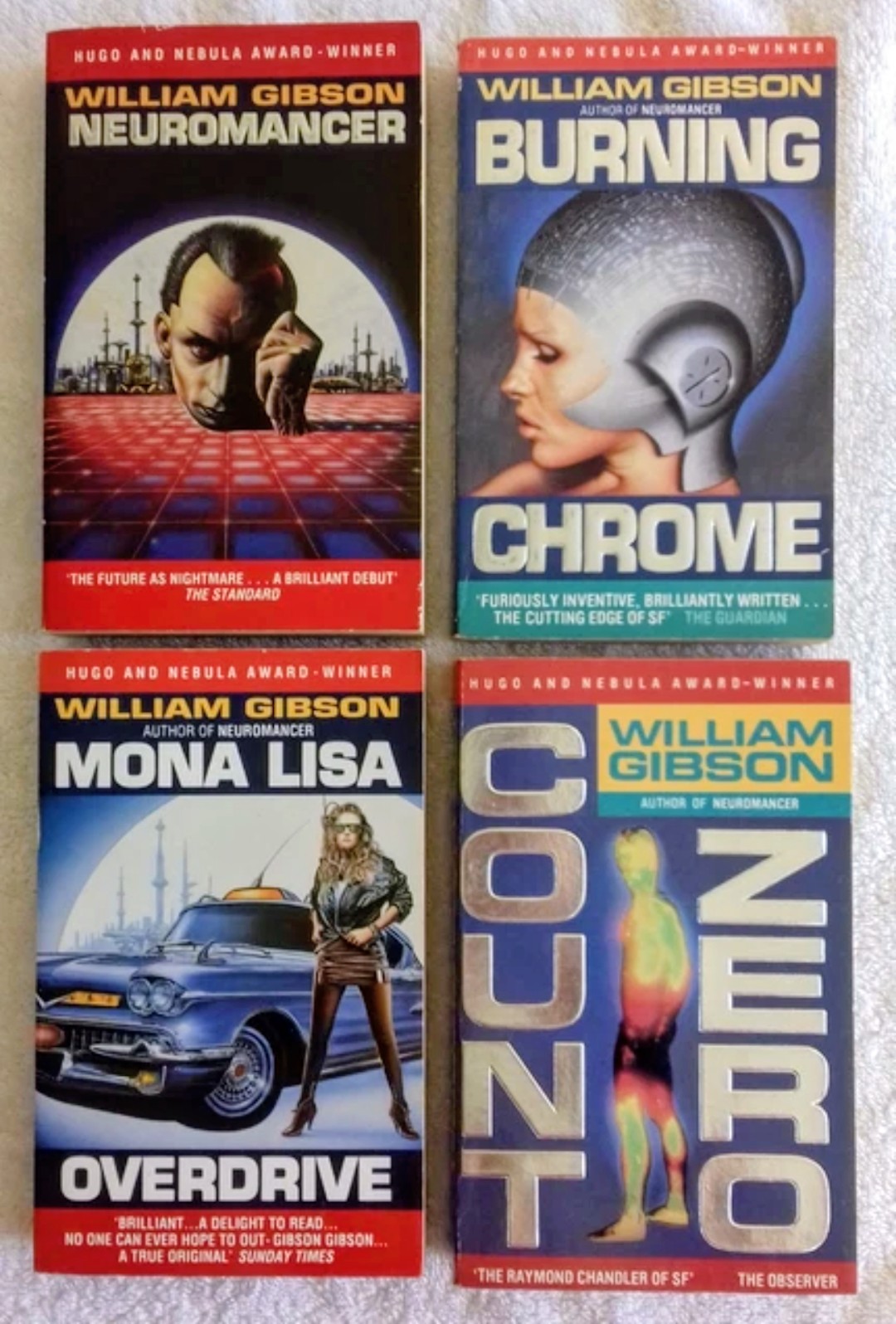

That’s the edition of Count Zero I have.
I should give Gibson another go as so far I’ve only read about a third of The Difference Engine before sliding off it. Twice.
I’ve ended up with 7 of his books (All Tomorrow’s Parties, Count Zero, Idoru, Neuromancer, Virtual Light, The Difference Engine, and Pattern Recognition) on my shelves because of them popping up in charity shops, but just haven’t got round to them.
I devoured all his books back in the day, but I only remember being kind of disappointed on a more recent Neuromancer re-read. I think I prefer remembering things as good than re-reading and being disappointed, so I’ll probably leave it at that.
I didn’t like it at all, might try a re-read now I’m (gulp) years older to see if I get it this time around.
All of Gibson’s other books are REALLY different to Difference Engine, and Pattern Recognition is an easy one to start on.
To be fair - Cyberpunk 2027 built a lot on the foundations of Cyberpunk 2020 which built on Cyberpunk …(Though Mike Pondsmith denies it - he says he didn’t read it until after the game was published.)
… which straight up stole huge chunks of Neuromancer 
More generally, I agree. A truly groundbreaking book which still resonates. I reread the trilogy about a year ago, and still found relevant stuff later.
If you haven’t read them Islands In The Net by Bruce Sterling and The Shockwave Rider by John Brunner are both well worth a read.
I don’t think I’ve read Shockwave Rider, which is weird because I definitely have Stand on Zanzibar, Jagged Orbit and The Stone That Never Came Down. And I think I got Traveller in Black from the library one time.