A good barbarbarbarmeter.
3 Likes
Pépé le Pew (1945) was inspired in name, accent and mannerisms by Charles Boyer’s portrayal of Pépé le Moko in Algiers (1938), which was the American remake of Pépé le Moko (1937).
(Boyer is probably better recognised now as the villain in the 1944 American remake of Gaslight.)
6 Likes
In France, Pepe le Pew is Italian.
9 Likes
Today I learned about Tyromancy. Those of you that know will be happy, and those that don’t should Google it, because it will make you happy.
We discovered it because we wanted to find a cheese shop in Reading so my partner Googled ‘Cheese Reading’
Suffice to say, my next character in any RPG will be a Tyromancer.
11 Likes
I’ve written two books on divination and Tyromancy has to be one of my favourites. (Also fun: “Favomancy”, dropping beans on the ground to see the patterns they make, and “Scarpomancy”, examining someone’s old shoes).
7 Likes

Which books? And where can I find them?
2 Likes
Ah, found this link:
But basically I can just send you kindle / pdfs if you’d like 
3 Likes
Could be a good quiz question too.
A) sending the apprentices in first and working out what’s going on by the sounds of their screams
B) spattering purple dye and divining from the patterns
C) divining based on the coagulatoon of cheese
5 Likes
In case anyone isn’t familiar with it: The College of Cheese Magic.
7 Likes
Tell that to Suzie Dent!
4 Likes
Today I learned that Kettle Power in NZ is only 2/3 of Kettle Power in the UK, which is why it takes me three minutes to boil a litre of water when the man in the video was doing it in only two.
I’m very familiar with my 3’ timing, as I have an alarm timer next to the kettle permanently set to that value – because it’s too long a duration to stand there waiting, but absolutely long enough for me to become so distracted that I don’t notice that it’s boiled. I’m using a digital alarm with two separate timers, and I kick the second one off after filling the teapot, and it tells me when the tea has finished brewing :).
8 Likes
I knew but never considered, specifically, that North American electrical standards limit an electric kettle to 1500W.
But that’s not the biggest takeaway. I’m now boggled that UK electric kettles are 3kW, and yet don’t seem any more robust than the NA ones. I’m right there with the guy in the video: pumping 3kW into a plastic kettle seems bonkers to me.
I boil about 1L of water when I make tea (but only use 0.5L; this is mostly to prevent the kettle from boiling dry. But sometimes I make another cup soon enough that there’s still some heat in the remaining water left). I’m used to it taking ~5 minutes. However, that 5 minutes becomes, effectively, the only way I managed to take a break throughout the day.
7 Likes
A rare instance of the bogglement at something being bigger/more powerful being directed eastwards across the Atlantic rather than westwards.
8 Likes
Well, if it’s not going into the water, it’ll heat up very fast and that cutout is one of the few automatic safety measures that even the cheapest manufacturers can usually get right.
6 Likes
You aren’t pumping 3kW into the plastic kettle. You’re pumping 3kW into water, which happens to be inside a plastic kettle. the water has a large capacity to absorb heat, which is why it takes minutes to boil, even with 3kW going into it.
There are (at least) two thermal switches, one that is expected to open when the water boils, and a second fusable type that will open if the first doesn’t and then you get a new kettle. If there’s no water, the heating element will get hot very fast, and trip the switches. (some designs have another safety switch for that, too.)
the technology connections guy clearly has no engineering background, because the difference between putting heat into the kettle, versus the contents is pretty basic. As long as the kettle can hold boiling water and is mechanically strong enough, it doesn’t matter what it’s made of. Plastic gets used because it’s cheap, and it’s a reasonable insulator, so the surface doesn’t get hot fast, which keeps heat where you want it.
8 Likes
Today I learned that Dali designed the logo for Chupa Chups
But to me, everything else on the Wikipedia page appears to be complete nonsense.
7 Likes

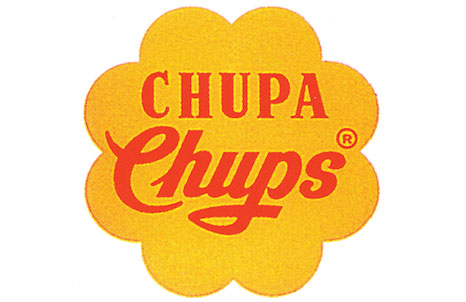
How very Dali-esque.
6 Likes