on Windows MS Powertoys are what I use to remap keys.
2 Likes
and another Invasion: this time it is the Deppenapostroph: Germans decry influence of English as ‘idiot’s apostrophe’ gets official approval | Germany | The Guardian
5 Likes
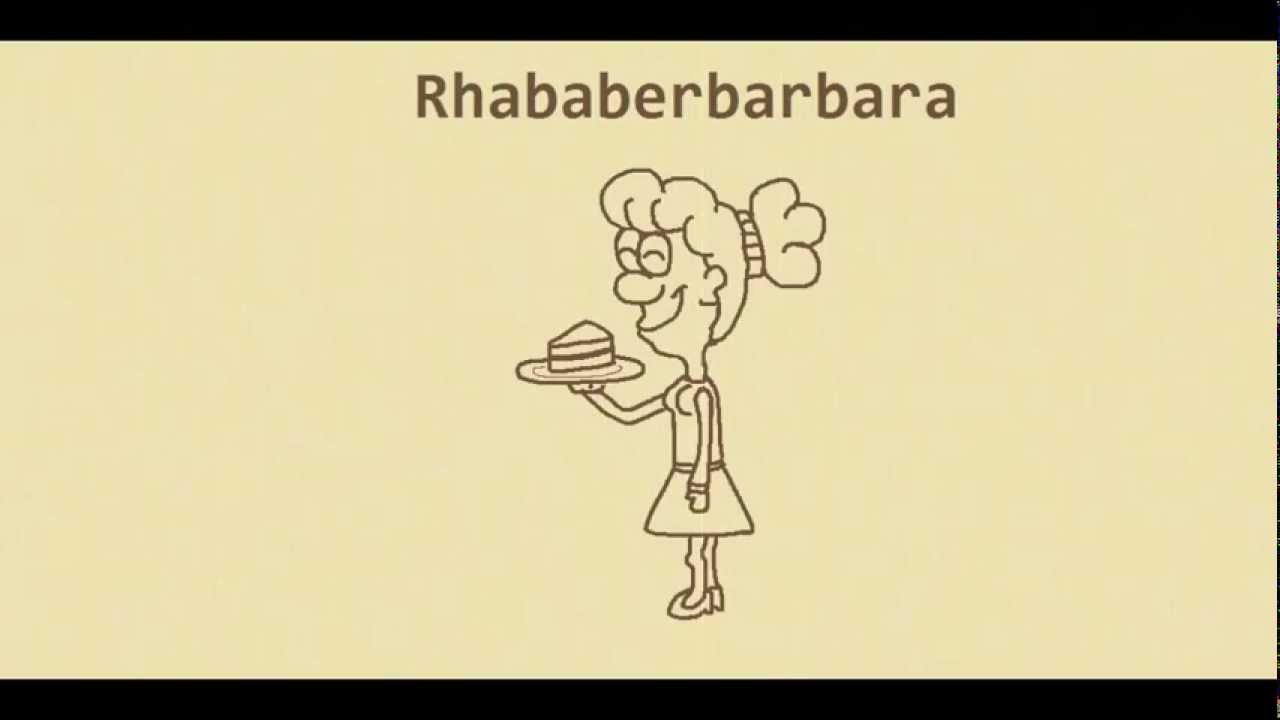
Wait, the Barbara Bar went viral in this June? The original has been around for 10 years!
5 Likes
Thanks for this, it was the kick I needed to sort out a thing that had been low-key bugging me for ages. It’s so good to finally have a numberpad that has / × − + in one place!
(Now I want more keys for >= and <= symbols. Maybe it’s time to finally put the Fn keys to use…)
2 Likes
So hey, why did you learn to speak Japanese?
3 Likes
You asked, so I will tell you all.
Back in the day, circa 1988, I started practicing Aikido, eventually going to lessons with Kanetsuka sensei, as my sensei Tom Helsby was taught by him. It’s a thing within traditional Japanese martial arts that students trace a lineage through their teachers.
Anyways, when sensei’s from Tokyo come over to Britain, there’s the slight problem of face, or losing face, which can happen if there’s a difference in accents, or ‘Ben,’ as the Japanese refer to it.
Kanetsuka, though born in Tokyo, didn’t have a high class Tokyo accent, and any misunderstanding that might occur when talking with the heirs of Morihei Ueshiba, basically his son and grandson came over to teach would be a thing of shame, who were high class Japanese.
But us gaijin we had no face to lose, because we’re gaijin; no matter how into Nihon culture and language etc.
So, senpai’s, senior students, and my Sensei would be classed as Kanetsuka’s senpai. Tom & Maria, his wife, encourage us all to learn Japanese for this reason.
So, that is how I came to learn Japanese.
8 Likes
For people who don’t know Japanese and have encountered “mojibake” in English - how would you describe it’s pronunciation by a typical English speaker?
Moji as in (the English) emoji or emotion? Or mop? Bake as in bake? Or bat and kettle? Or something else?
i would go with (e)moji and bake as in bread having initially assumed this was an English amalgam. being told it is of Japanese origin I would possibly change bake to a more German pronunciation with a long open a sound and the short e at the end.
edit: German would be Zeichensalat (character salad), the OG would be Buchstabensalat Buchstabe being letter but the internet has obviously moved beyond letters
2 Likes
I don’t think I have ever heard someone else saying it out loud (and I imagine a lot of us here have had the experience of learning a word from text first and assuming a pronunciation that turned out not to be in use by anyone else), but I would assume four syllables:
mo-ji-ba-ke
sounding like, at least in my pronunciation, something like mow-gee-bah-kay but with shorter vowel sounds.
2 Likes
I’d do the same. I’d expect it to be the wrong pronunciation, but I have no idea what the pronunciation should be, so I’d hope someone would correct me. English speakers usually have to learn and remember pronunciations of foreign words individually.
However, this thread has caused me to look up the etymology of emoji, and learn that it is e (picture) + moji (character), nothing to with “emotion” or “emoticon” in English.
2 Likes
Yeah, I was interested to see if the two words with the same character were pronounced differently in English because emoji has that mistaken conflation with emotion while mojibake does not, and starting with a consonant seems less likely to result in an elongated vowel sound for “mo”, but if no-one has ever heard it pronounced…
Anyway, they are both “mo” as in “mop”, “ji” as in “Jill”, “ba” as in “bat”, and “ke” as in “kettle”. All short vowels, no rounding as in “mow”.
3 Likes
Now that you mention it, German and English pronunciations of emoji differ around the o sound. The o in English gets longer and and raises the voice in my experience while the same vowel is pronounced shorter and flatter in German. Like the Mop as you say.
1 Like
My trip to Japan resulted in my most hated discovery about Japanese: the section of Tokyo that’s named “Asakusa.”
Japanese is a semi-logical language (as all languages are, despite what anyone might tell you). Ah-sah-koo-sah. Maybe said a little faster, Asa-kusa.
Nope. “Ah-sak-sah”
grits teeth in foreigner
EDIT: Don’t get me started on Kansas and Arkansas.
grits teeth in Canadian
EDIT 2: Correcting the Japanese spelling.
1 Like
I recommend not looking too closely at some British place names then…
3 Likes
See, Canada doesn’t have that problem often. We do sometimes (“Yonge” is pronounced “Young,” and “Etobicoke” is pronounced “Eh-toe-bih-coh”), but usually it’s just the names themselves are stupid.
Moosejaw. Medicine Hat. Youbou. Salmon Arm. Stoner.
2 Likes
Medicine Hat has long been one of my favourite place names.
But it’s certainly not challenging to pronounce.
Unlike Rampisham, Quernmore and Woolfardisworthy. Or Loughborough. Or Hawick.
1 Like
You just gave me an excuse to post Map Men!
5 Likes
I assume you mean Asakusa, not Asukasa? It is actually pronounced exactly like it is spelt.
A sa ku sa
You just don’t say ku like koo. It’s a short vowel, they all are.
Japanese is very phonetically consistent. But if you get the spelling wrong, you aren’t going to get the pronunciation right…
EDIT: Now that you’ve changed the content of your post, it instead highlights a common problem that English speakers tend to have with Japanese pronunciation.
“Asa-kusa” will not be read correctly by English speakers. It will almost invariably be read with unconscious stress on “sa” each time, as English tends to do that with “second” syllables, and with the “ku” vowel as in cooper. Do both, and you end up saying something that is genuinely hard for Japanese people to parse, unless they are familiar with these quirks of English.
“Ah-sak-sah” is also wrong, but sufficiently close to the correct (lack of) emphasis that it is more likely to be understood, because it ameliorates both of those issues. You still likely have stress you don’t want on “sak”, and “ah” vowel sounds like “bar” instead of “apple”.
(And this whole thing makes me once again wish people got taught the International Phonetic Alphabet in schools - it’s so hard to communicate the nuances of phonetics without any common ground to communicate in. English is so messy!)
5 Likes
That was a fun video.
1 Like