Access and Soft Power of Aristocratic Status in the Modern World, e.g. in the UK (1980-2020s)

Item the first, I have a specific British PC in an upcoming campaign set in March, 1991. She is the fictional Lady Gwendoline Hilda Gordon-Lennox, born the daughter of the real Earl of March and Kinrara, but since her father inherited the titles from her grandfather in 1989, she has been the daughter of the Duke of Richmond, Lennox, Aubigny and Gordon, called Charles Henry Gordon-Lennox when he’s at home, or most likely just ‘Charles’, by family.

Depending on exact dates chosen by the player, Lady Gwendoline would have been born in 1963 or so, and attended Oxford in the early to mid-1980s. Likely outgoing and gregarious, she will have formed social networks around familial relationships, during her secondary education (where are modern daughters of Earls or Dukes educated?) and at Oxford. She rides, shoots, stalks and fishes, likes fast cars like her brother, and has a private pilot license.

In GURPS terms, the daughter of a Duke who lives an appropriate lifestyle for a glamourous socialite might rate Status 4, but Lady Gwendoline can only afford to live at Status 3 without much more money and dedicating her life to flaunting her privilege and wealth at all the right places.

I imagine, however, that her position in life means more than just Status. Cousins and various other relations become Claim to Hospitality, but how far could that reach outside the UK? Would the social network of her family and/or the people she went to school with extend to her being able to find someone among embassy staff and/or British expatriates in almost any country who’d find her accomodations and at least listen to her request to help with a sympathetic ear?

If most of the campaign takes place outside the UK, it limits the direct influence of her family, as such, but foreigners are often impressed by Status nonetheless. And if she were arrested or taken hostage, I imagine there are ways that a Duke who still sits in the House of Lords, and whose cousin is a General, could pull strings so that the government would take steps to secure her release. That’s probably worth something, as a Patron, albeit one whose power is mostly circumspect.

Item the second, I have multiple NPCs in that campaign and others with some connections to aristocracy, whether in the background history or current position. What are some ways that aristocratic birth, breeding or being from a good family can be used to advantage by adventuring characters?

In the 1980s and later, what are some countries in the world where a noble birth or a real title matters for the purpose of a character engaged in action-adventure, thriller or mystery shenanigans? Would one expect to find the French, Italians or Spaniards most impressed by noble titles or aristocratic lineage?

How were aristocratic traits and backgrounds perceived in the newly free countries of Eastern Europe, after the end of the Cold War? Communist and socialist doctrine condemned all aristocrats, of course, but newly liberated people tearing down Soviet statues might not rate the official propaganda of the discredited regime highly on an accuracy scale.

Aside from Wealth, Status, Allies, Claim to Hospitality, Contacts, Patrons and Reputation, what other GURPS traits might an enterprising adventurer manage to leverage from being born into a noble family? Especially, what are some suitable Perks, both published and new?

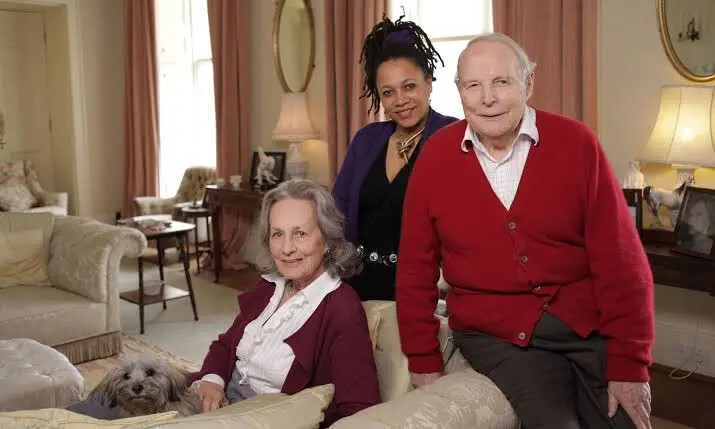
You know nothing of the English upper classes - he will be called ‘Daddy’ by his daughters, ‘Father’ by his sons and probably something like ‘Whoofy’ by his wife and friends. :slight_smile:

Though he did go to Eton, the 10th Duke of Richmond did not manage to acquire any public school moniker more exotic than ‘Chas’. His friends and his wife actually did call him ‘Charles’ at home and his father was called ‘Freddie’ by family and friends.

Everything I’ve read on him suggests he was unusual, for a Duke. For one thing, he led a relatively normal middle class life as a chartered accountant in Coventry, before the retirement of his father required him to take over the family estate, Goodwood Estate, which was then perilously close to bankruptcy.

His son, the 11th Duke of Richmond in the present, the Earl of March and Kinrara at the time the campaign is set, is called ‘Charlie’ at home. Charlie refers to his father, the 10th Duke, as ‘my father’ in interviews, but I would not be surprised if he called him ‘Dad’ or even ‘Daddy’ at home. His daughters almost certainly called him ‘Daddy’ when young, but as adults giving interviews, it’s ‘Dad’.

Not all aristocratic families are the same. Though I do regret that His Grace did not have the enterprising spirit to acquire a proper public school nickname.

1 Like

Definitely a “Whoofy”… :rofl:

As it happens, when Lord Nicholas Gordon-Lennox, uncle to the PC, retired from the Foreign Office in 1990, he was appointed one of twelve Governors of the BBC. I know the Governors are not supposed to interfere in the ordinary day-to-day business of the BBC or make editorial decisions, but what can they do, as Contacts?

Could they ask BBC staffers to pull together what they have on file about a particular newsworthy person or the situation in country X, currently in crisis, with lots of rumours going around? Just for their personal peace of mind, so they understand better what facts the news editors have as they make decisions on what to cover and how.

Formally, the governors of the BBC (until 2007) talk to the Director-General, not individual programme makers or researchers.

There’s nothing to say they couldn’t approach someone informally, but it would be very clearly outside the usual channels and would smell dodgy.

While Lord Nicholas Gordon-Lennox might have been perfectly happy to end-run the odd bureaucrat to help his niece, unfortunately for her, Michael Checkland seems to have been an exceptionally cautious and cost-conscious Director-General.

Which rather suggests Checkland would regard the Governors taking an interest in either current affairs or anything from the vault as an unnecessary demand on researchers’ time, to say nothing of the wear and tear of copy machines and waste of paper.

What could Lord Nicholas do which might be useful to a globe-trotting adventurer headed into areas which might well pop up in news coverage shortly?

I wouldn’t use a real aristocrat myself. They might take offence at being used for purposes of entertainment and having a non-existent relative foisted on them. And they can afford better lawyers than you.

That said, I’d say that having relatives, people they were at school or university wtih all over the globe is a leading characteristic of people whose ancestors have been aristocrats since the year dot. Have the character have a pool of unassigned points which can be turned into Contacts and even Allies as the plot demands it and allow them to refill the pool from earned experience as they wish.

I wouldn’t like having to invent a whole new Dukedom, as it would wreak too much havoc with the world. The closer I can get to setting the campaign in the real world, the better. Yes, there are fictional PCs and fictional NPCs, but any time I can use a fictionalized version of a real person instead, I prefer that.

Having a fictional version of themselves appear in a story people tell each other in person would be an extremely limp and flaccid cause of action. It would be less slanderous than every time people in the village speculate about the future of the Estate and various family matters, given that it’s explicitly fiction. And because it’s not published or produced in any commercial capacity, indeed, the sessions are not even open to the public, the caution with which publishers and producers habitually operate is nowhere near as necessary.

Furthermore, the roleplaying does not happen on UK soil, no one involved lives in the UK, and the jurisdiction of UK courts would be questionable. If they sought satisfaction in Iceland, I’d have the advantage of not having to pay myself and there aren’t any lawyers here I’d fear to face in court.

That would be too metagamey for my taste. Allies and Contacts coalescing out of the aether exactly where the PC needs them would be a bit too far. I’d rather have defined networks of connections, which might not include anyone living behind what was until shortly before when the campaign is ‘the Iron Curtain’, but could well include persons who could provide some kind of assistance there, through phone calls or other communications.

The character does have Claim to Hospitality to represent her network of school friends, relatives, family friends and having an uncle recently retired from the Foreign Office, so she can ask British embassies and consulates for help and at least someone there will find her a place to stay and politely listen to any requests she makes. She’d have to convince diplomats or anyone else stationed in an embassy that whatever she asks for is appropriate, within their allowed scope of action and in the interests of the United Kingdom, but that is why she has Influence skills.

I will have to figure out what schools she attended for her secondary education. She went to Christ Church, Oxford, depending on her birthdate either the first or second year they allowed women to enroll there, but where she went before university is not yet established. At least one of her older sisters went to the Bedales School, but I haven’t yet looked up where other female relatives went. Her mother’s choice of Harcombe House seems unlikely.

Even if you were publishing the game, the usual “this is a work of fiction” disclaimer ought to be sufficient!

Well, I’d say that having a valid basis for complaint or even being in another country isn’t enough to stop someone with money making a nuisance of themselves.

I’d also point you to the extensive store of defunct titles that Britain has accumulated over the years. I’d start with assuming that they didn’t go extinct and creating the subsequent generations. Or there are also reams of fictional nobility: I am fond of dropping Dorothy L Sayers Dukes of Denver, the Wimsey family, into the fringes of my games.

And finally, unless you know where the game is going in advance (which I am careful not to do) a vaugely defined background that can be made more specific later is the way to go.

But let it be as you wish.

I will actually know more about that than is usual for my games, as NPCs will be giving PCs briefings about targets for recruitment and their last known residence, or, in especially inconvenient cases, several of the probable places they might be now.

That being said, PCs start play with the background, connections and knowledge of the world specified before play begins. Absent fate-changing superpowers, there are no retcons or unspent points suddenly manifesting in plot-convenient ways. That would make the campaign feel like the kind of media I actively avoid, in which case spending time to run it would be a very suboptimal use of my time.

If the closest Contact the PC has is in Italy, but the job is in Poland, it’s the player’s responsibility to figure out how, if at all, the Contact could help in any way. And no one can add Area Knowledge where they are going to the PC’s sheet after they learn where the job is.

Well, unless it was specified in the backstory that the character spent a year there learning Polish and I forgot to reflect that in the mechanics. In that case, there is no retconning of any kind, just a correction of an error, made by the translator from character description in common English to GURPS terms.

None of which helps me narrow down if there is anything which a Governor of the BBC can do which is helpful to his niece while she is travelling around Eastern Europe and possibly Central Asia, likely Africa and maybe a few countries around the Mediterranean somewhere?

As a former Ambassador, Lord Nicholas might be able to flatter and deceive Michael Checkland. Mention how he always felt that he got more useful information out of BBC news bulletins than the secret information from SIS. Tell him it was a shame that the BBC didn’t send Ambassadors dossiers on subjects of interest in their backyard, they might find it, at the least, a useful addition to National Intelligence Estimates. Suggest he have a few dossiers prepared and sent to people he knows in the Her Majesty’s Diplomatic Service and it might be quite useful at a budget meeting in the future to be able to make the case that the information collected by the BBC is not only informing the public, but also useful to other government agencies.

The sadly missed Dukes of Hazard, for instance.

1 Like

And the Duke of Earl

2 Likes