Your Last Played Game Volume 3

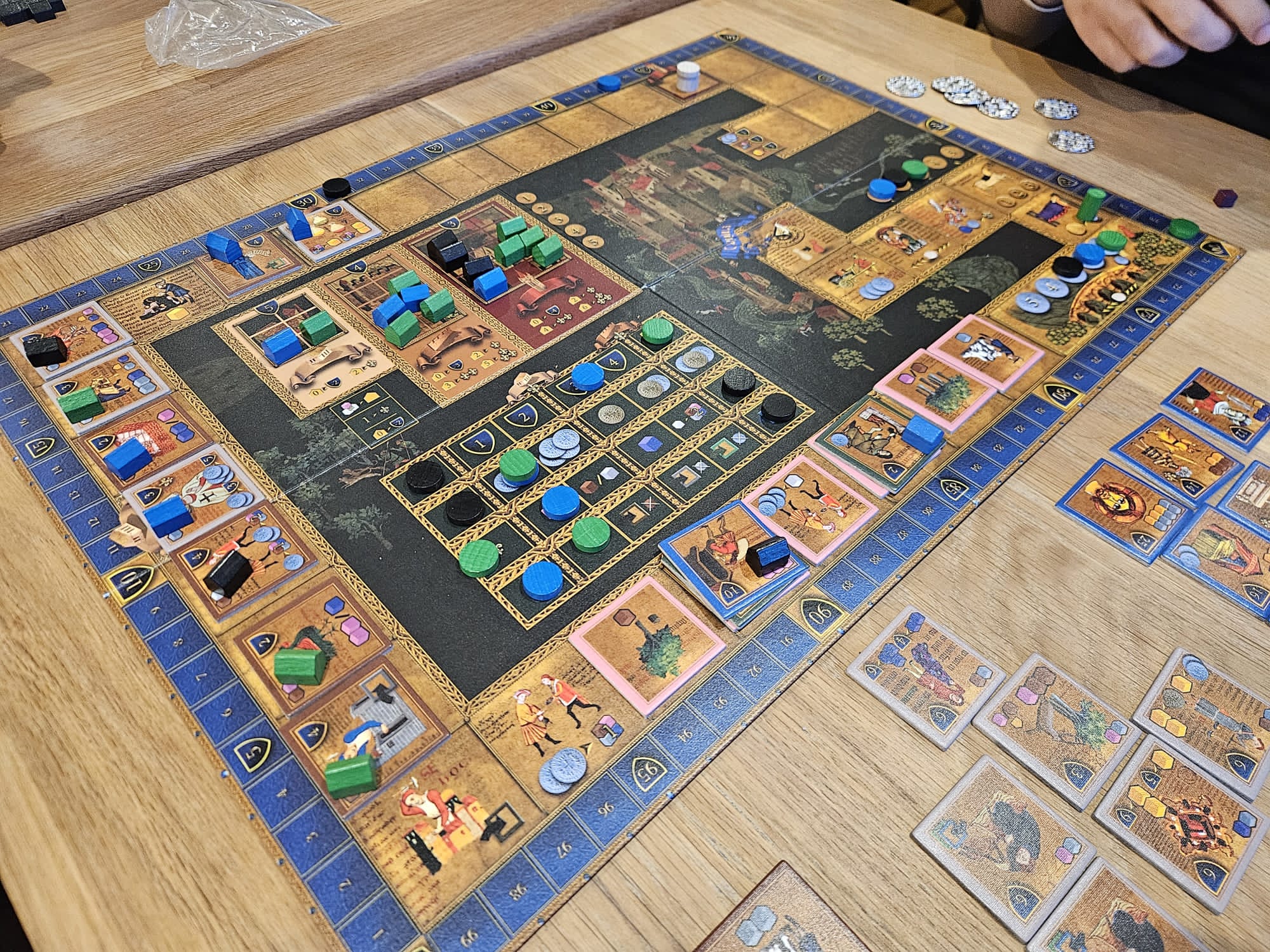
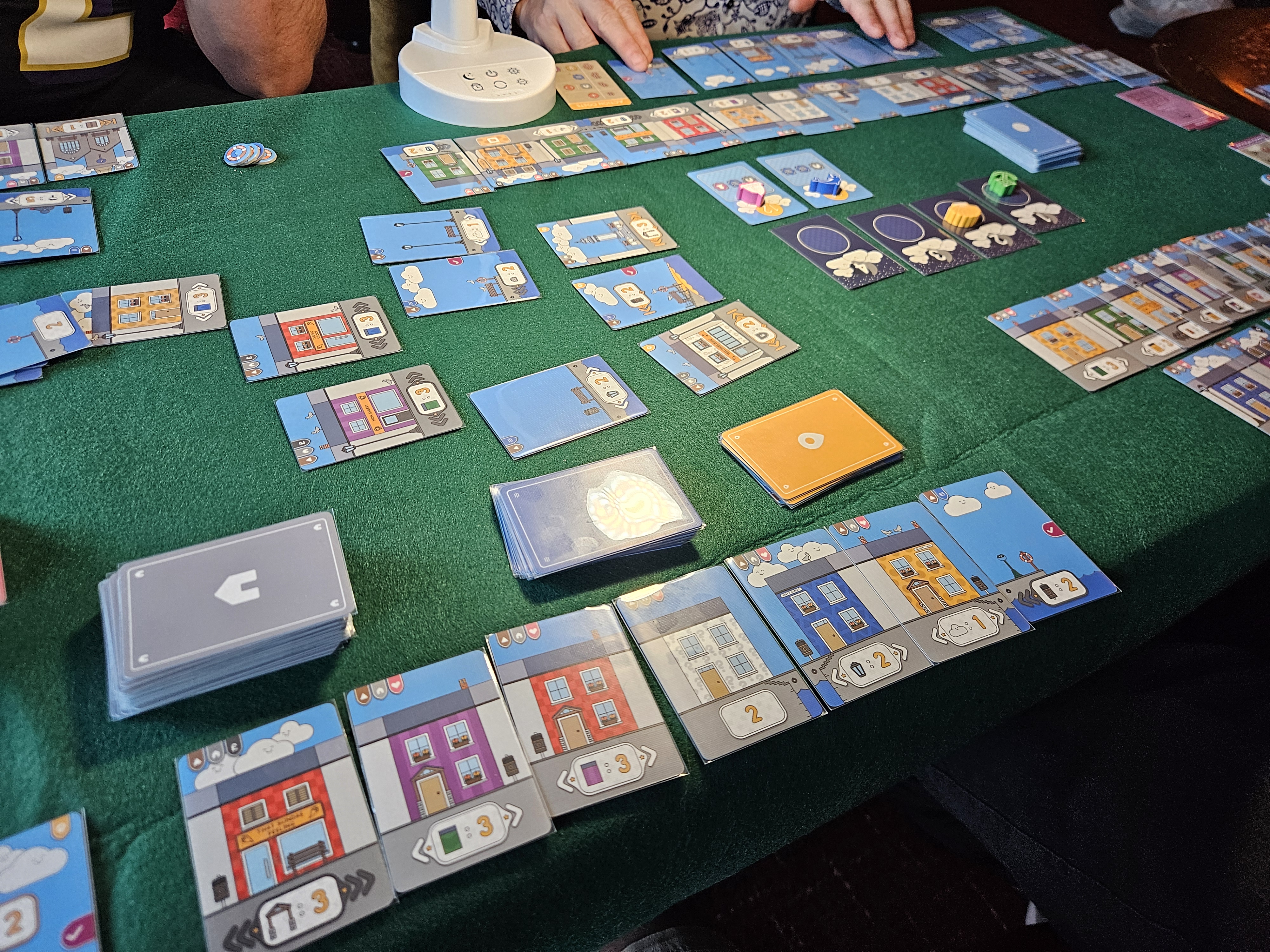
We took Brass Birmingham out for a spin today after a fair while. My batting average continues to be dire at this one, I got TROUNCED 165-122. :joy::joy::joy:

In a first, our two nerworks did not intersect AT ALL in the second period until Maryse’s very last action of the game, where she put down a liaison just for the points (as if she needed them, Christ).

Now I got the itch to learn a new game and I’m looking at bringing out SETI in the near future.

6 Likes

This weekend’s gaming involved two solo games of Viticulture Essential Edition to try out the Tuscany expansion for the first time. I just added the four-seasonal board and regional influence section, saving the special workers and structures for another playthrough while getting used to the changes. Game one was a bit of a mare, never really getting anything going and scoring only 15 at the end of the seven rounds. Game two was better, with more luck with vine and visitor cards leading to a narrow defeat by a point after seven rounds, although I played on for an eighth round for a narrow lead.

My initial feelings were mixed however. I love the essential edition base solo game, finding it a great challenge and expected to like the Tuscany version even more. I do like the separation of actions into the four seasons, but found that the influence section was an unnecessary distraction for the solo game. I like the concept for multiplayer games but for solo play, on reflection, I think it boils down to a balance of action focus and economy for an area where the solo player will never do better than the automata. It got me thinking as to whether it would be best to spend the three to six actions to get the best influence result (a two point deficit) or totally ignore it, sacrifice 10 points to the automata and focus those actions to gain victory points through two more big order sales. It felt that the influence board, in solo play, is a diversion from the tight focus of planting vines, harvesting grapes and making and selling wine.

I’ll see how the special workers and structures fit for me in future games, and determine whether to bother with the influence board at all, but after the first session I can see me playing much more of the base game solo than using Tuscany.

8 Likes

I watched “before you play” play a two player version of the game and they decided, based on the “chat” to not play on the little map of France bit except for for gathering resources.

I wonder if there’s a later version of solo rules that avoids it.

4 Likes

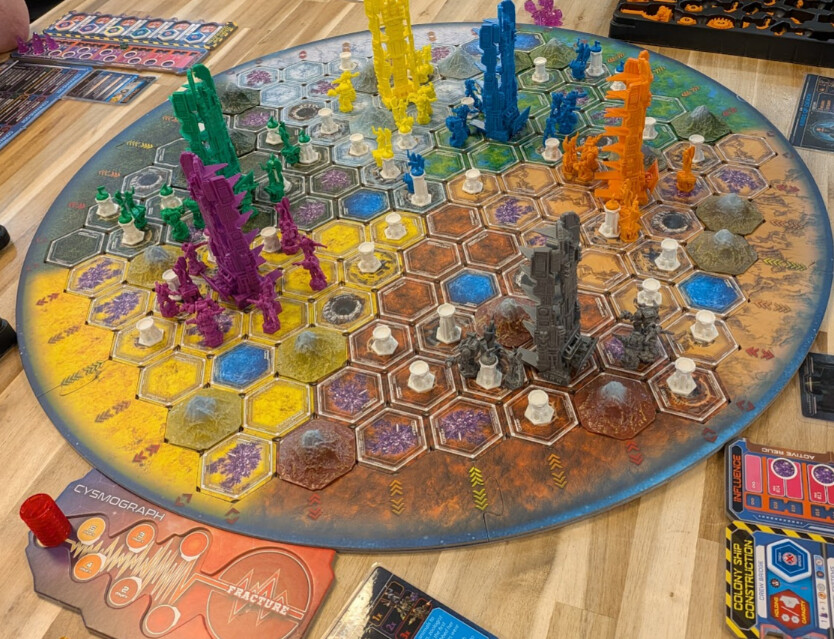
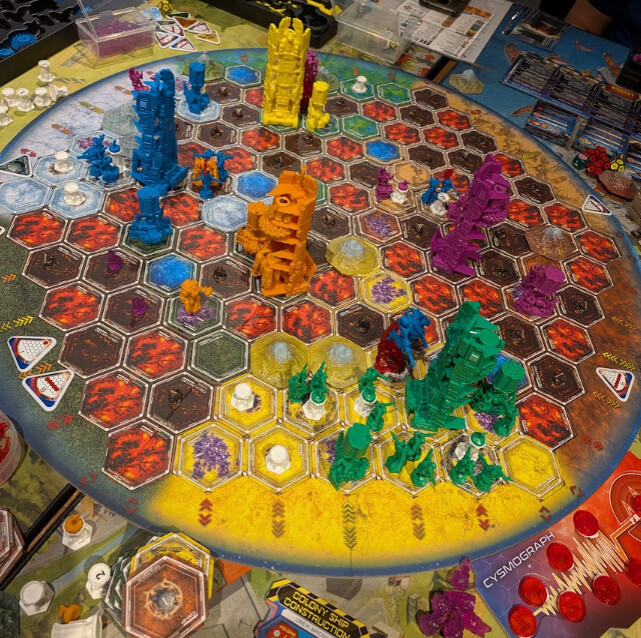
We are still going at it with several games of Cysmic. Very thematic and everyone who played it has enjoyed it. Even though we’ve not had a completed game with final ending that one person won!


This is two differnet game photos. You’ll notice one with much of the surface devastated.

10 Likes

Very nice :). I do not yet have a maximum score, but I can vicariously enjoy yours!

2 Likes

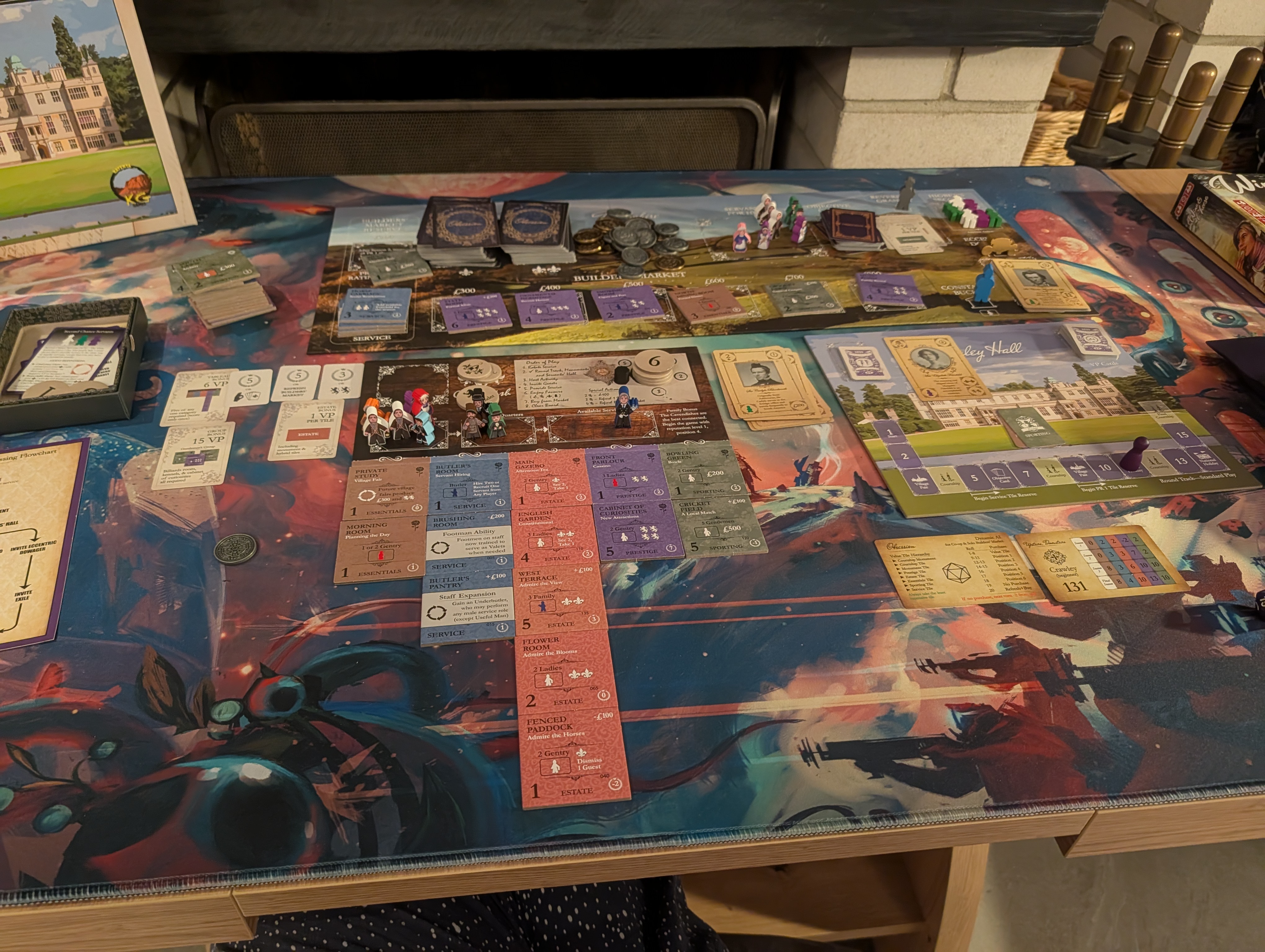
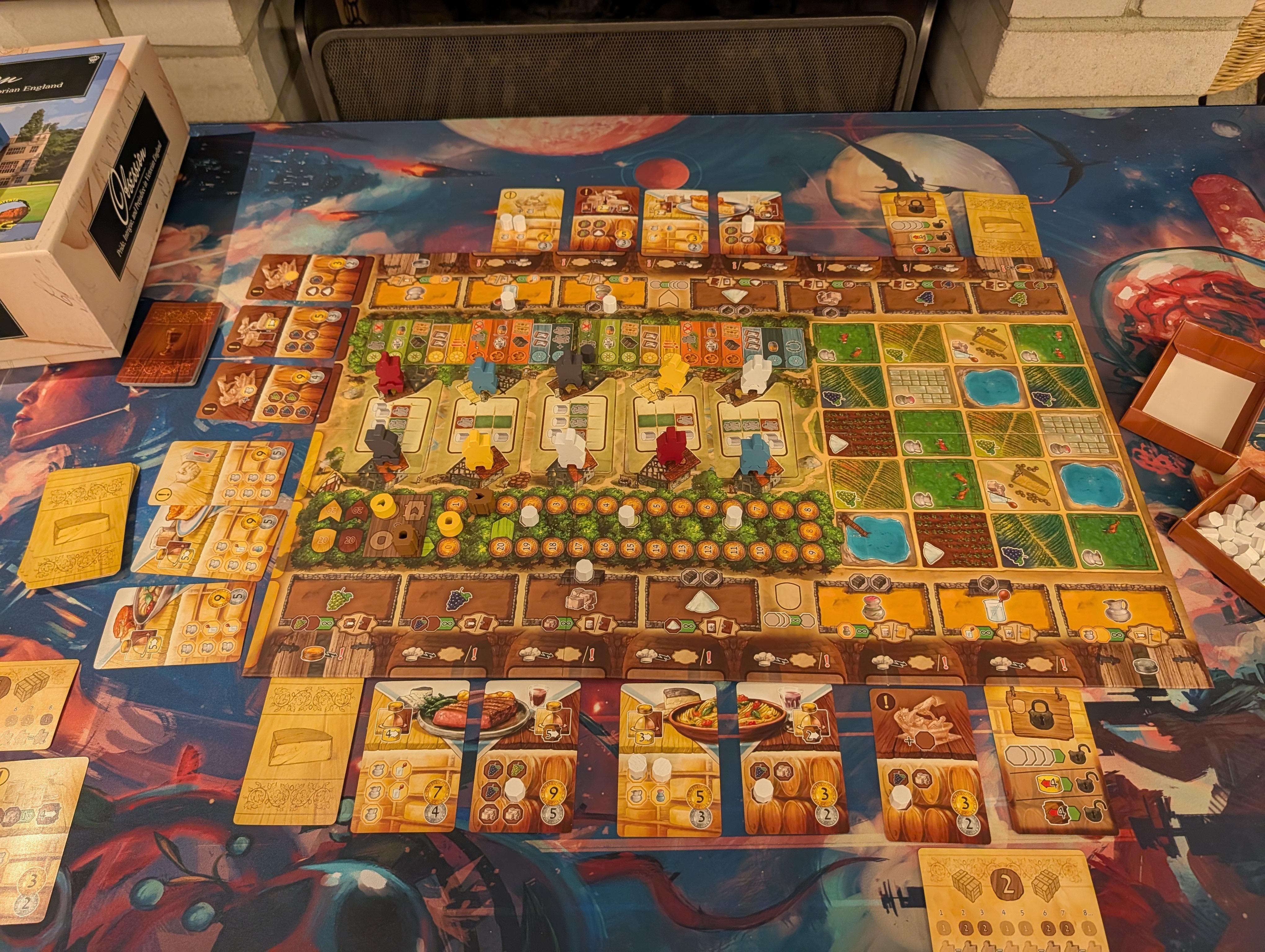
I had myself a game of Obsession with the new manual. I didn’t do very good in the game but the manual is definitely a huge improvement. I didn’t play the game enough to know all the rules especially not with all the expansions.

I also appreciate the appendices that explain all the tiles and cards. There is both a keyword index in the back and a well structured table of contents.

Yay. No more Zetteleswirtschaft with the 5 manuals and various promo tile explainers

13 Likes

Caylus - damn. This was tense. I am loving Caylus more and more.

Can’t Win - This guys just doesn’t sleep. Another Taiki Shinzawa trick taking banger! Hell yeah

Flip 7 with a Vengeance

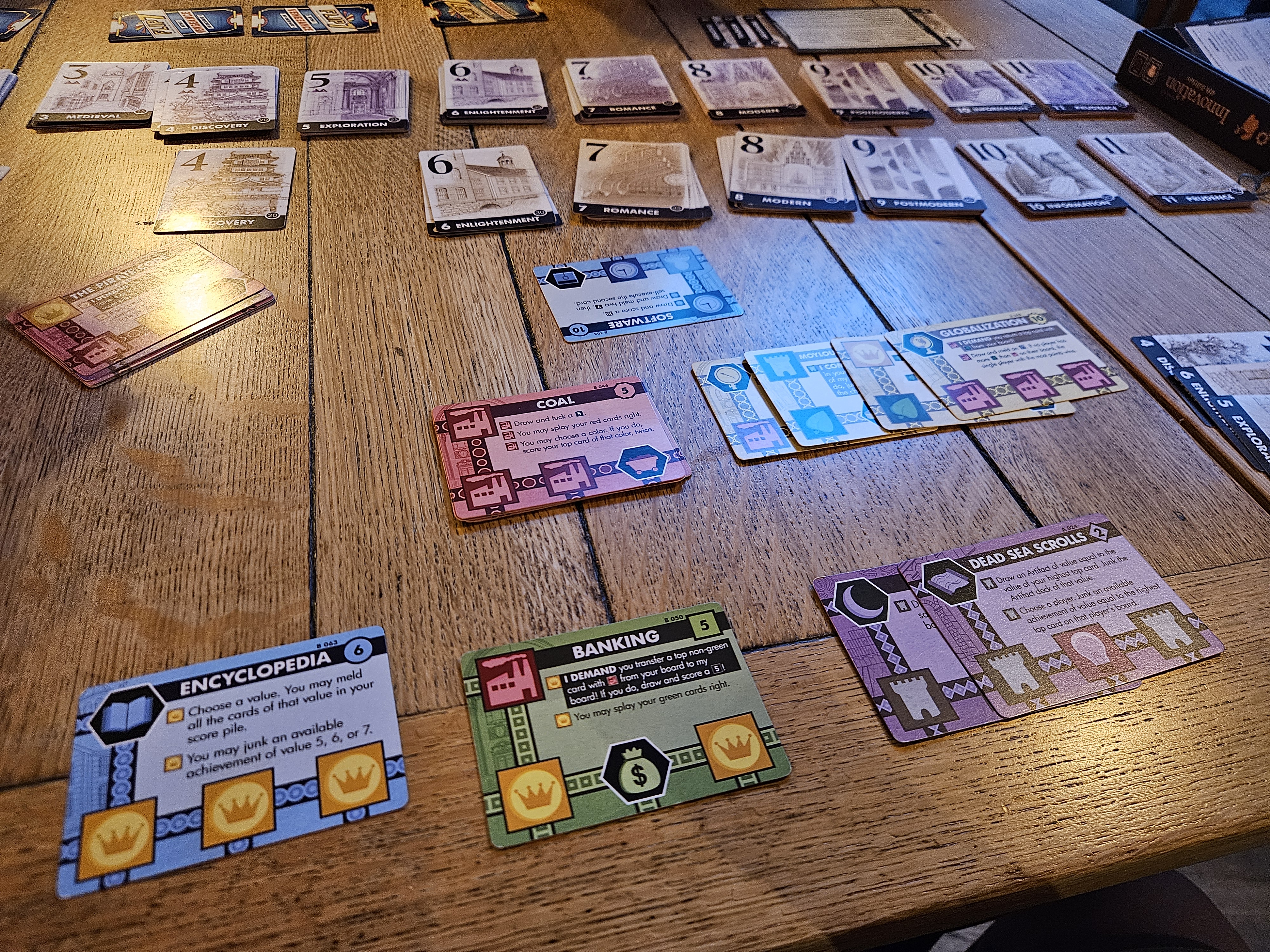
Innovation + Artifacts of History - this expansion is very fun and doesn’t ask too much. In fact, I’m tempted to say that I’d rather introduce Artifacts first to Inno veterans than Unseen. The museum mechanism is more intuitive than the vault from Unseen. The Compel dogma is pretty fun. And so, the only expansion I haven’t tried yet is Figures in the Sand

Batavia - old school Queen games title. Good fun. Need more plays

Tenby - played it one more time with 4 players. I’m sold. I like this more than Forest Shuffle and this game is way more than what you expect from the box. It is like those Devir games like White Castle, but I highly prefer the twee Welsh town theme of this and the simplicity of the rule set over White Castle or Red Cathedral

Encore! - roll and write. Eh.

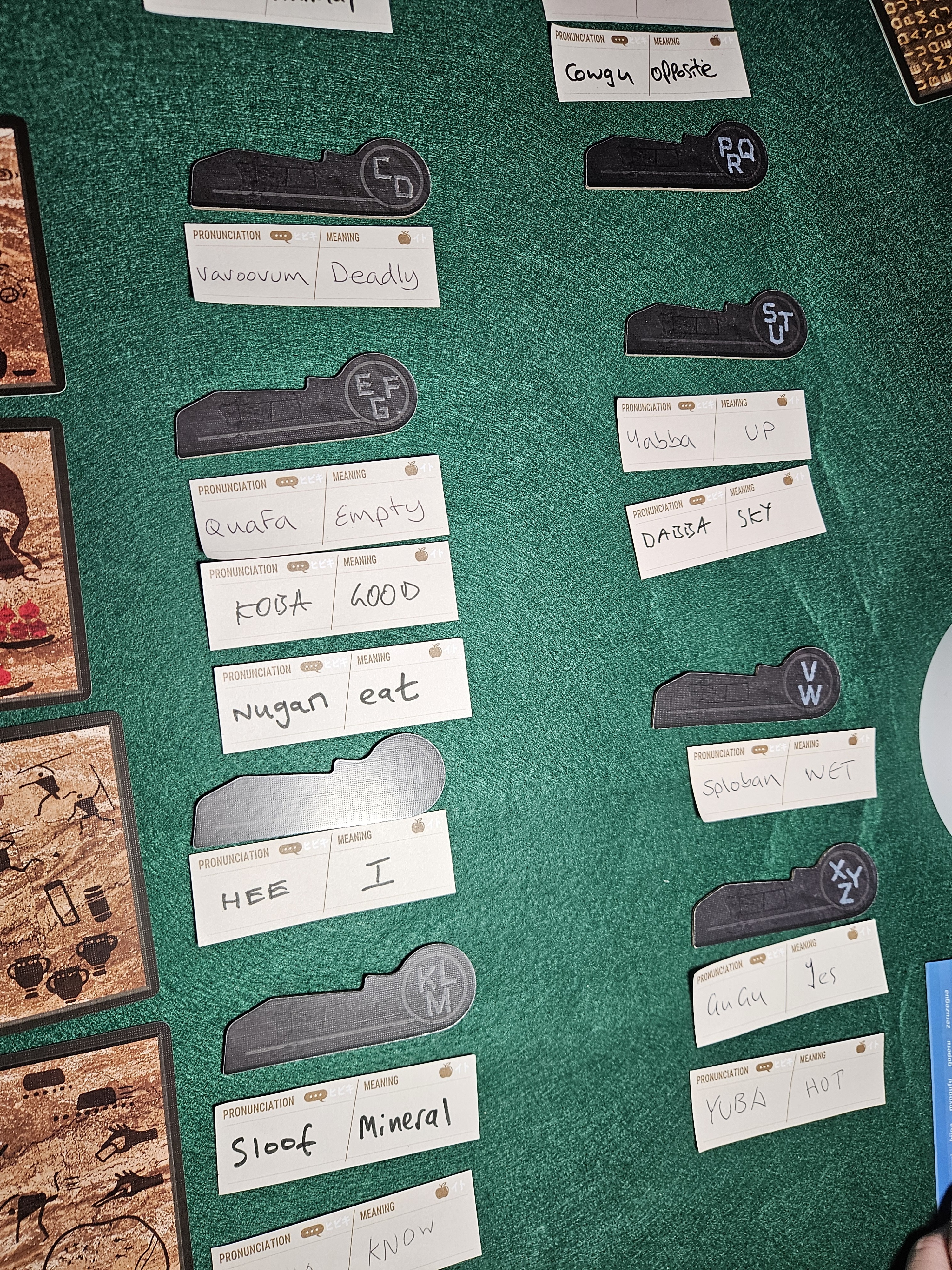
Gibberers - this is one of the most unique games I have ever played and a very silly fun game. So far, my top new to me is rather competitive with games like Maria, C&C Ancients, History of the World, but Gibberers is up there.

Despite the silly fun though, expect the game to run LONG. It’s not a quick filler party game at all. It’s longer than even Decrypto. As for depth, I would say that Decrypto is deeper and cleverer. Meaning you need to play well to win in Decrypto. On the other hand, what Gibberers does is to give thematic experience that is so fun.

There's no plot nor legacy elements in the game. So this section will be about what I thought of the game under the hood. So if you want to explore the game without seeing what's behind the curtain, ignore this section

There is the appeal with how they sell the game and the hype that surrounds it that it’s a game of constructing a language. It didn’t felt that way upon close inspection. In fact, if you remove all the make-up and costume, Gibberers is basically a word association game like Codenames and blah blah. In fact, it’s closer to this new Allplay word association title called French Toast. The game of Gibberers is essentially about starting with a limited set of vocabulary and then players trying to guess what the new word is by using only the words that are on the list. And when you guess it, the word is then added into the vocabulary.

The part where we are these cave men who say “ooga booga dinka durgen!!” is fun but strangely irrelevant to the word association game that players are bashing their heads against. However, you PLAY Gibberers precisely because of the thematic experience of being cave men who say “ooga booga dinka durgen!!” Indeed, the best part of the game wasn’t about the language we are crafting, but when a player made a joke saying “trinx susu wawa”, I immediately understood and howled in laughter. And that’s what the game to me

And so, this is what’s behind the curtail of this game and that should eventually make you judge if it’s a game that you’ll be returning to again.

As for me: Hee wawa Gibberers koba

12 Likes

I made it to a game night for the first time in months, and we played Florence.

I enjoyed it, and would happily play again, but some of the component design makes the game state harder to parse than I’d like. In particular, and especially as locations on the board fill up, differentiating family members from nearby guards becomes frustratingly difficult. The different ranks of family meeple can be distinguished from one another pretty easily, but those guards needed a significantly different design.

I was resoundingly last. I almost managed a nice move at the end to win the single richest pot of the game, which should have gotten me out of last place and not trailing quite so abysmally behind the lead – but I forgot that I needed time up my sleeve to pay for it after the round was over, and so I forfeited the points… I ended up with 128 to the winner’s 202. (At least I wasn’t lapped on the 100-point score track, as I’d half expected to happen at one point! :).

Our host has just received their copy of Container so I’m looking forward to that next week.

9 Likes

I played a 2-handed learning game of Wine and Cheese
The box says playtime is between 45 and 75 minutes.
It’s probably pretty accurate. Games may get faster once you played a few times.
Playing 2-handed is obviously slower anyway.
It is a pretty big game in a very compact package. Scott Almes… my only other game of his is Food Chain Island :wink:

The manual though… wall of text.
But it ended up being okay.

Both players are competing to be the best Wine & Cheese producer in Burgundy over 2 years of play. Knizia style scoring: wine and cheese score separately and the lower value is your score. The phases are separated into seasons and the whole year repeats once. It goes roughly like this:

  • Spring/Fall: Collect resources by sending workers to the fields or returning them from the fields
  • Spring/Fall: Use resources to produce cheese/wine & sell cheese/wine
  • Spring/Fall: stash a few resources, the rest go bad
  • Summer/Winter: Age cheese/wine
  • Repeat…

But because there are some differences between the first and second half of the year… the manual is detailed.

The interesting push pull is that there are 2 workers of each color, one for each player and they are initially placed randomly on the “houses” which tell you how each worker will collect resources: there are patterns on the house cards (which are from a small set and differ each game a little bit). Workers either collect resources when their pattern overlaps other workers on the fields or they collect resources by working alone and their pattern covers empty slots.

Players take resource turns in a 1-2-2-2-1 alternating pattern. So the first player selects a worker. Then the second player must place their worker of the same color (they may be in a different house so have a different collection pattern) and then chooses another color to place, then the first player must place the worker of that color and so on until all workers are placed. This is repeated when workers return in the fall…

To produce goods there are cards that have little resource icons on it and the resources need to be placed on them. In order to sell for gold (more points than silver), wine and cheese have to be aged properly, this happens naturally in summer and winter but it can also be sped up or slowed down by spending certain resources. There is some chaining with bonusses going on when producing or selling resources. Also resource cards come in two types: action cards have potential special bonusses associated with them while “Genuss” cards need to be aged in pairs of both a cheese and a wine for extra points.

It’s quite intricate but one quickly gets the hang of it. Luckily it is a two player only game because I think this can get quite thinky. Maybe less so when you only have your own cards and resources to look at and are not trying to work both sides of the board.

I hope the rules have good retention: while the manual is a wall of text, I think it is quite teachable. There is nothing overly complicated to teach, just a lot of little details.

The shared worker space about the resources give some interaction, while the other phases are mostly “I am now doing my own thing”. The resource phases are about half the game.

Game logistics are great: setup is fast, the box is very well organized with 4 little cardboard boxes containing everything but the board and serving as container for the resources during play. There is nothing fiddly with this game, there are some really well thought out ways to track certain things: spots for cards you sold for gold and silver are separated. The workers get little benches to wait on in the houses that turn into hats on the fields allowing you to track which pattern you are actually executing. The whole sequence with the worker colors is very neat I think and makes for some good decisions. The way resources are tracked just works really well.

There is nothing super-new or innovative except maybe the resource gathering. At its heart the game is a resource conversion engine like so many other games out there. But it is one that seems very well thought out, and it is designed for a thinky 2 player experience that lasts for a while like good wine and cheese do… the theme is somewhat present I just think they might have gone the extra few steps of naming the wines and cheeses. Burgundy has such a wealth of famous products… why not add that? It would have brought home the theme so much more. Maybe I’ll write my own names on the cards… (someone probably wanted to avoid all in-game text. Meh)

Hope this gives those of you interested a bit of an overview. I have not played Beer and Bread, if anyone has played that, how does it compare? Is it similar at all?

6 Likes

I have not played Beer & Bread, but there is definitely some shared DNA between the two games. Two player games, producing two different types of goods, of which the lower amount factors into your final score. However the actual gameplay does sound different. B&B gameplay uses cards that have multiple uses, making you choose how you want to use the cards. You draft your hand of cards with your opponent. So it sounds like there are no workers, as there are in W&C. So, possibly a spiritual successor, as some of the ideas and goals are similar, but the gameplay is different.

5 Likes

Massive UKGE playthrough

Jackpot: Set the Reel

https://boardgamegeek.com/boardgame/447589/jackpot-set-the-reel

Really enjoyed this, a tight little hand management game and the better of the two slot machine games I played. No randomness at all after the initial shuffle, which is odd for a slot machine game, but still fun.

Guessocracy https://boardgamegeek.com/boardgame/447621/saikoromin-zhu-zhu-yi-demekurashi-dice-democracy

A daft dice rolling game where you have to vote on which dice rolled highest/ lowest. Quick and fun, extremely light and daft. You know the type of game by now.

Gibberers https://boardgamegeek.com/boardgame/380109/esuperaizeshiyon-gibberers-the-word-game-of-langua

Really enjoyed this, played on expert mode, and succeeded with a lucky level 5 word we already had perfect words for. Not for everyone (one player really didn’t like it), but original and unique

Strange Slot Simulator https://boardgamegeek.com/boardgame/468535/strange-slot-simulator

A weird statistical analysis- the card game. There are 6 decks with different distributions of cards. You choose one, shuffle it, draw 3, and repeat. Eventually you have to work out which deck is which based upon the observed distribution. From a mathematics point of view its cute and interesting. Not a great game though.

7 Likes

A few games played this week:

Xylotar: a silly game trick-taking game :laughing: the not knowing exactly the value of your cards makes for some risky decisions and quite a lot of swearing, particularly when you find you’ve accidentally bid to win 5 tricks. I think this is just the right length for this sort of game, unlike…
Justice: another trick-taking game which was at least 100% too long. The idea is that you have 3 “suspects” and by winning tricks you can add votes for whether they are guilty or innocent. Everyone has a secret condition that allows them to score, like having everyone convicted or everyone judged correctly. It felt like you had very little control over whether you could steer the game, and whether you could score was mostly determined by the cards you were dealt. I don’t mind a bit of swingy nonsense, but it has to be short enough to be enjoyable (see above). The game also had terrible AI art, which didn’t help.

Unmatched: I had never played this before, and it’s probably just as well that I don’t regularly play two-player games because I could easily see myself buying too many sets! We played Achilles and Sun Wukong. Achilles gets Patroclus as a companion, and once Patroclus gets killed Achilles gets a bonus to his attack strength and card drawing. Sun Wukong can choose to take a point of damage to clone himself up to three times, which is very irritating if you’re trying to fight him and are suddenly surrounded by monkeys. Would definitely be interested in playing some other characters.

Kabuto Sumo: a couple of very quick games while we waited for other people to arrive at the pub.

Excalibur: a wildly overproduced party game that involves using blindly drawn characters to try and find/steal the Excalibur chip and be holding it at the end of the game

Yes, the swords are metal. No, it isn’t necessary. Would play again, wouldn’t play £65 for it…

9 Likes

I can’t believe it’s been close to two weeks since that session, but I finally found time to continue my UnderQuest adventure, finishing the last couple of rooms of level 1, and traversing all of level 2. That alone took me an hour and a quarter (albeit with a bit of re-reading some rules), and there are up to 3 levels remaining, so yeah… I’m not remotely so speedy as BGG suggests at this point. But I have no problem with that – it’s all good fun.

My character gained enough XP for a new skill, and has learned to be more nimble; and consequently I decided to sell my shield at a subterranean market, as I could now get the same defensive benefit if I was carrying less weight, along with the additional bonus that my off-hand was freed up to wield my dagger in order to do more damage.

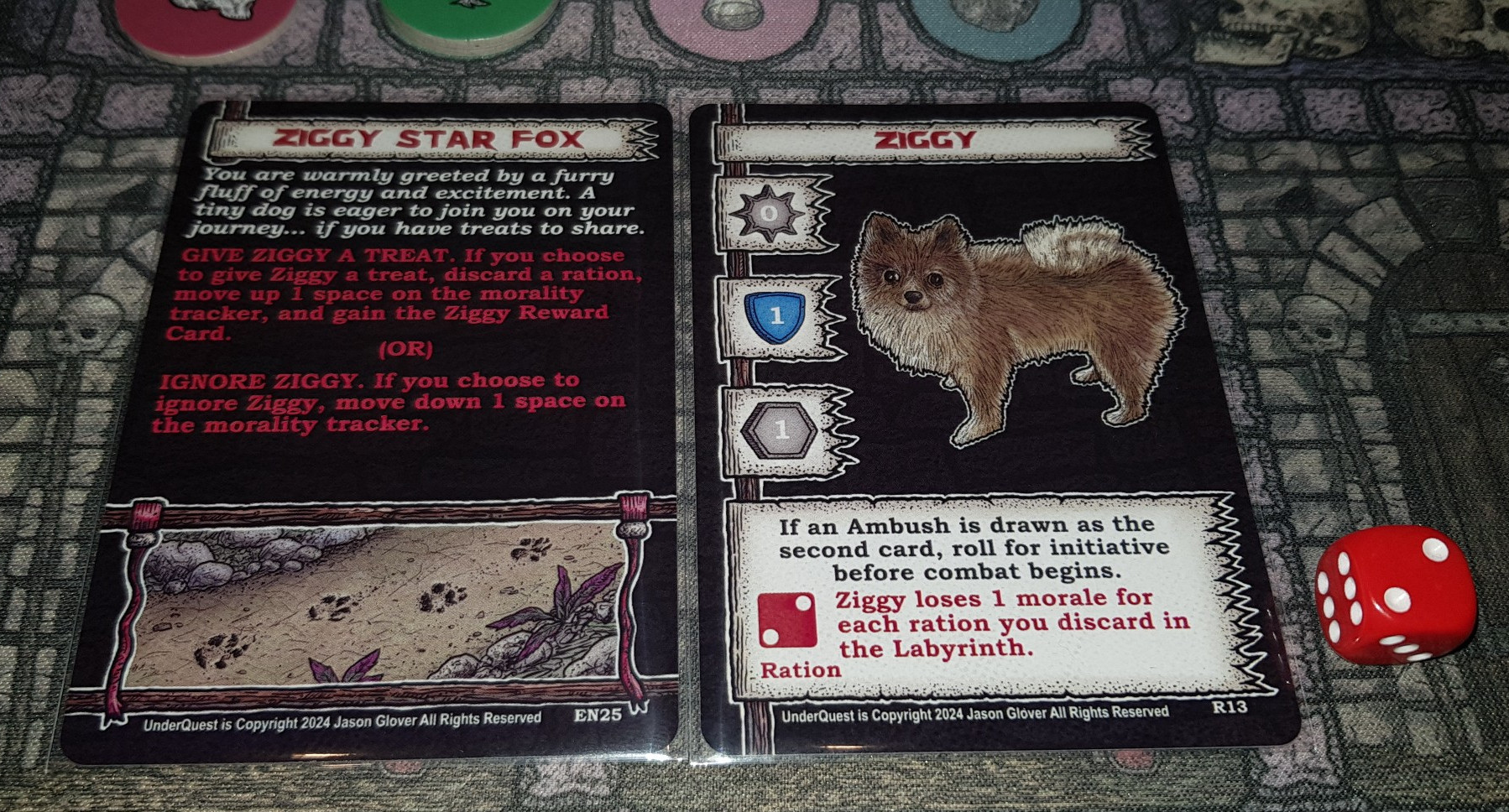
I also made a friend! Ziggy is food-motivated, and runs interference in a skirmish, reducing the enemy attack strength (as well as raising the alarm if anything tries to ambush me). Thanks Ziggy! (Look at that face.)

6 Likes

You can play 3 and 4 player as well… :smiley:

2 Likes

Petiquette - oink game. Weird vibe based game using logic. Interesting but I wish there’s more control with the cards

Eldritch Horror - nearly won but lost

Innovation + Echoes of the Past - excellent. Was tired and sleepy at this point so I was beaten badly :sob:

dnup

4 Likes

Some longer games today:

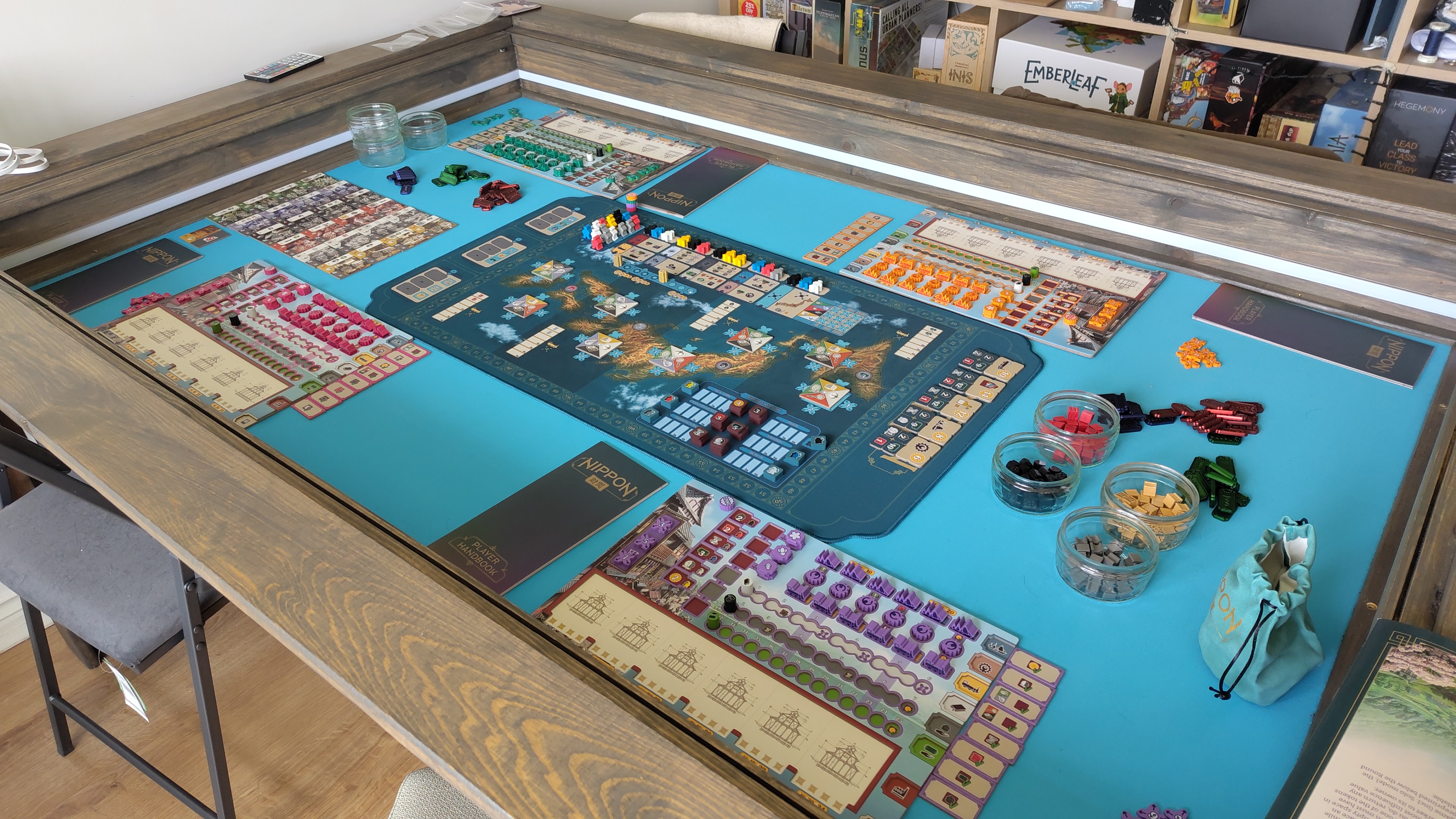
Nippon Zaibatsu: An action-selection/area majority Euro based around the industrialisation of Japan. The action selection is interesting because you have to take a worker to do an action, but the more different colours of worker you take, the more you have to pay at the end of the round, and sometimes the action that you really want to do requires you to take yet another colour of worker…

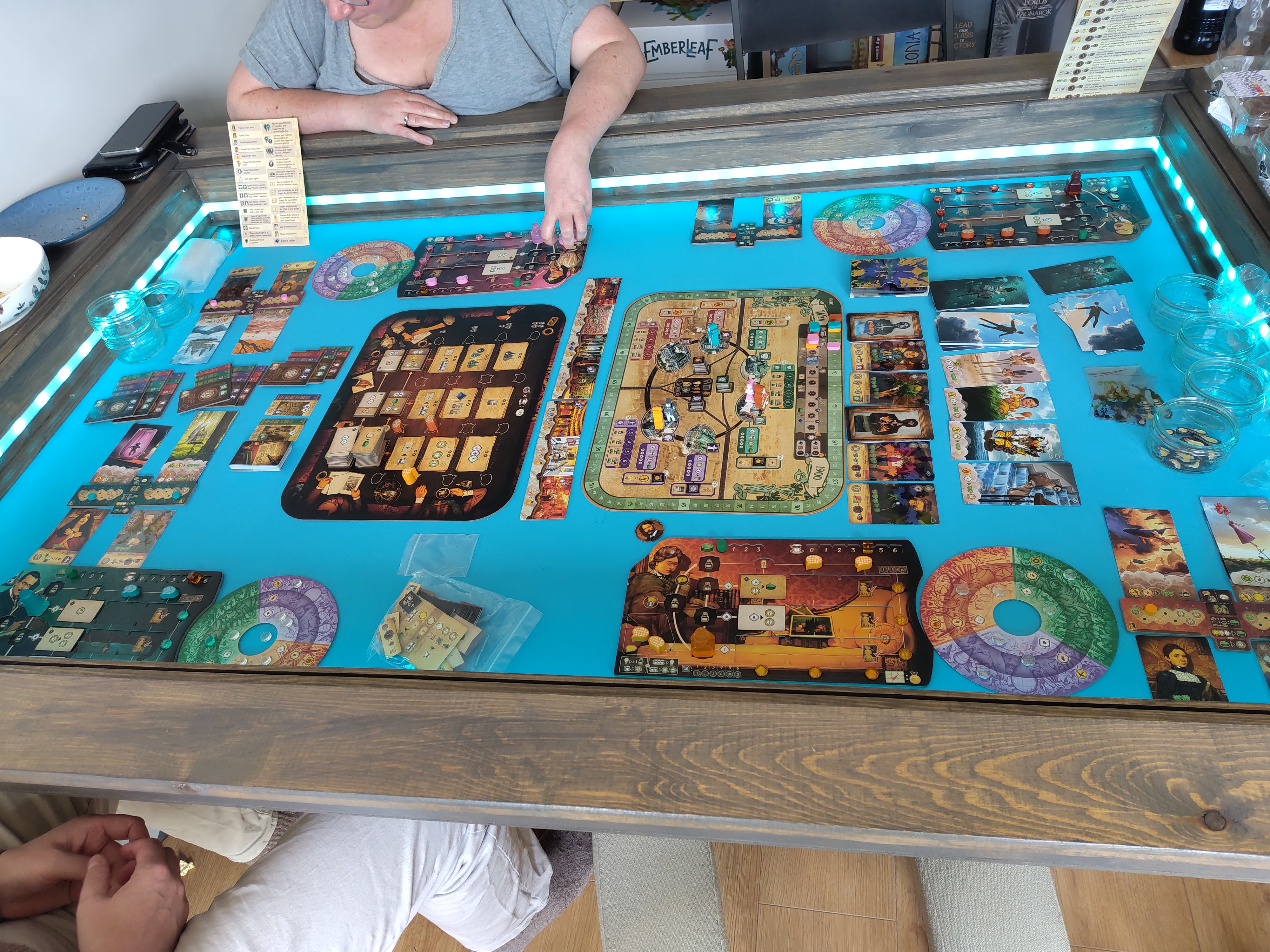
Unconscious Mind: gives me the same sort of death by icons feeling that I get from Anachrony, but I think I prefer this slightly. The conceit is that the players are students of Freud in 1900s Vienna. You get your points by publishing new research, curing patients, and increasing your reputation. There is a lot to keep track of, but I did enjoy the use of coffee as a main resource.

Also some great art on the dream interpretation cards:

9 Likes

Yeah, the game I wanted to play was “everyone builds their entry from a full array of possibilities, then if you’re in the majority you get a point”.

4 Likes

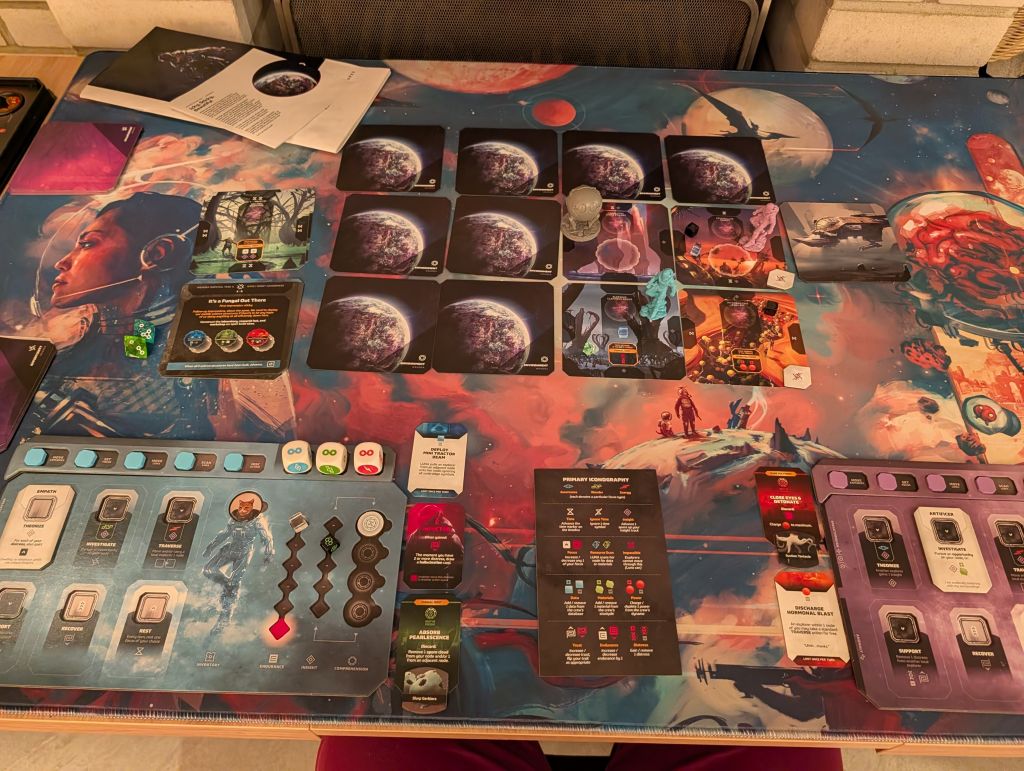
It has been ages since I got Unsettled. I played a few games back then and had to relearn most of the rules. It went… okay enough considering how much time had passed. I had played this scenario previously. It’s a pretty simple introductory one. It was more fun than expected. Like most of the games of this type that I have tried with the exception of Gloomhaven, the gameplay itself is not super complex: just manage your actions right and don’t take too long to complete the tasks the scenario gives you. But this is better than most of the others, maybe it is easier? Maybe because the scenarios are compact it works better for me?

(in my mind I am comparing this to Sleeping Gods, Earthborne Rangers and 7th Continent)

I left it on the table to try Scenario B on the same Planet soonish. Last time I decided that I wanted to try different planets but now I feel it makes more sense to play through one planet because knowing what cards exist will help.


On BGA, I also played a round of Tanglewoods Red (the solo offering of the people that like to make dice games you could play underwater… I keep forgetting their name). For a short moment at the start I had hoped that I had made some major mistakes in my games on the table causing me to struggle against the difficulty. But nope: I lost this one even FASTER than on the table. I hate those dice. I regret that purchase. I had hoped to connect through the fairy tale theme of these games… because Red has been so awful (difficulty-wise), I have yet to try the other two Tanglewoods variants.

What are they thinking? The base difficulty of these games (Hoplomachus Victorum is the other one I own) starts so high up… why would you want to make games that frustrate players that way? Maybe there are people who prefer to struggle against the system much more than I do. I need to learn my lesson. I have 2 of their games now. They are so nicely produced. But productions I can’t play… … I might eventually houserule the dice with the empty faces. I have some ideas for Hoplomachus but none for Tanglewoods.


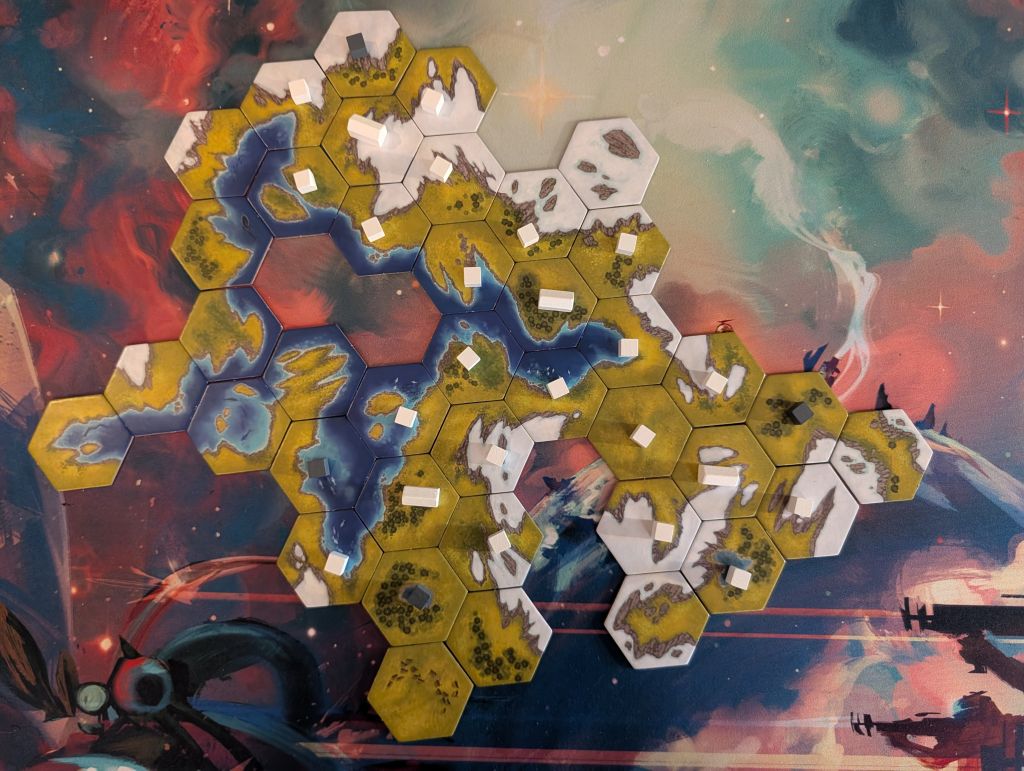
During lunchbreak I managed the most satisfying fjord:


The trick is to have as many water tiles around your settlements as possible because (i counted) half the tiles are water tiles. But placing settlements on watertiles carries quite a bit of risk… now that I know what tiles exist though the risk becomes more managable. And I love it when the coast lines comes together like that.

9 Likes

Yesterday, played a game of Terraforming Mars. I (using Phobolog) lost to Maryse (using Saturn Systems) 134-123. Unusual game, we normally put cities and forests down on the surface MUCH more quickly. We really focused on the global parameters this time around. It was a great game, really didn’t know who was winning until we counted the last batch of points.

5 Likes

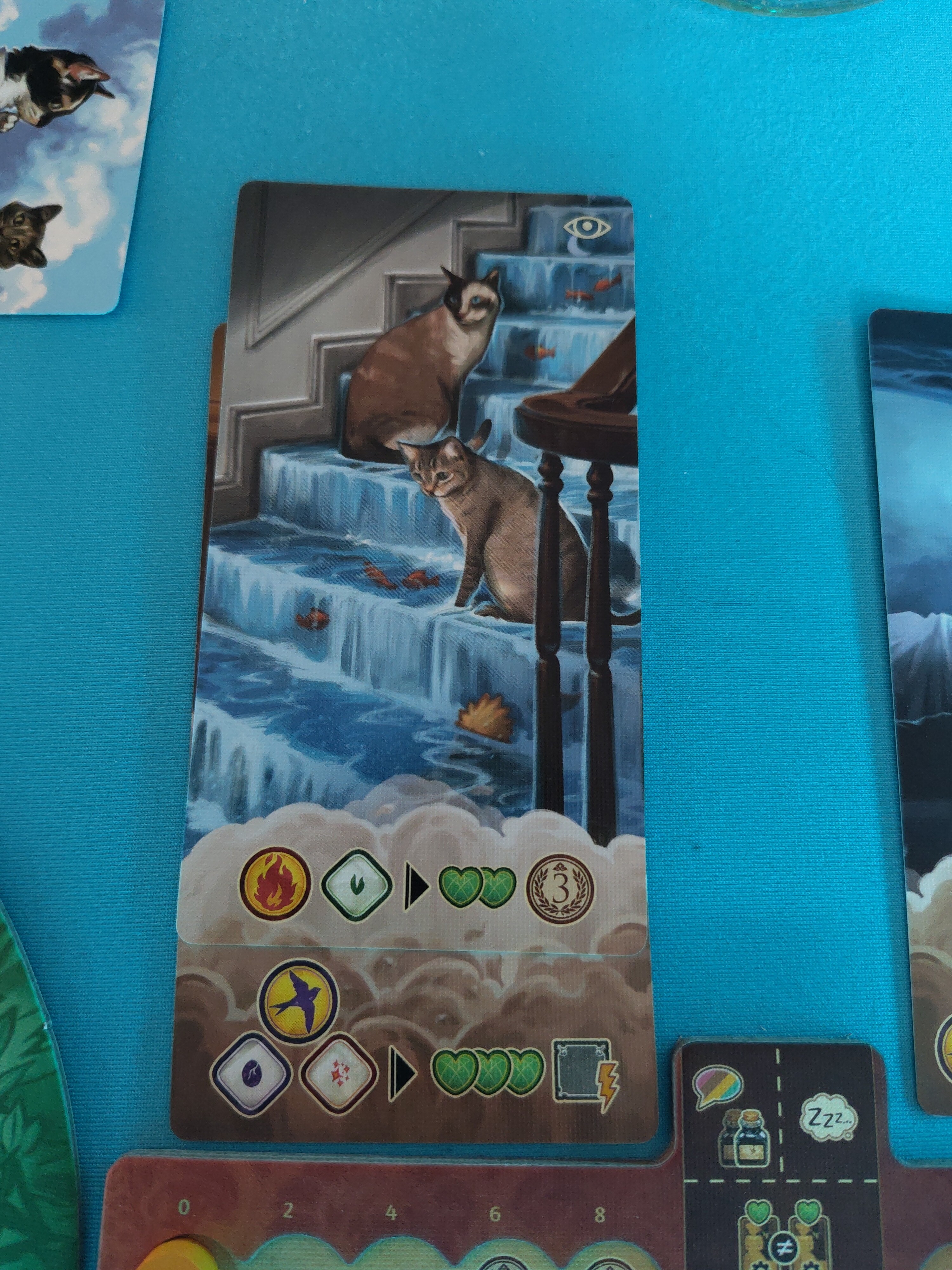
This weekend was another really busy one - which I may explain later in the week in another topic - but I had time for a quick solo play of Calico on Sunday afternoon. Nothing too heavy and picked the three cats who look most like some of my own housemates, specifically Tibbit, Coconut and Leo. It was going pretty well, accommodating all three cats once but not able to complete both parts of any of the three objectives, and just missed out on getting the final colour button too but finished with a score of 63, a lot better than expected. Getting that final button would have given me an extra six points but I was still happy with how it played out.

6 Likes