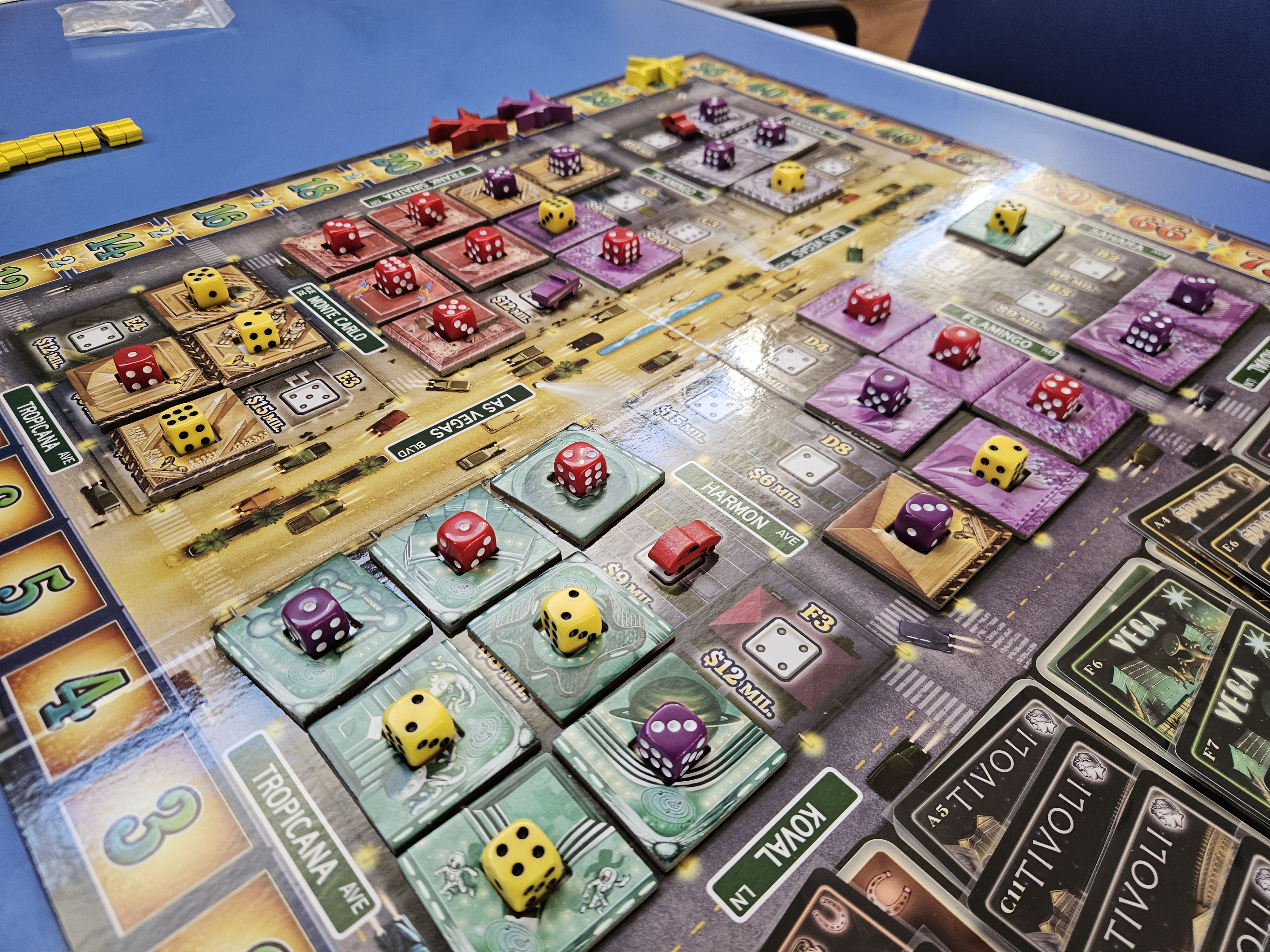
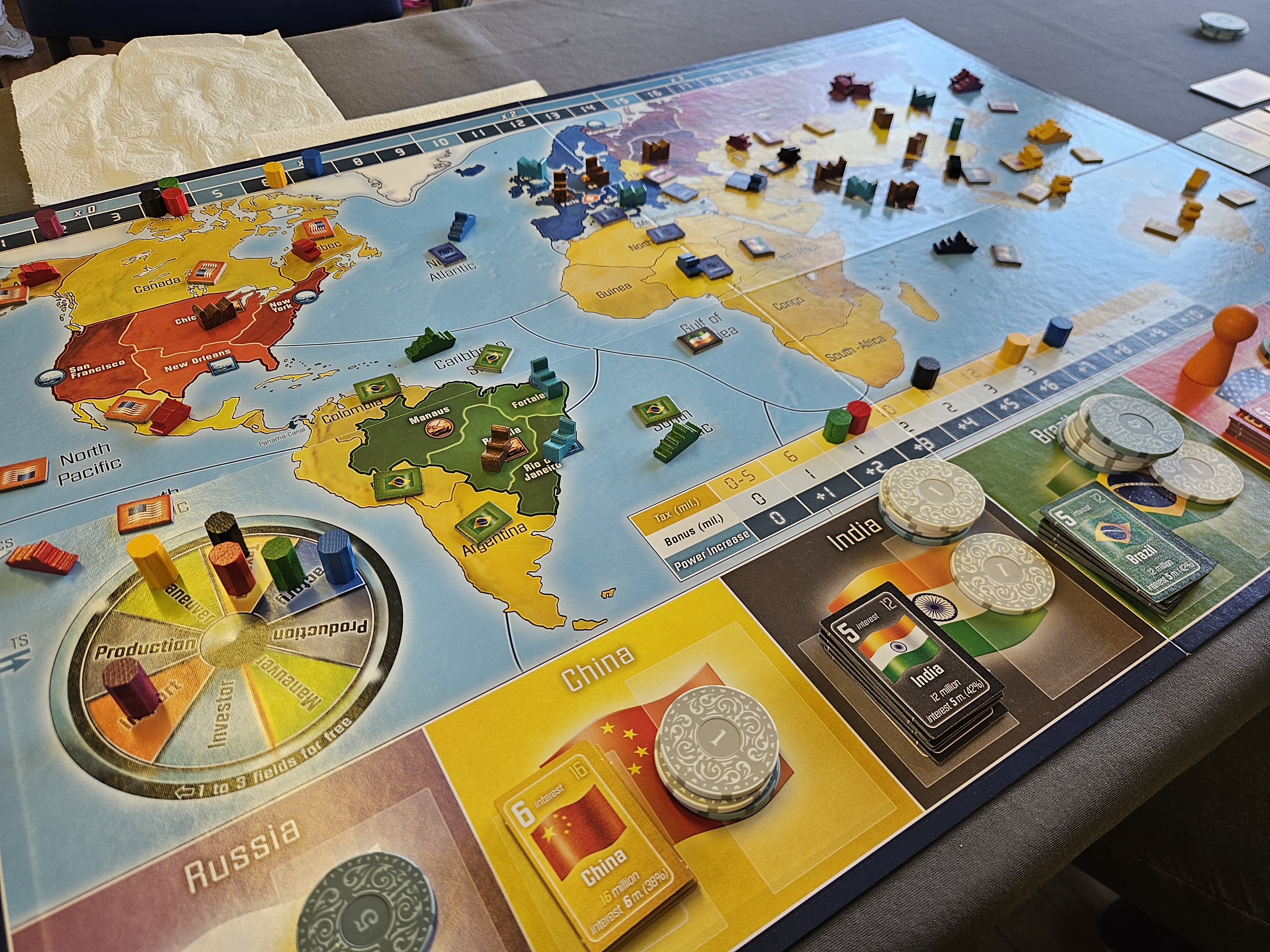
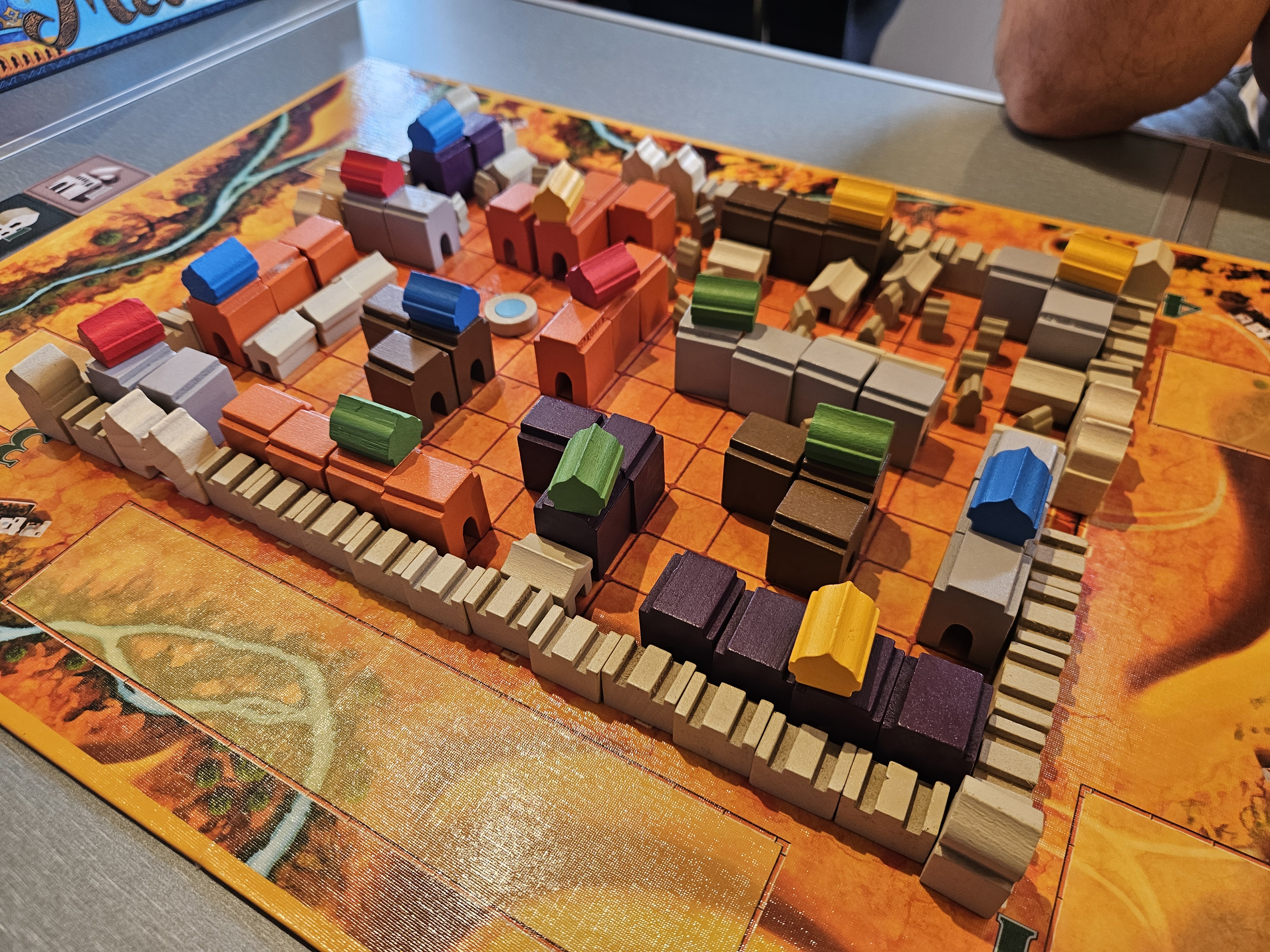
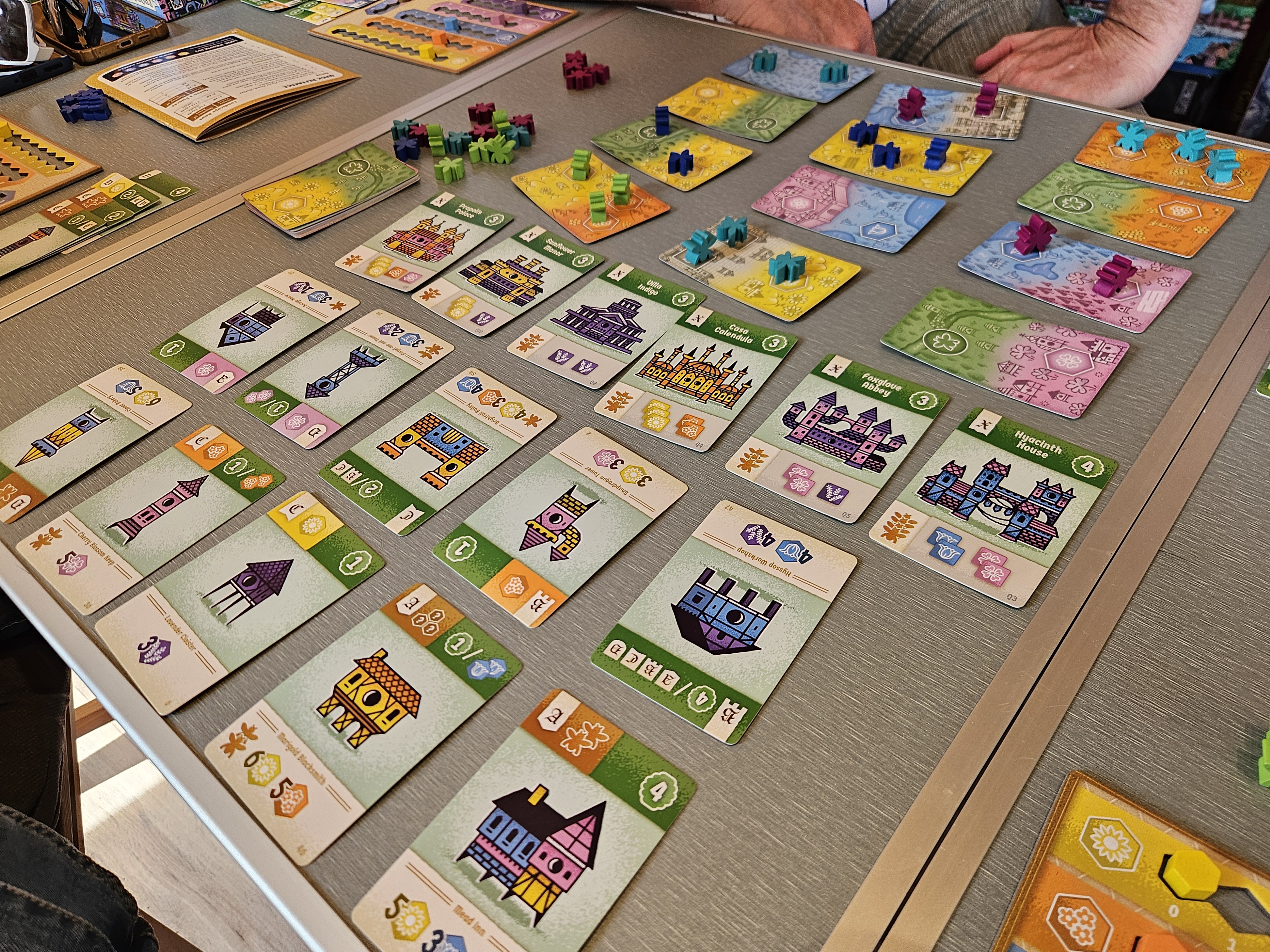
I’ve had some more table time again - maybe this is the new world? It’s nice to play cardboard rather than mouse clicks. A bit of both from the last week:
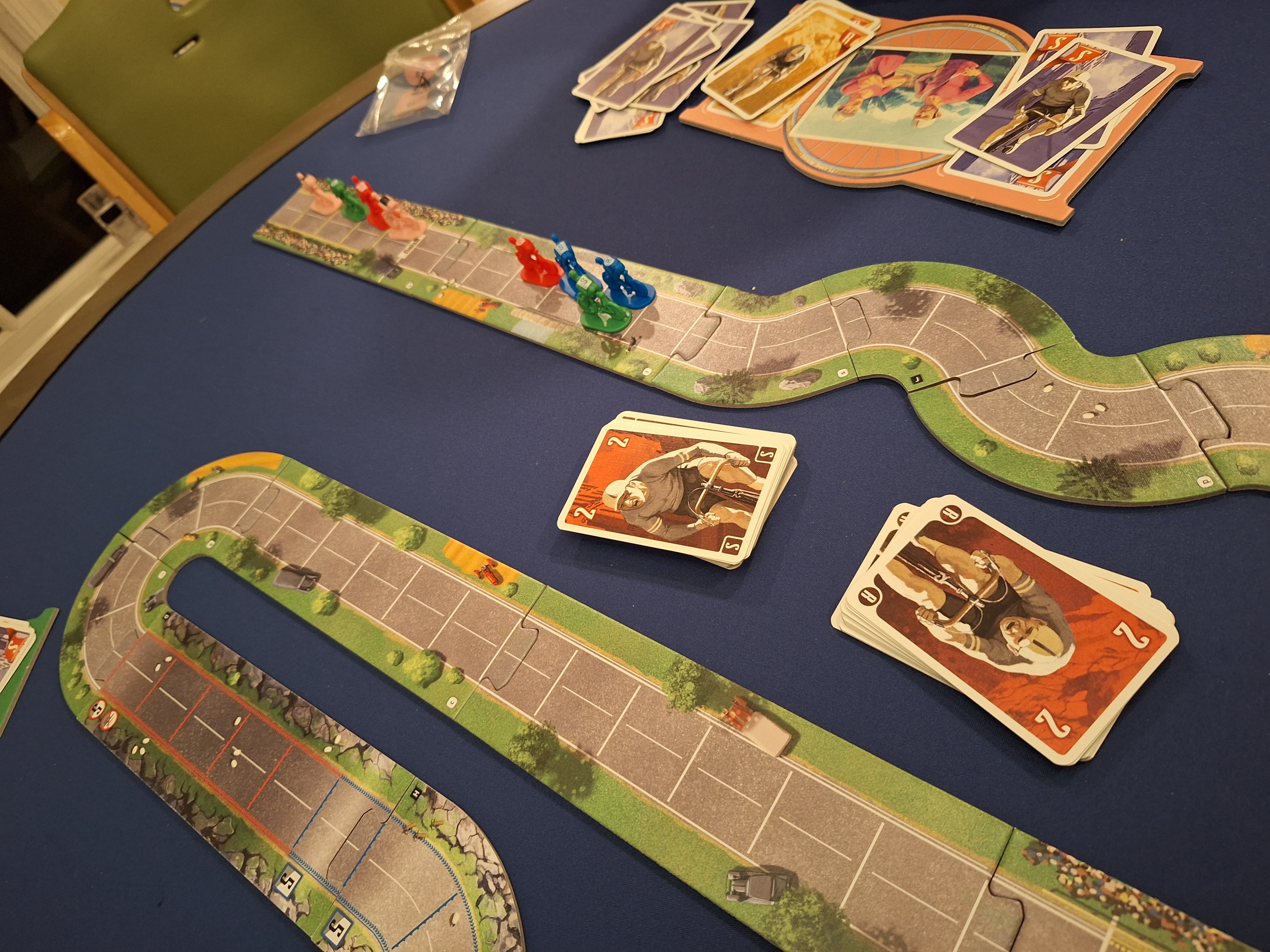
Flamme Rouge: As my esteem for Heat increases, and Flamme Rouge holds steady, I may be about 50/50 on these two now. The uphill rules are always a bit fiddly to teach.
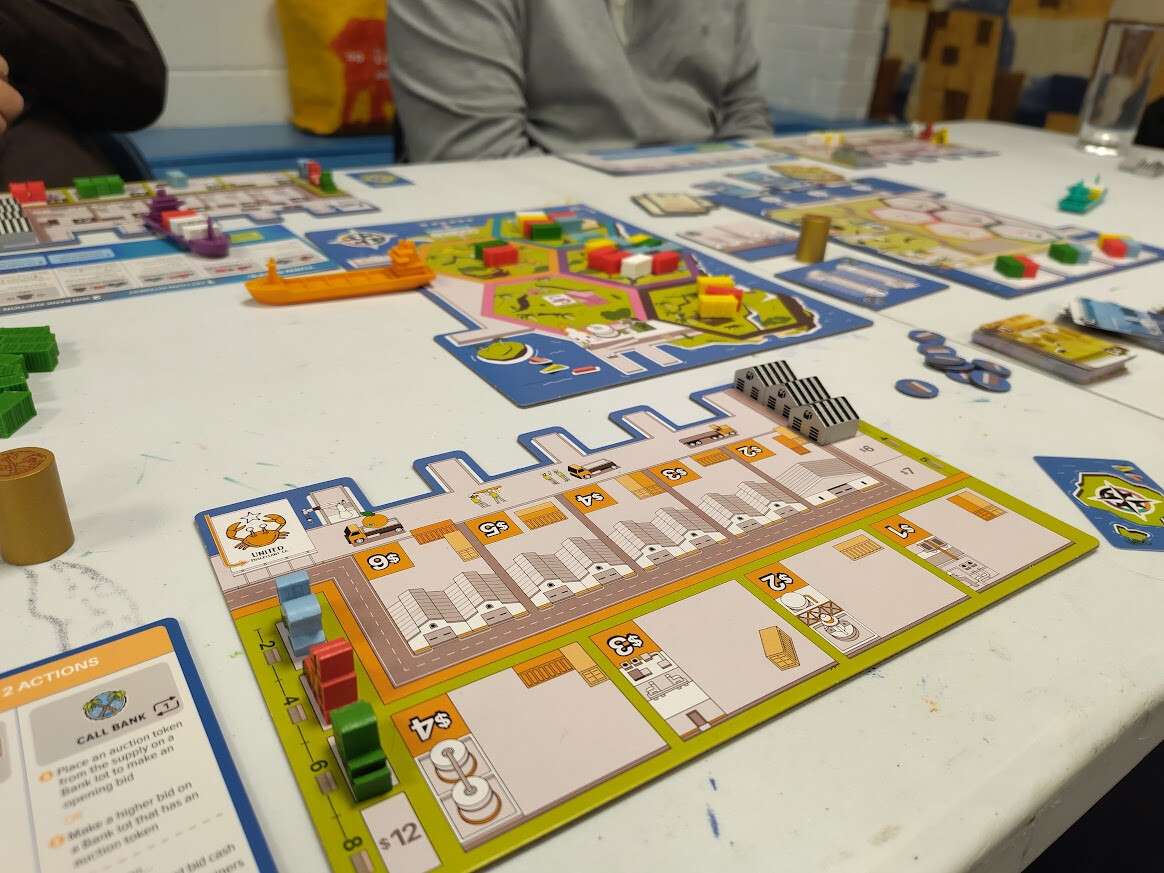
Irish Gauge: I think this may be a 10/10 game? The more I play, the more engaging it is. Chicago Express didn’t land for me the same way. But I still suspect that ChiEx has more wrinkles, and if I ever outgrow Irish Gauge I’ll be happy to jump into it’s arms.
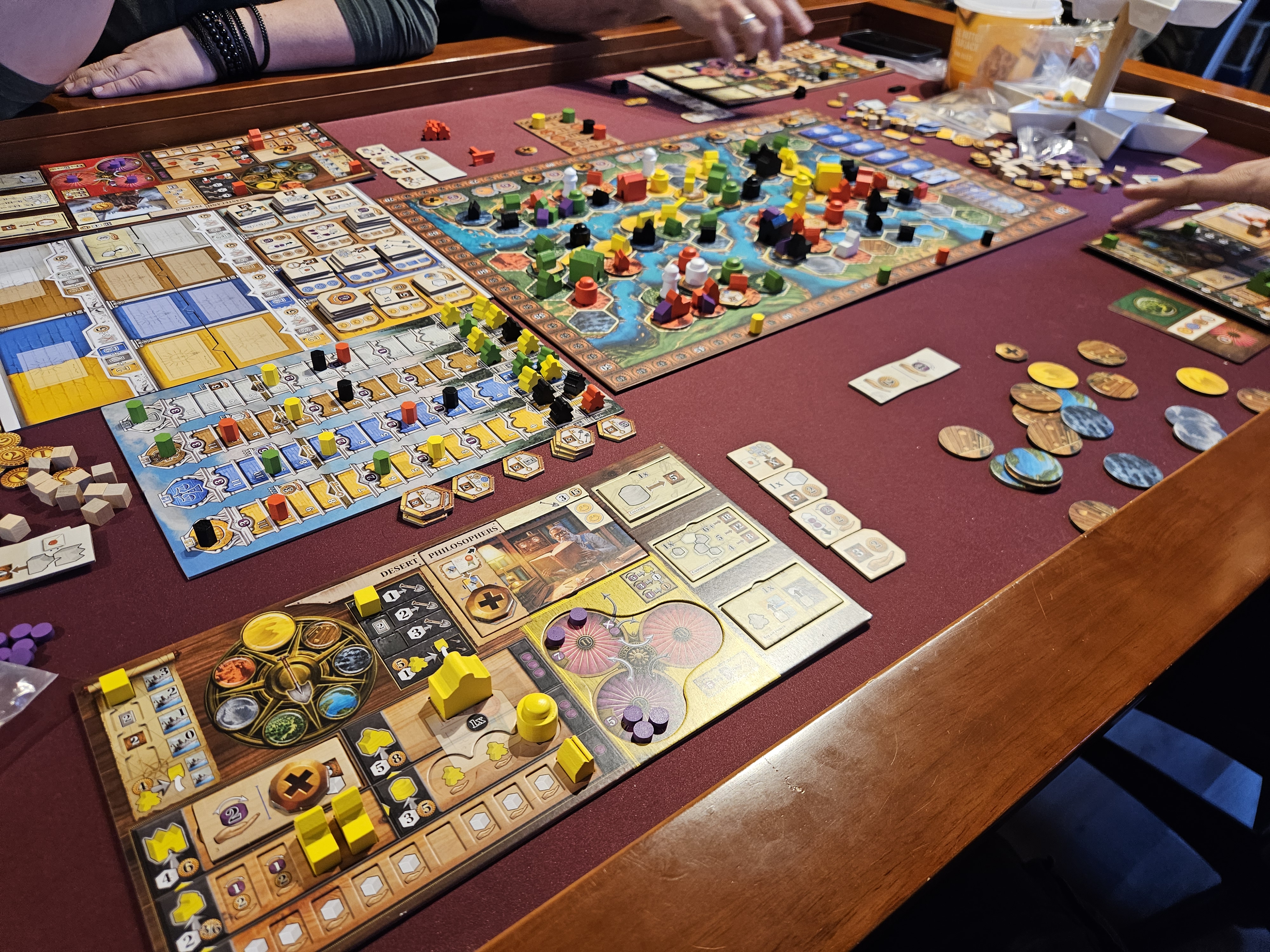
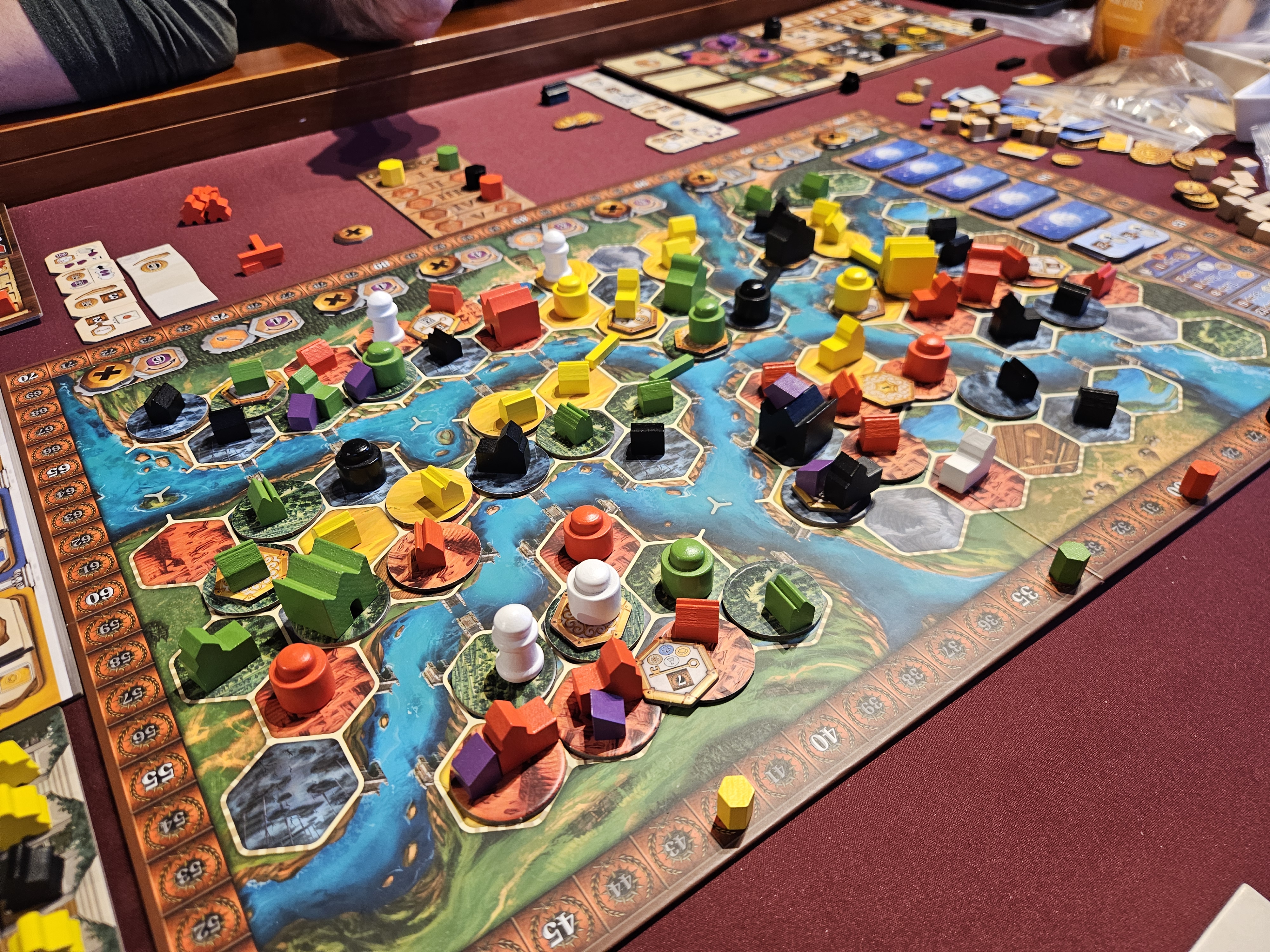
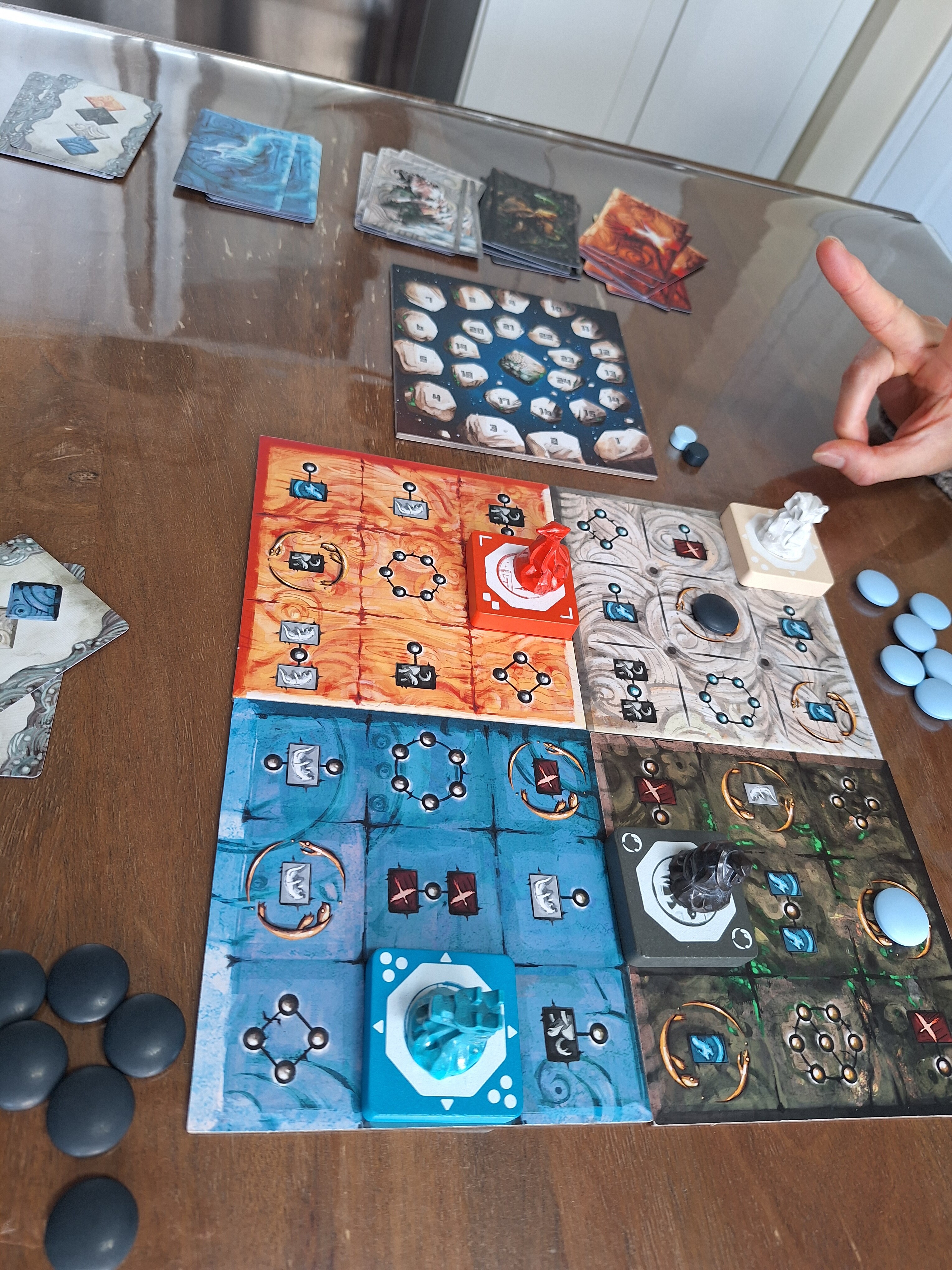
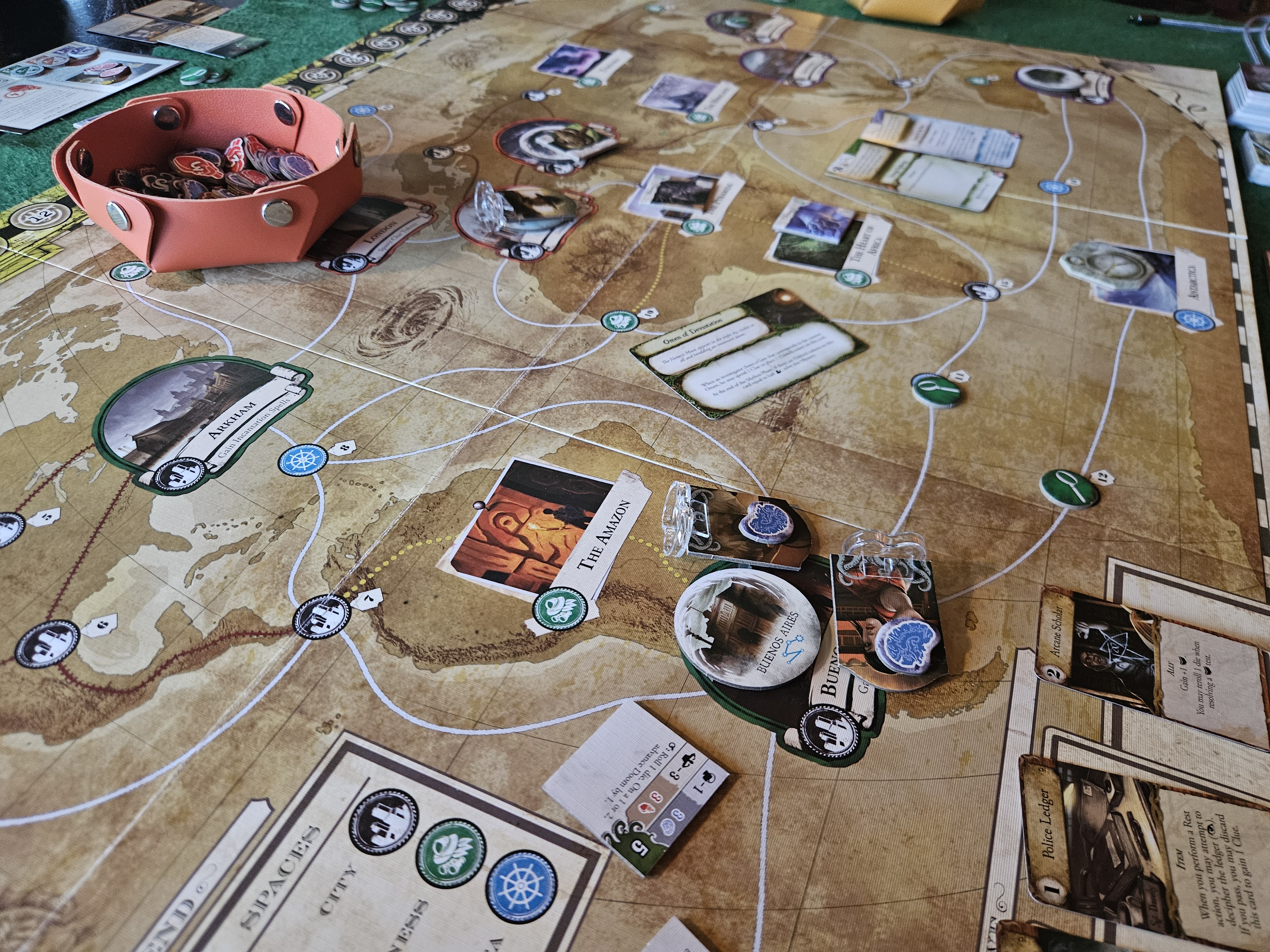
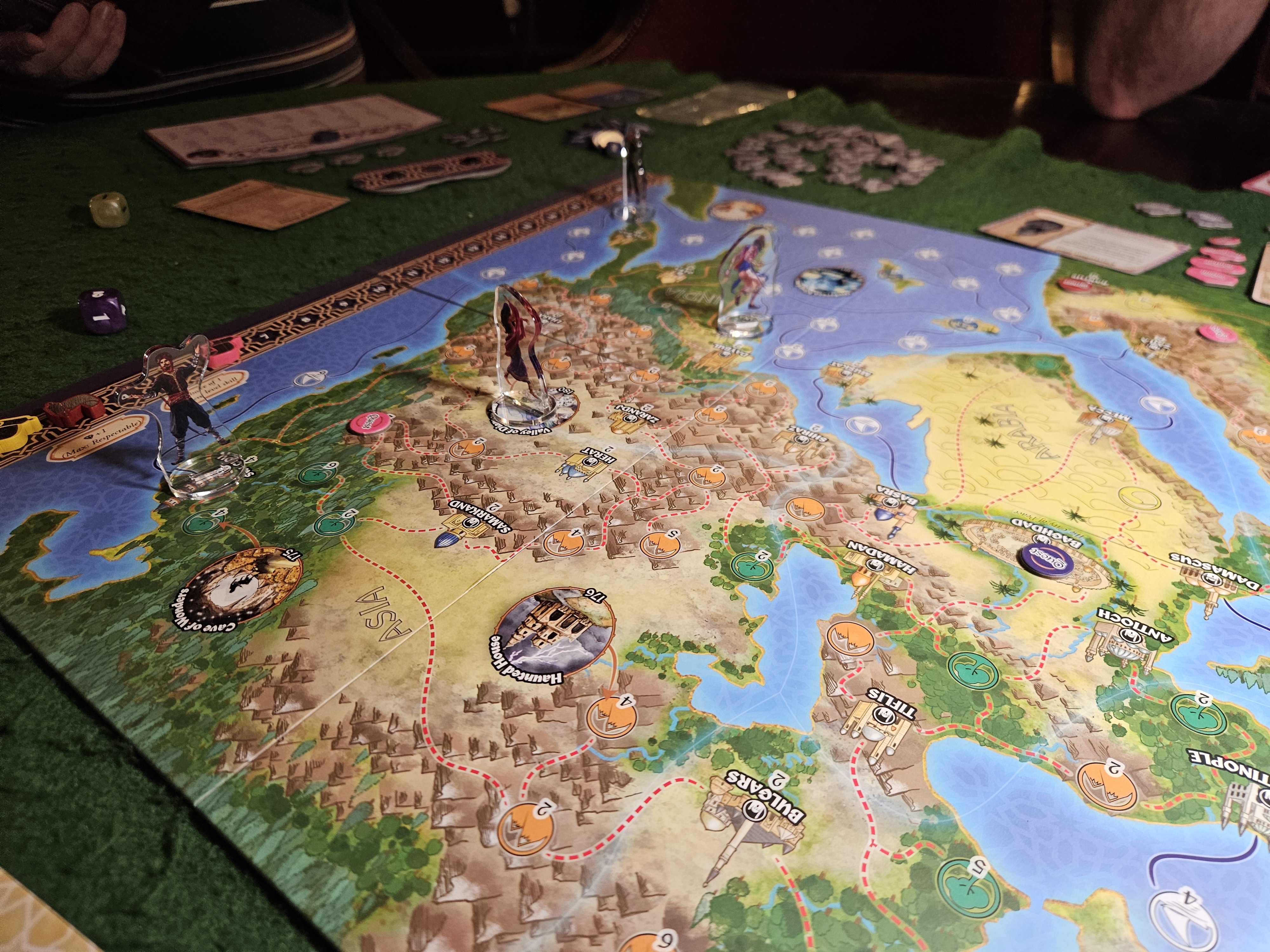
Azure: This one’s been divisive. Space-Biff wrote an excellent review, concluding it’s the only Mythos game he doesn’t like. Meeple Mountain gave it nearly 5/5 but disliked Moytura. Who knows. I’d rate it as good not great, but also unique and consistent. I don’t have anything else like it, with the spatial engine building on a shared map.
I think the biggest flaw is that the first two acts are more interesting than the last act - often early decisions set the end game in motion and you just have to play it out. But the first two acts are strong, and the gifted stone expansion pushes the interesting bits later into the game.
While I agree largely with Space-Biff’s assessment, I seem to keep coming back and keep having good sessions.
Splendor Duel: I play so much of this online. Nice to play on the table. Actually see what the opponent is taking and such. Have a little stare-down as you both dare each other to refill the board. This is still really good stuff.
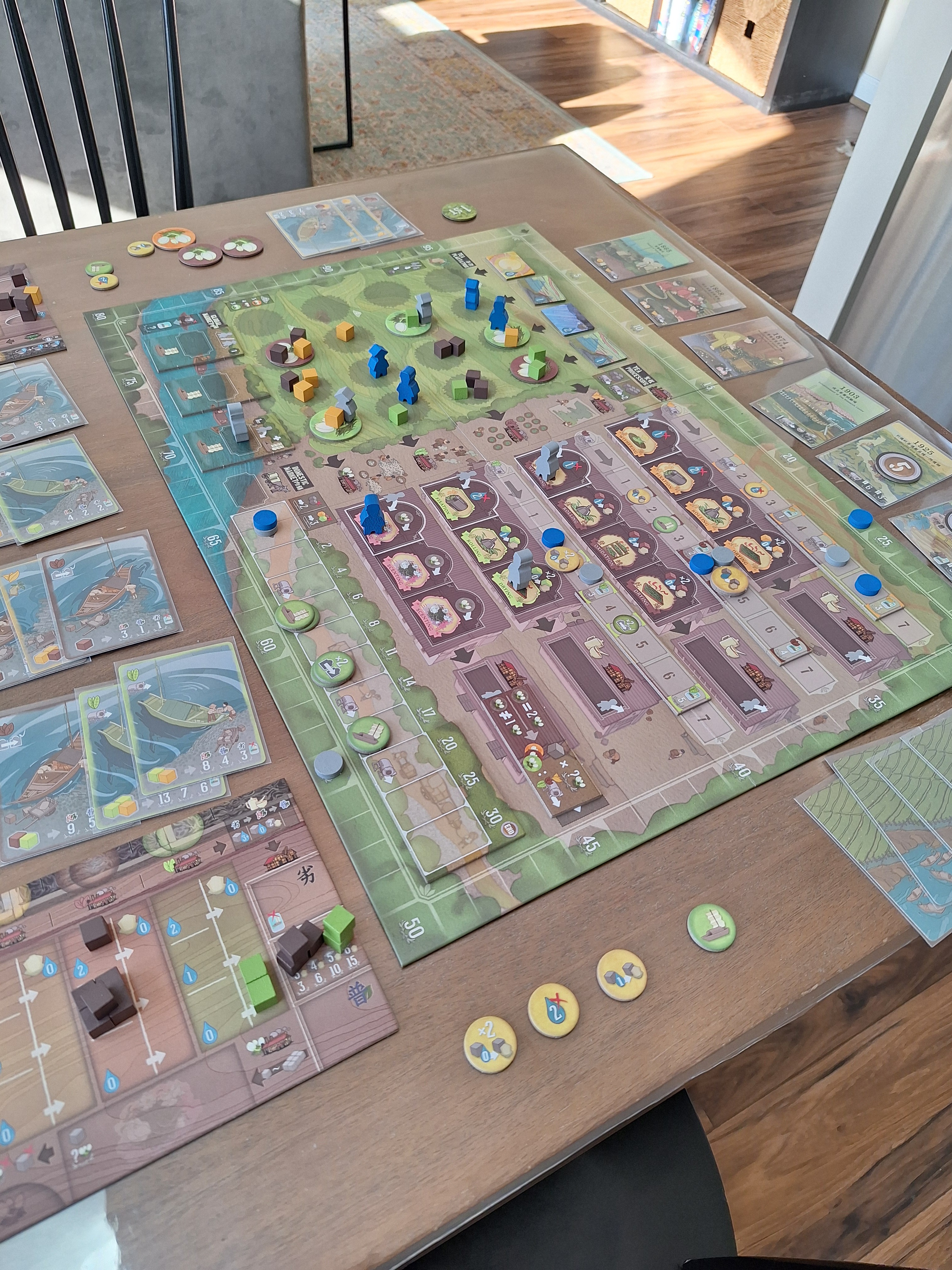
Formosa Tea: The rules seem so simple. Take leaves, make tea, sell tea. Round-by-round bonuses and a very simple tech track. The teach always seems to spiral, though. And woof the gameplay - The fact that everything is interconnected - both mechanically and PvP - means you have to think about everything very thoroughly. And the whole puzzle of “how am I going to make this tea” which requires you to place workers in the fields, and then also to anticipate the involuntary teamaster advancement at round-end which can bolster you or utterly destroy you…
I really like this game. It plays a bit heavier than I expect it to (or remember it playing).
Sail: Just some learning hands of this cooperative trick taker. It’s hard and the general model of punishing you no matter what you do tends toward the co-op style I like least. Still, I’d like to spend more time with this one and see how it works under the hood.
Panda Spin: So good at 2. So good at 2. Do I sell Haggis yet?
Rainbow: Rainbow is one of AllPlay’s tiny box games. $9, roughly Oink sized box. And it’s something of a platypus.
At first blush, it’s a hybrid of trick-taking and climbing/shedding. Once around using Big 2 style sets, highest set takes the pot.
On play, though, I realized it’s actually an auction game - using Big 2 vocabulary.
The way it works is each player plays one set - either Rows (same number) or Runs (sequential numbers) - with any singles working either way (a Row of 1 or Run of 1). You have to follow the type of hand but you don’t have to beat previous plays. After everyone has played, the highest set gets the best points, then second gets second, etc. Once the points are divvyed, all the cards played go to the middle of the table to become the prizes for the next round.
So, in essence, you are bidding on the pot in the middle using Big 2 sets.
Add in that you want to go first to determine if the current round is Rows or Runs, but you want to go last so that you can surgically gain the most efficient prize from the table. And you want to consider what points you are making available for the next go around so that you’re appropriately doling out rewards. Add to that that people will “go out” at different times - going out first means you miss out on several rounds of play, while going out too late means you won’t get to play your full hand - and you’ve got a surprisingly lot to think about.
I loved it. It’s simple but tight, with enough puzzle crunch to keep everyone thinking and enough theater and chaos to foster a great social event.
Strong.
The deck is 1-6, ten copies of each. You could likely play with two decks of cards and just 8 of each number.
Istanbul: This game doesn’t play well between different skill levels. I usually hold back to keep things competitive, but this time went full-bore because someone was trying to get home.
I love the neutral worker variant in the app. I own Mocha/Letters and want to table them. I can’t seem to get past intro games though.
This one has a great niche, though, as it’s a real Euro (engine, resource collection, and all that) with an arc of play that still fits into a small timeslot. Along with First Rat, Harvest, New Bedford…there’s not much that can do that.