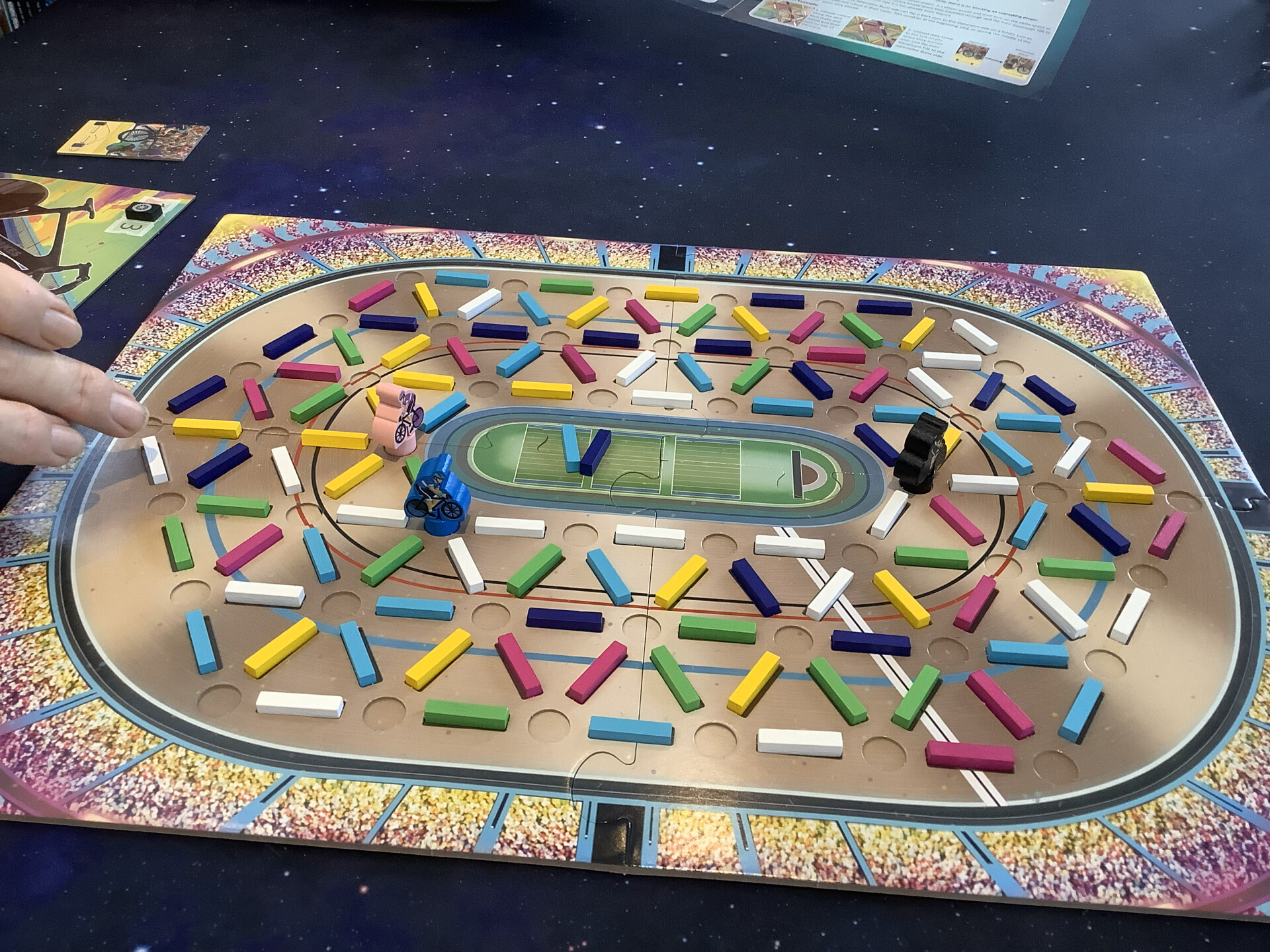
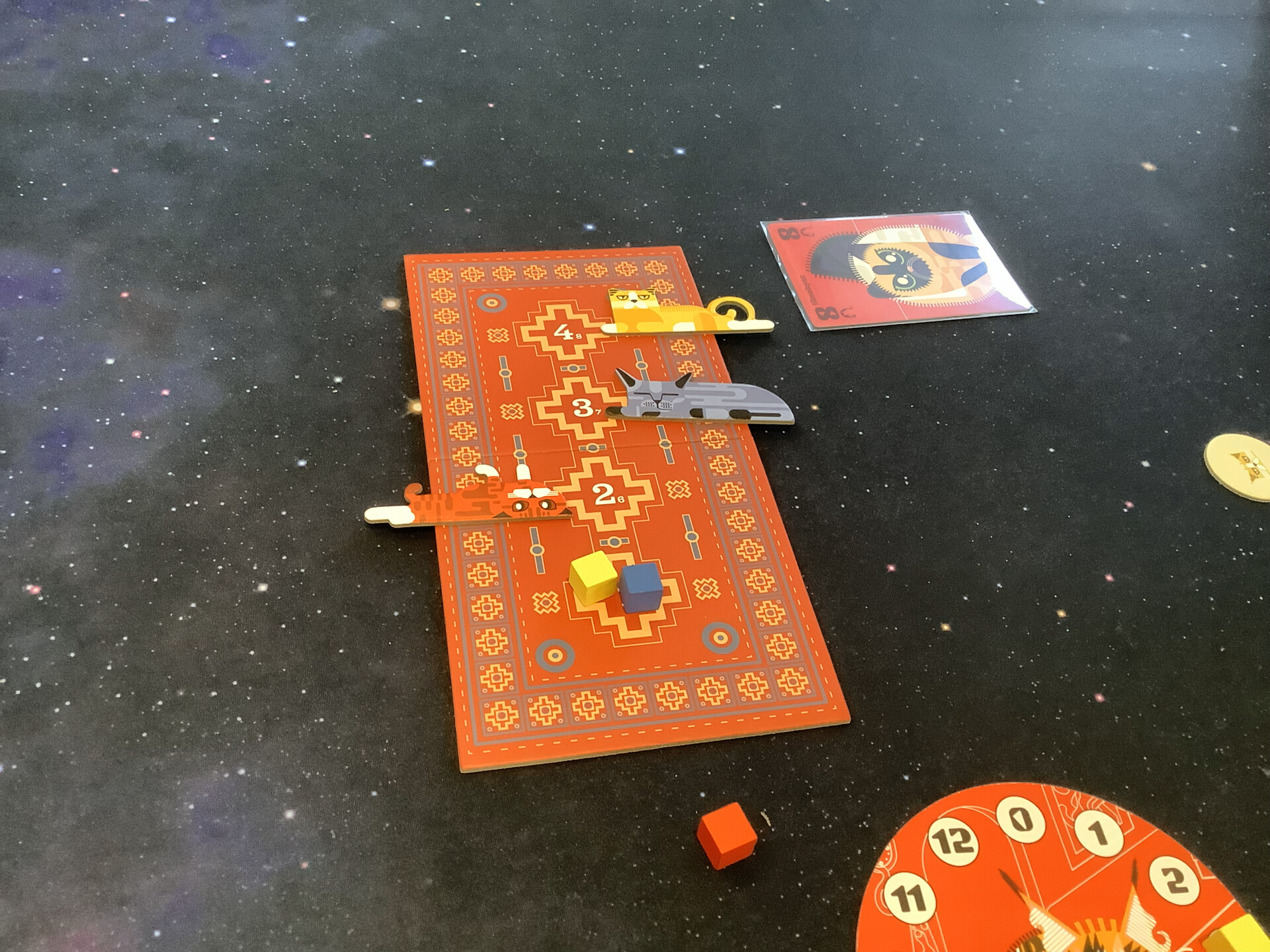
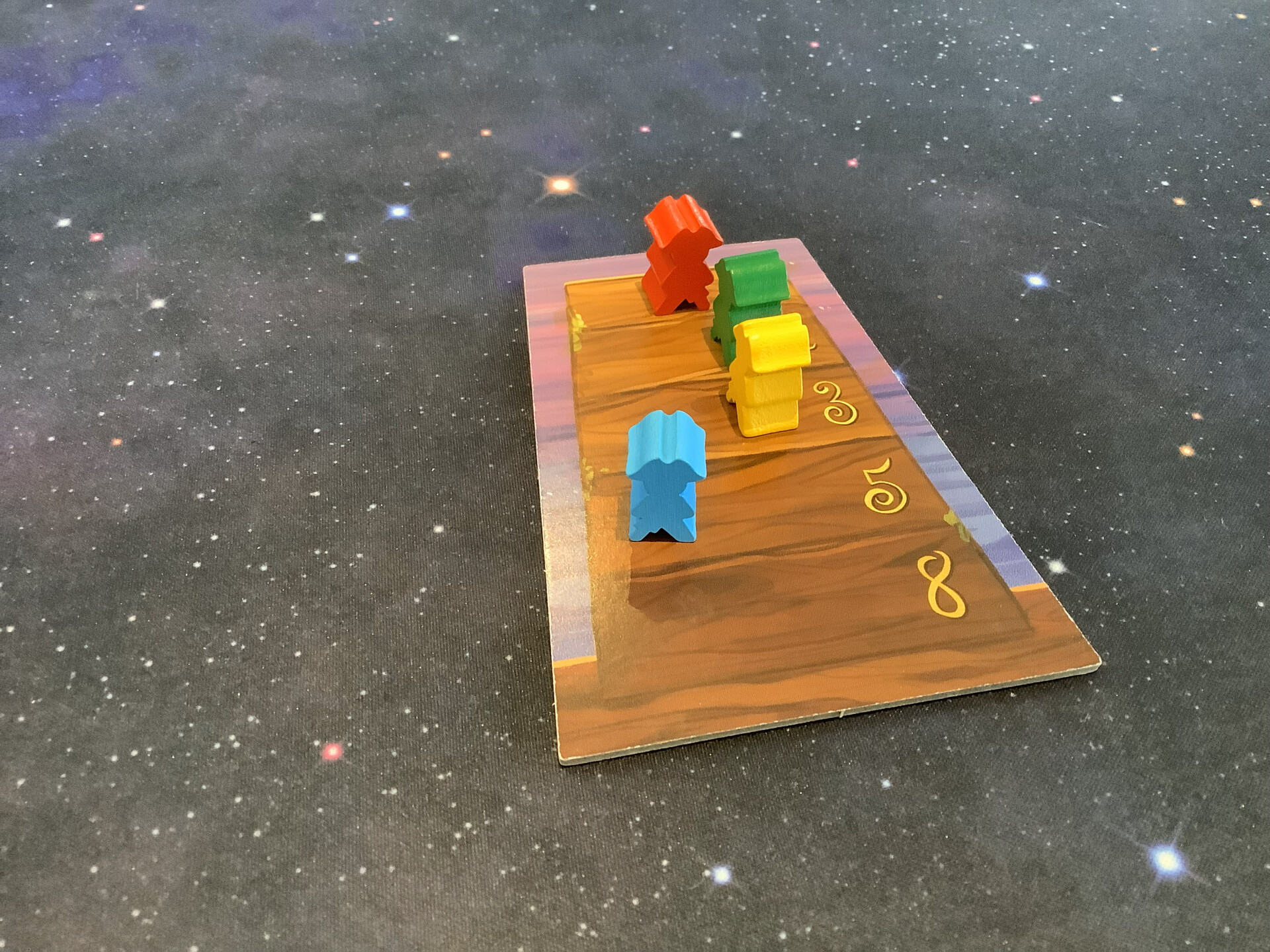
Another game of Spokes. Just 3p, and I wanted to do 2-bike teams, but someone else needed it quick.
We spent a moment adjusting the starting setup this time to make sure there were no starting clusters of the same color, and I think that was a good move.
It was good on a first play, better on the second. We were doing a bit more of looking at each others’ wheels to see who could or could not follow us if we planted a big breakaway, and doing more intentional disruption of the big pathways. It’s good stuff.
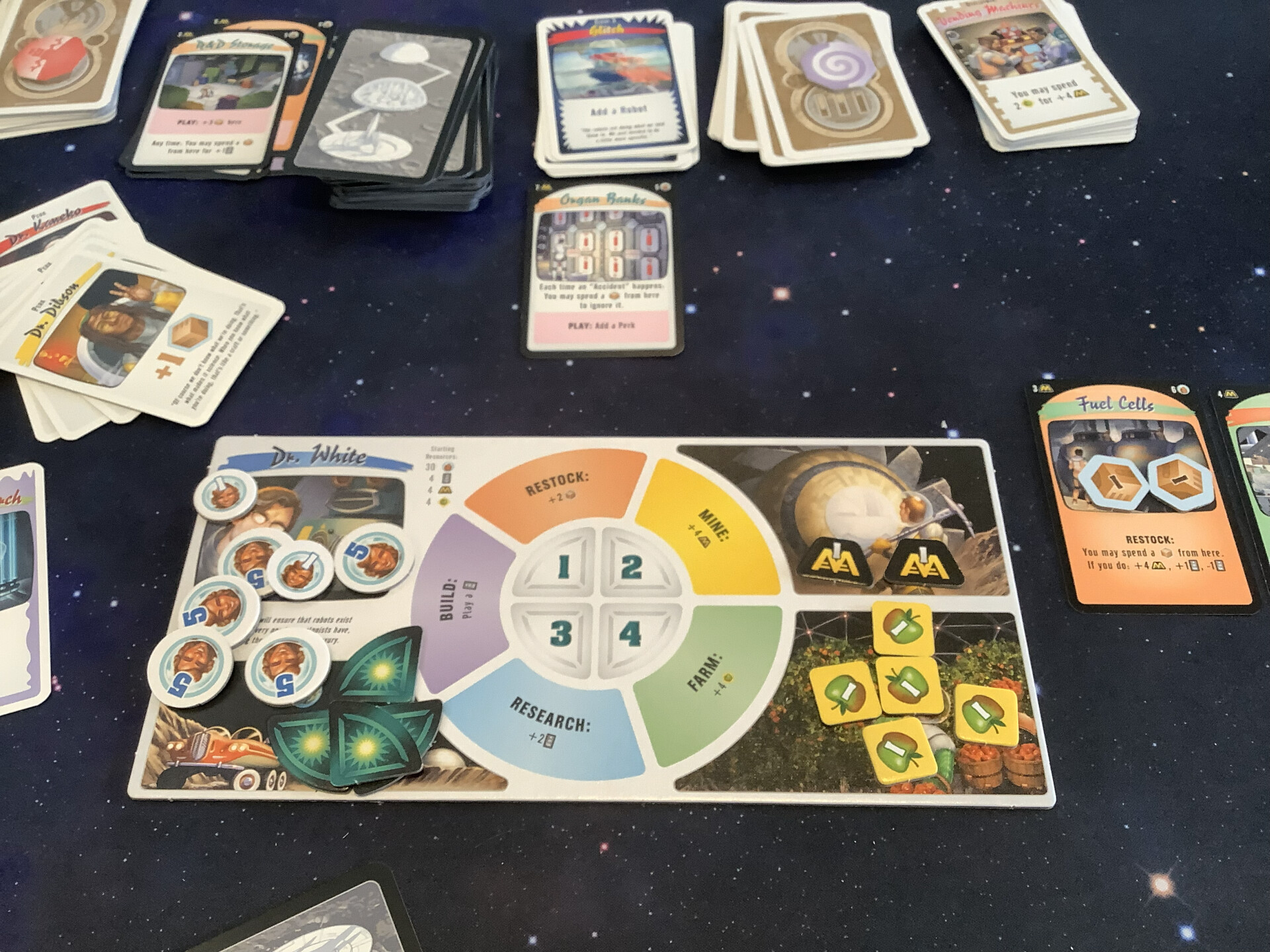
And then Arcs…
Started out salty, as the owner had not punched/sorted/unwrapped everything, so an already long game had a bit of a prelude. Secondly, someone had dropped out and the owner had swapped a new player in day-of, so we further delayed with a long teach… (we’ve all got kids, the etiquette is to learn the game before hand so we can spend our very limited time actually playing). And as a result, we only played through three rounds.
But Arcs…
I wasn’t crazy about it. But it’s also got some hooks in me still this morning. I think my relationship is complicated?
It reminded me heavily of Pax Pamir 2. Three touchpoints I can articulate:
Action constraints - as with all the Pax games, you kind of know what you want to do but you are very limited in which actions you can actually take at any time. Yes, I realize I’m low on ships or that city is undefended and I’m going to get raided, but my ability to actually respond is up in the air. Thus, gameplay resolves into two things - one is opportunism. Not what can’t I do, but what can I do, and can I (by taking that initiative) force people to focus away from my vulnerabilities? And second, a real understanding of the cards (hands here, market in PP2) and board state to try to drive the game toward the actions you’ll be able to take three turns from now, and avoid from the first any cul-de-sac where you need unavailable actions.
It was a big learning curve in PP2, that second. Pax Renaissance was the same and wasn’t worth it to me. I’m not strongly pro or con, it’s just a thing.
Porous board state - Partially because there are so many actions and so many constraints on when you can do them, and partially just by design, you are always vulnerable. You can take my cards, blow up my ships, block my lanes, capture my people. Everything is up for grabs and anything you build is just one or two opponent decisions away from being knocked over. As with the actions, this makes things highly tactical and opportunistic, as any long-term strategy will get butchered (if it’s working). Balance comes from opponents, and if you are not a threat then you can go about your business. This is a bit of a mindset thing, like Innovation, that nothing is mine. Don’t lean too heavily on any one thing as it can be taken away in a moment.
Tug of war scoring - Things aren’t inherently worth points, and the things that DO score for you are all up for grabs. PP2 it’s always the two things, either most tribes or most influence with the strongest faction. But you and your opponents can shift the paradigm any time, and can swing who is in the lead pretty easily there as well. This felt the same with the Ambitions. Declare too early and everyone piles on. Declare too late and the points dry up or are completely gone. What scores is its own tug of war, and then actually scoring it is a second tug of war. Again, tactics tactics tactics as everything is so fluid, you just want to surge at the right moment to get your nose above water for a turn or three, grab those points, and then get dragged back down.
Sometimes I find these games frustrating. A bit like water polo, where you’re trying to play a game with balls and goals, but in reality your time and energy is spent on this wrestling match. It isn’t what you were sold when you sat down to play. I used to think I was a tactical player but I do find these games where long term strategy is a lie to be frustrating. Lastly, a general rule for me is that if a game is chaotic and hard to control, shorter is better. This is what killed Tapestry. So comparing PP2 at 1hr and Arcs at 3hrs, I’d definitely veer to PP2.
All that said, much of chapter 1 and 2 I was thinking “maybe I need to swap PP2 for this one.” I’ve been thinking about it all night. I read a review that went through the good and the bad and resonated with both angles, especially the reviewer talking about his friend who always left disoriented and unhappy but also asking when they’d play again.
We ended after chapter 3 and I had a decent lead, maybe 20 to 15, 14, 10? I do want to play again. I also don’t want to spend a precious real-game slot on it. I guess it’s just complicated.