I owe an update on the Last Bought thread. But I want to wait until the next week. I have at least on crowdfunder incoming. Potentially two along with a preorder. It’ll make for a bigger pile 
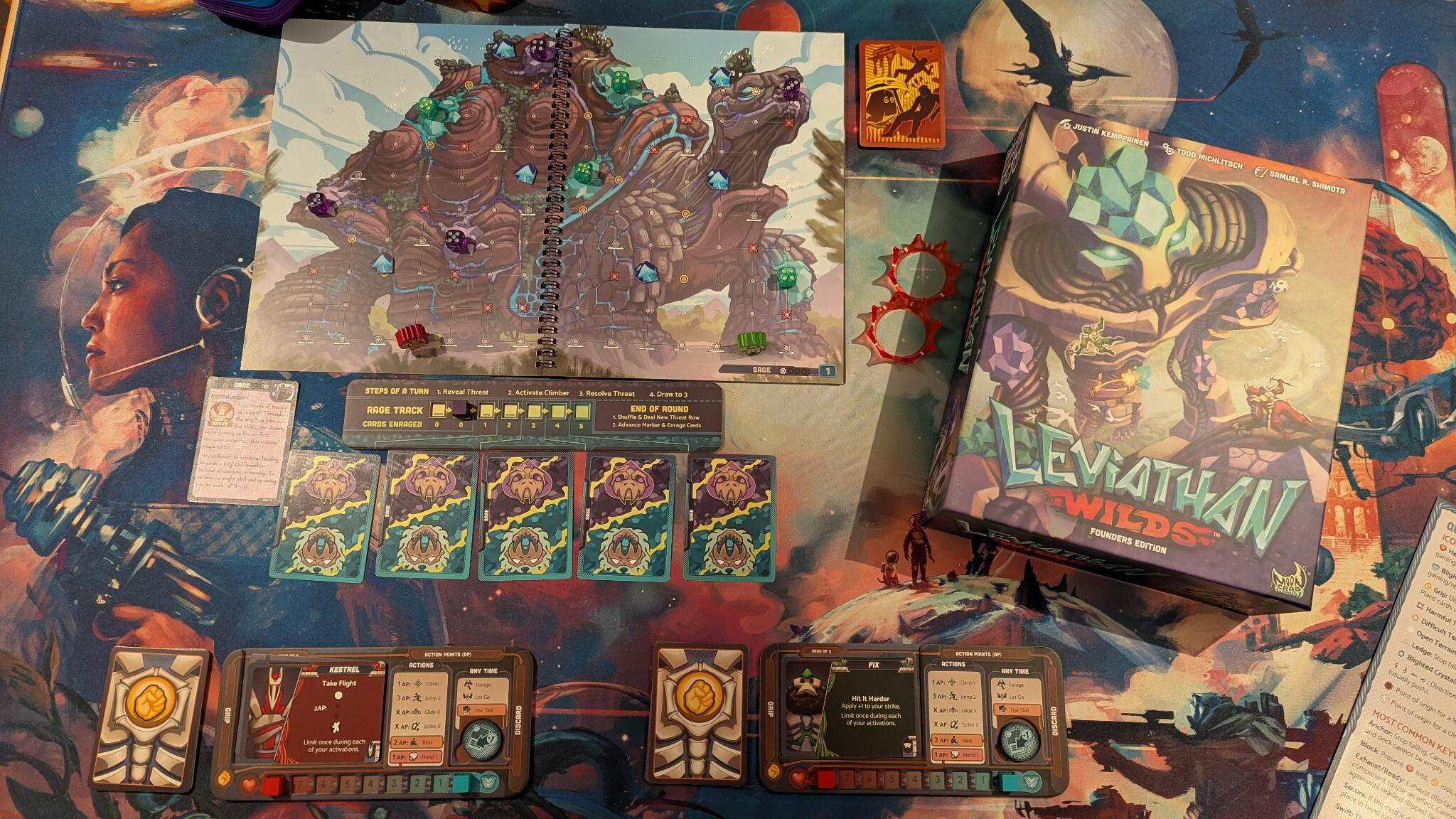
In any case I’ve already taken a few spins with the latest additions.
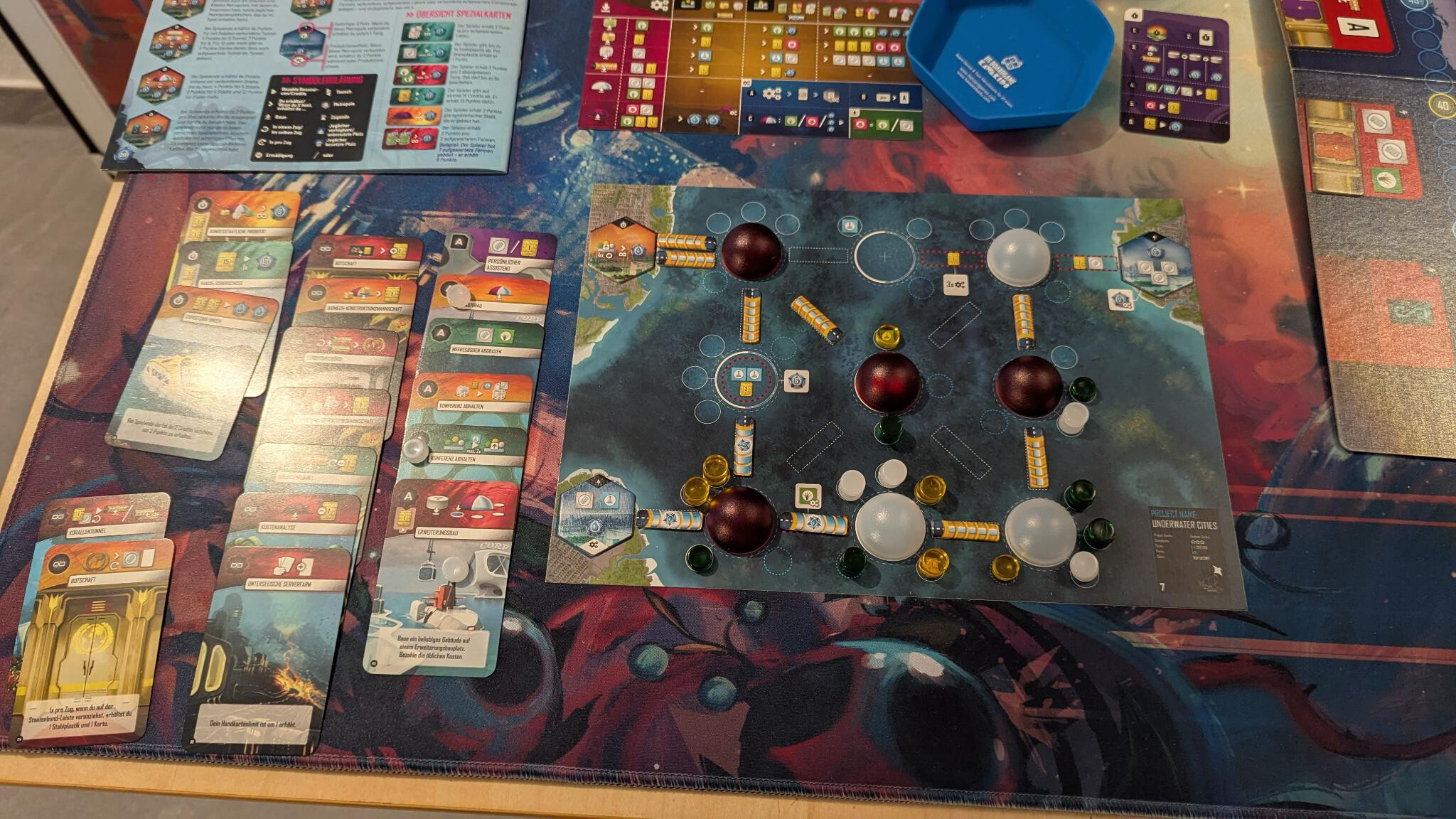
I’ve always wanted a Suchy game for my collection. I’ve played Pulsar at friends and got recommenations for Underwater Cities from another many years ago. So every year at SPIEL I checked out the latest Suchy creation and somehow they never clicked enough for me to acquire them: Woodcraft–too busy on the table. Messina–too dark a theme. Praga Caput Regni–too gimmicky. Resafa–I just noped out last year. Evacuation in 2023 should have flown right into my SF-loving heart but it didn’t. Lots of people seem to have small niggles with it and also the solo seems immensely difficult or so I hear. Still this one I’ve waffled about for so long and it’s been on sale a lot recently… but there was always something keeping me from buying it. in the end I saw there is a new expansion coming out soonish for UC and I admit that a 2018 game is getting its 2nd expansion (besides promos) now seems like something that will have legs.
Having played and lost my first two solos of Underwater Cities, I think I made the right choice. How am I to have 7 cities and 100 points for the solo… though the 2nd game I only missed by 2 points. It’s most similar to Terraforming Mars somehow in my mind. And I love that game to pieces. So more of the “similar” is really good. Also the unassuming box size… very pleasing. The rulebook is okay enough, the rules seem easier than many other games I own. I’d probably flag it as teachable if I play another few solos to fix the rules in my longterm memory.
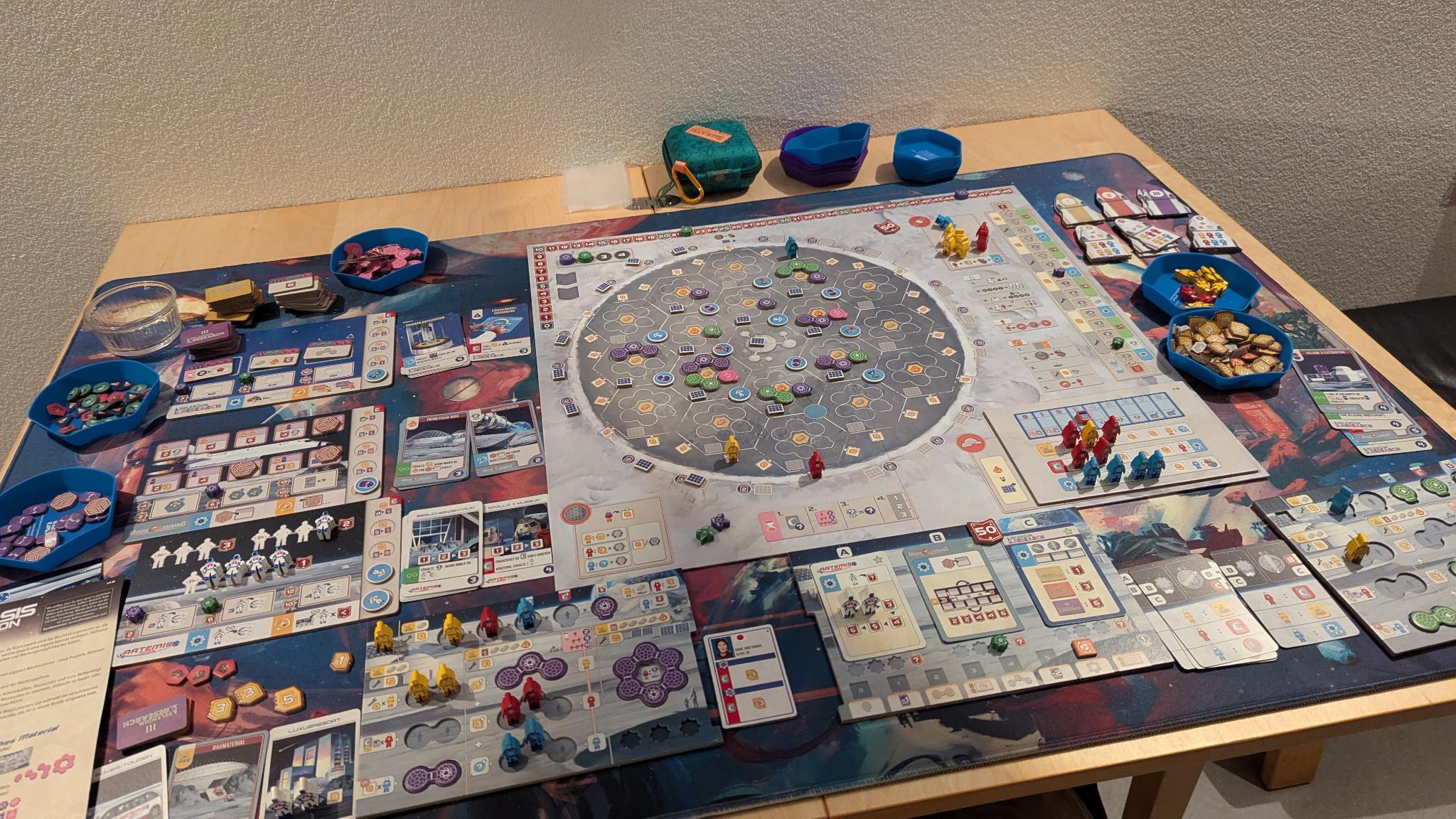
The other new addition I’ve already tried came as a birthday present not from myself this time, I swear, my friends gave me a gift certificate for FLGS (they considered our favorite chocolatier in town first, luckily they asked my partner who told them my dad is already doing the chocolate gifting–I told everyone I want for nothing and need no presents but they aren’t listening). Long story… so I got to learn Shackleton Base:
Actually I learned and played this one first. And I really want to either write a player-aid or rewrite the rulebook. How can the people who think of these beautiful systems be so bad at communicating them?!? I may be especially nitpicky as a software dev because I need to be very precise when describing requirements or else…
3 seems to be the number for boardgames these days. 3 eras, 3 rounds, 3 worker types, 3 command action types, 3 main actions, 3 corporations, 3… possibly because hexes have 3 axis… or something like that. (Underwater Cities also likes 3, as does Revive. I think we need to discuss the number 3 and what other games use it)
In this game you play 3 rounds in which you have 6 workers which give you 1 action. So everyone gets exactly 18 actions. No bonusses, extra workers or anything. There aren’t even any free actions (I lie, you can buy solar panels during your turn but that’s about it) or action cascades (unlike Underwater Cities which has the action cards which allow you to get around some limitations for action slots or Revive which has a lot of free actions which aren’t actions but modifiers that enable you to take actions you otherwise couldn’t).
You win by having the most points and points come from various sources during the game or after the game.
Each player commands a space agency which is trying its best to curry favor with the 3 corporations that are vying for dominance in the crater in this game. In each round every player receives a shuttle filled with exactly 6 workers and maybe some resources. Shuttles determine play order and which worker types you get.
On your turn, you take one of your workers and do one of 3 action types:
- Go to Lunar gateway: send your worker and pick another one to hire into your base directly and gain some money. This is also known as the Verlegenheits Gateway that you wish to avoid.
- Do a command action. There are 3 types corresponding to the 3 worker colors. If you match color and command you get a small bonus. There is a command queue that gets more expensive as it fills up with everyone’s workers during the round.
- Build (yellow) pay some resources to build a building
- Projects (red) pay some credits to do a corporation project. Projects go into your personal tableau and give you VP and change up some of your actions or allow you to change your interaction with that corporation
- Corporate Actions (blue) do up to 3 “corporate actions” → corporations are asymmetrical. They each come with their own rulesheet and have distinct actions. F.e. for Artemis Tours the action is to move a tourist that is in your base to one of the projects you have acquired from Artemis Tours. For Moon Mining you deliver resources in exchange for money and VP etc.
- Use the crater. You can place workers around the crater to activate rows. Depending on the type of worker you can gain resources (titanium or rare earths → yellow workers), corporate resources (tourists, samples or helium → blue workers) or money (red workers are my least favorite kind). Workers placed around the crater will move into the base of the player who holds the majority on the row after the round. So strategic placement of workers and buildings will help you avoid the Verlegenheits Gateway.
That’s it. There is an interactive minigame with a shared supply of solar energy, sola panels that cost rare earths and reputation intertwined with the worker action system. I left out quite a few details that make for some thinky decisions where to build which buildings when and how to make “tasty” rows to activate especially with your blue workers. I made a ton of small rules mistakes in my first game and I may or may not have had more points than the automa…
The solo automa is okay to run for the most part. Not too difficult decision making except for where to place buildings when there is no obvious best move (where they would gain a worker, if no such space exists, the rules are still a bit unclear to me).
I am not ready to judge this game yet. Rule understanding wasn’t good enough until halfway through the game. It was definitely harder to learn than Underwater Cities even though the rules complexity is only slightly higher in my opinion…
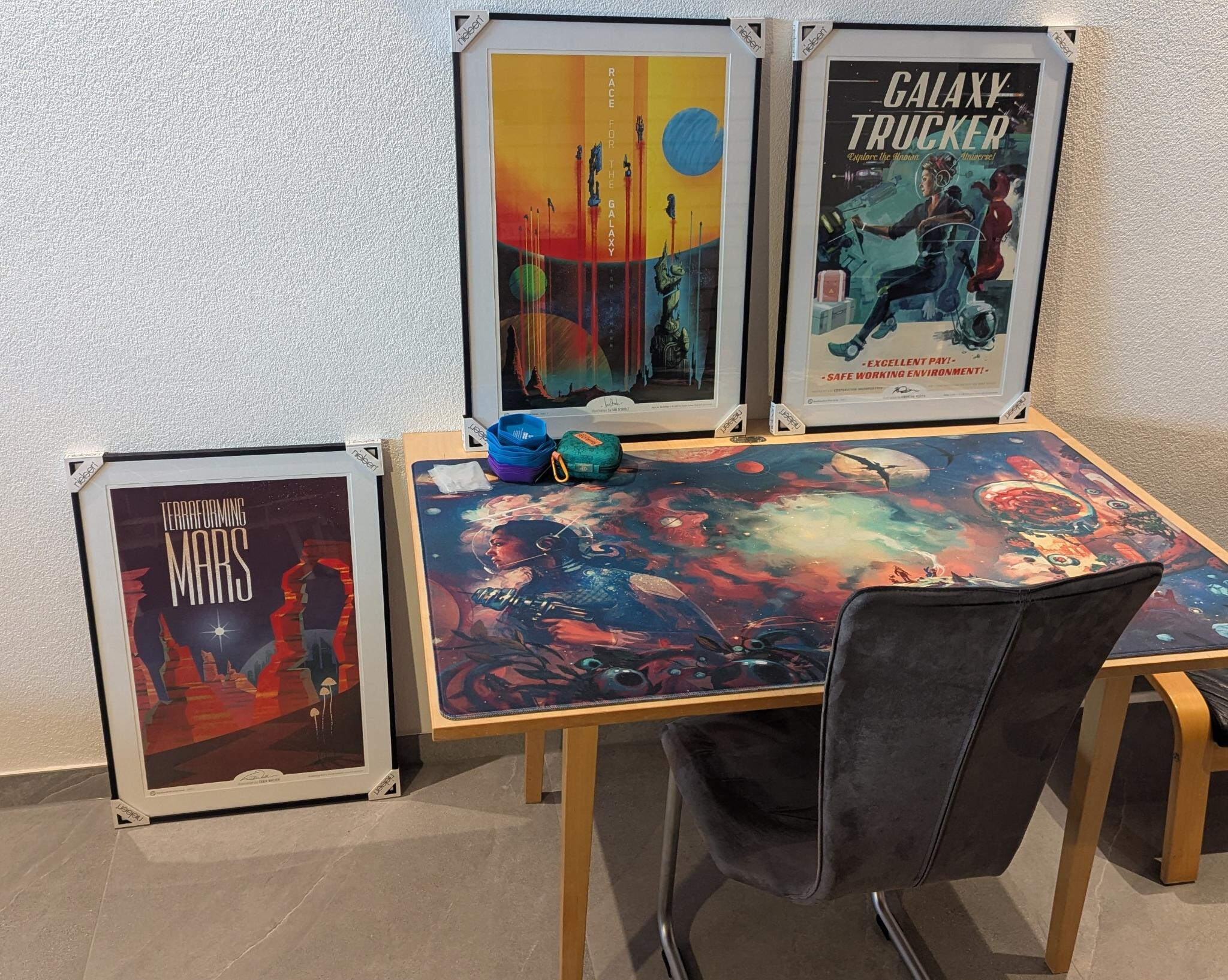
As a bonus I got to pick up the framed Artist Series prints that arrived just before my birthday.