I made bread:
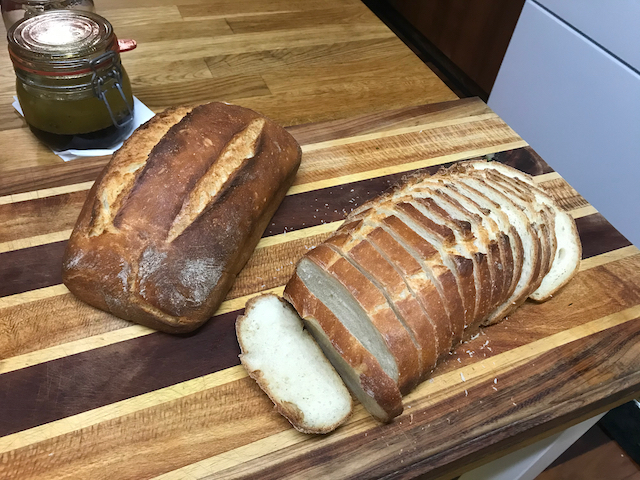
The loaves came out at 690 grammes each, which is pretty close.
I made bread:
The loaves came out at 690 grammes each, which is pretty close.
Be honest: were scales involved when you divided the dough? Because if not, I call witchcraft*.
Looks to be very fine bread, either way.
*yes, you did detect a note of bitterness there. I never get it right, or even ‘right enough’ just by eye and hand.
Scales were. But each half of dough came to 775 g, and I am pleased that they baked to 690 g — I was aiming for 680 g per loaf.
The bread is pretty satisfactory. The crumb is very elastic, with fine even holes, as I wanted. But the crust, though crunchy when it came out of the oven, went a bit leathery within about an hour and a half, and I don’t know how to prevent that. (Whoever answers “eat it warm from the oven” will win no prize.)
Did you have a tray of boiling water in the bottom of the oven? That and a spritz of water just at enovening point helps. But I have never achieved a crust that remains really crisp for more than a few hours. T’aint in natcher, oi reckon…
I did. In fact, this was the first time that I tried it with the spritz and boiling the water in the kettle before I put it in the oven. I also took the loaves out of their tins and re-spritzed the oven at the eighteen-minute mark, before returning them to finish cooking and develop a deeper all-around crust.
Ach, then blame ambient humidity after they came out of the oven. Or imps. Seriously, though, crispness of crust seems to be a transient thing, except for crusty rolls sold as such, which are usually too burnt for my tastes. You could try a dusting of fine polenta when forming your loaves. It does add a bit of extra crunch.
I’ve heard that if you crack the door and leave it in the oven to cool, it helps the crust… Be crustier.
Never tried it, so your results may vary. I can only wish you luck on your journey for the perfect crust.
Kinda intimidating next to home made bread, but I try and always keep a couple of crescent roll dough. We rarely eat them plain. I roll it into sheet and I filled with leftover whatever. In this case cheese green onion and chopped BBQ chicken. Cut up n bake
Looks great! I may have miss interpreted your post, but I find scrolls more intimidating than bread.
In saying that, my way of making bread is very… Slap dash? It’s in the same mind as the really old recipes with instructions like “mix until it looks right” or “add more water than it needs to come together” or other things that make perfect sense to the author but don’t help anyone else. I end up with bread, and it’s often good, but it’s never the same.
My least favourite instruction in cooking is to cook crême Anglais in the double boiler “until it coats the back of a spoon”. Tempering chocolate “until it becomes shiny” is a close second.
Give me a temperature I can read with one of my thermometers, you innumerate goons!
Using a pyrometer to measure the surface temperature of a thing in the oven remotely in a second or two (open door, aim, squeeze trigger, close door), without any need for washing up, still seems faintly odd to me – but awfully useful!
The instructions I have for cooking meat almost all seem to call for a specified interior temperature. Depending on the oven temperature and the cooking, this can be more or less different from the surface temperature. And I can tell whether the outside is done, but it’s not so obvious with the inside. So I’m not sure what the pyrometer is telling you.
I’m thinking more of casseroles and such like. “Has this oven actually reached the temperature it claims to have reached” is a good one. (The bizarrity of using air as a heat transfer medium…)
Also sauces in a pan.
One of the major realisations in cooking for me is that “X degrees for Y minutes” is simply a way of making sure that the whole lump of food has reached X degrees, not that it actually needs that time at that temperature.
My general technique (well not mine but from a bread baking class I took years ago) goes like this:
I bake mostly sourdough bread with high percentage of rye flour, the crust remains really nice for at least a day. Pure wheat breads get a really nice cracking crust but grow stale much quicker but you can also eat them quicker. I let rye bread sit for half a day before eating, otherwise I have had it fall apart in a sticky mess of steaming crumbs…
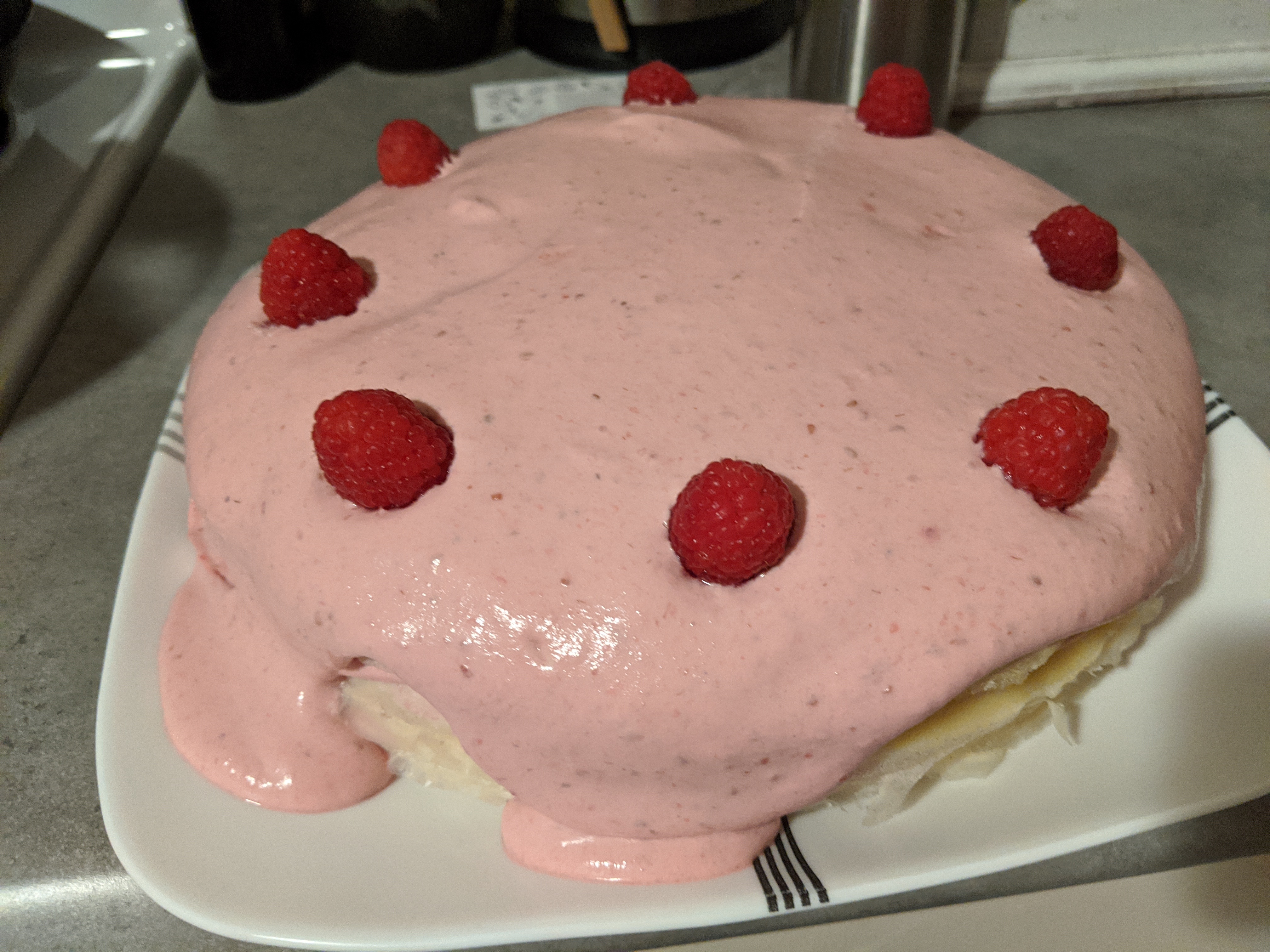
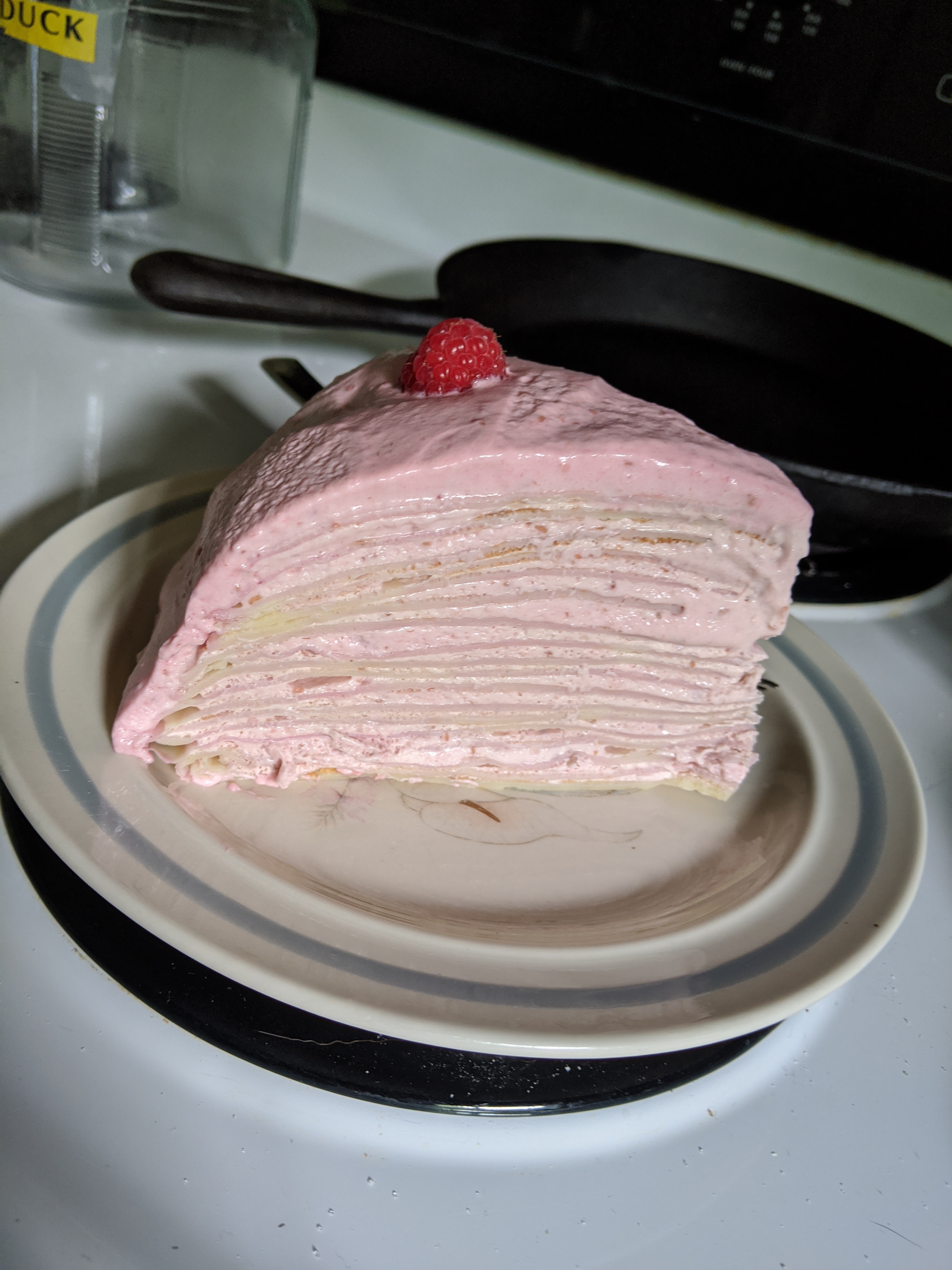
Well, my partner’s birthday has come and gone, and I made the final crepe cake in celebration: a raspberry cream crepe cake:
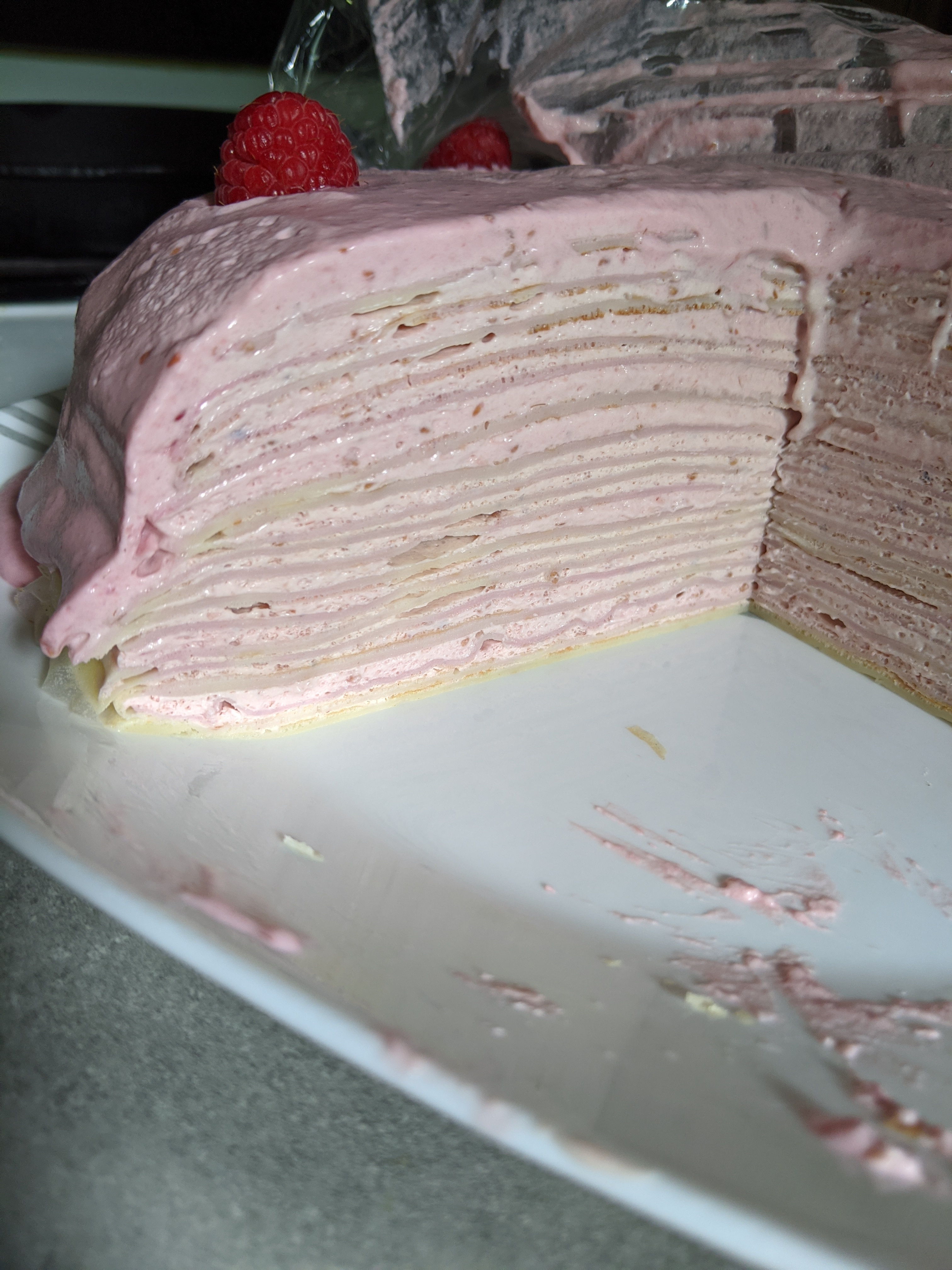
Pros: Very light and fluffy, not at all dense (unlike the first one, where the pastry cream was too heavy). Raspberry flavour wasn’t overwhelming, but it was strong, and the cake held together very well.
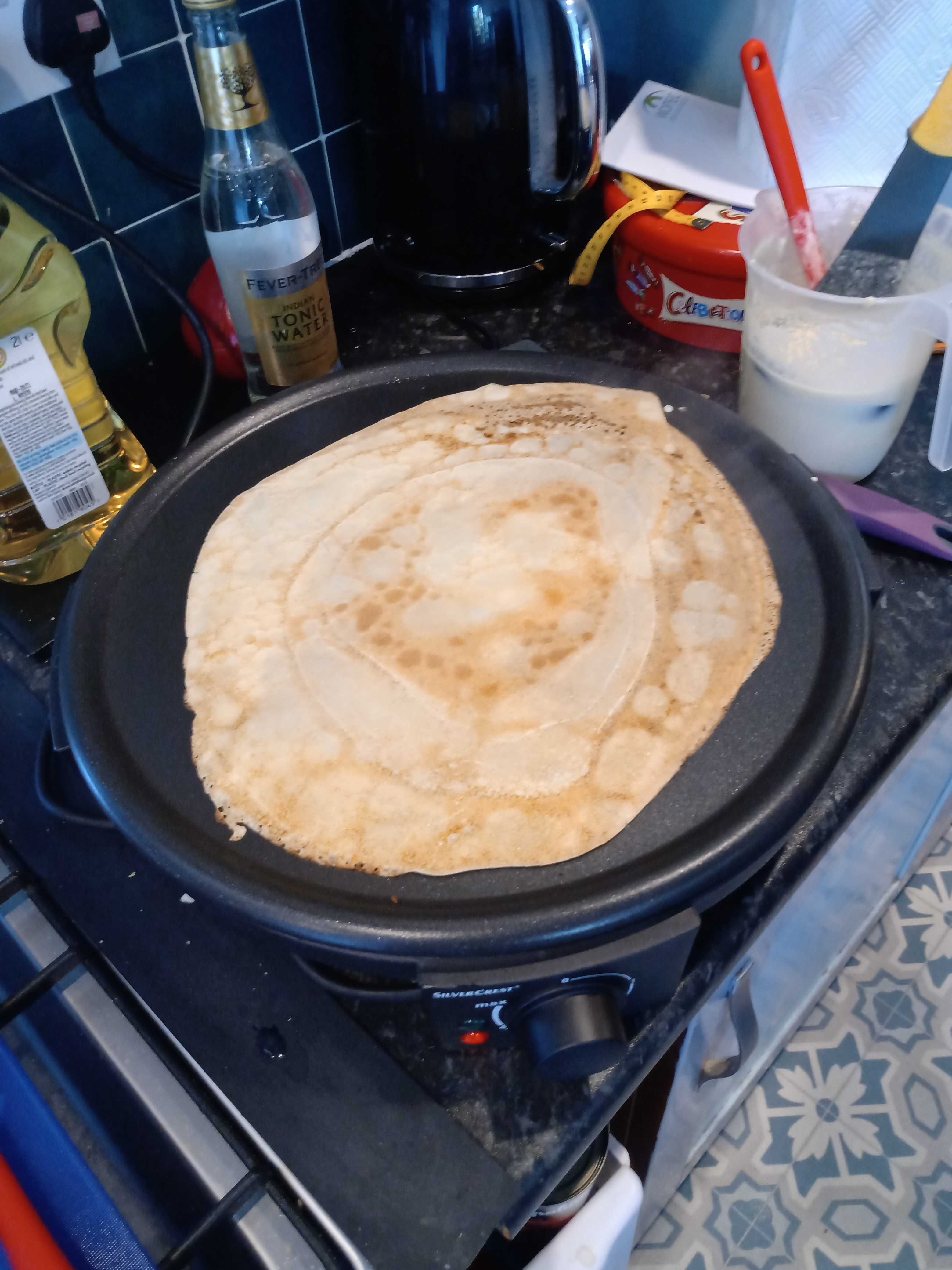
Cons: Had too much whipped cream at the end (hence the “frosting” of raspberry cream over the whole thing), and I don’t like seeds but Andy does so that’s a personal thing. Plus, I really should’ve aimed for about 4-6 more layers, probably… I messed up a bunch of the crepes as I was making them due to a probably-unjustified distrust of anything “non-stick” that isn’t cast iron or ceramic (and sadly I’m out of ceramic pans… the last one didn’t survive our move 5 years ago).
And gosh do these crepe cakes take forever to assemble. But, Andy was happy, and so I was happy to make all three for her. She liked this one the best, which is a good sign I suppose.
Moral of the story: thank heavens that’s over, I’m not making a crepe cake until this Pandemic is well and truly over and then I’m making ONE for our friends who have all complained about not getting to try any of the ones I made and then NEVER AGAIN. Work-to-delicious ratio is too high on the work side.
Tomorrow I may bake a cake-cake. There is a recipe in one of the “Looney Spoons” cookbooks called “You Only Live Once” that is amazing, but I don’t know if I have it any more… maybe Alton Brown has a good cake recipe. His cupcakes are gods-damn amazing…
Right. So yesterday was my sister’s birthday. We have our other sister and her husband and son (my tall nephew) staying for a few days, and I made a flash meal to celebrate. Fortunately I was right on top of my mise en place, because my sister decided to have a picnic at the beach at lunchtime to meet my strong nephew’s new girlfriend, then on the way back my sisters decided to call in on my eldest nephew so that younger sister could see eldest nephew’s girlfriend’s new house. When they got here younger sister decided to invest the afternoon in a nap, and her menfolk decided to spent it watching Rugby league on the television. Eldest nephew and his girlfriend called in to drink beer and never developed any sense that they ought to leave, which left my sister tied by the tongue, and me with absolutely none of the help in the kitchen that I had arranged. This left me very busy and in a constant apprehension that two extra people had invited themselves to dinner, so I didn’t get the time to take the photos that I had planned. I did, however, get enough to show the progress of the beef.
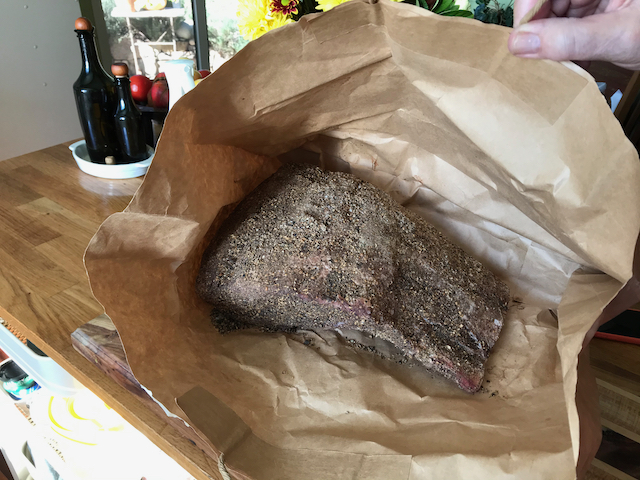
After three weeks in the downstairs fridge, the beef looked like this:
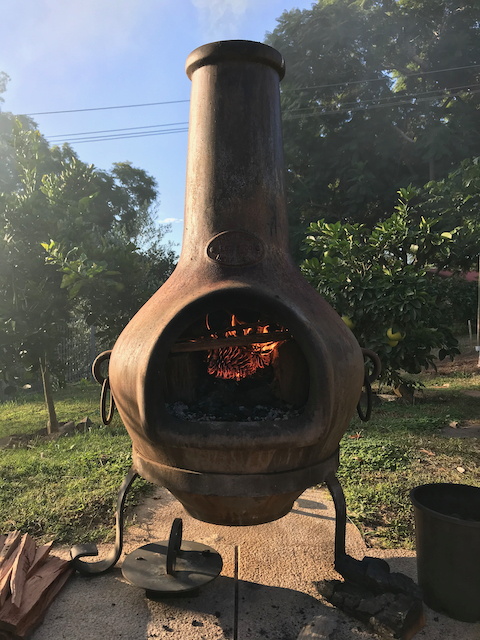
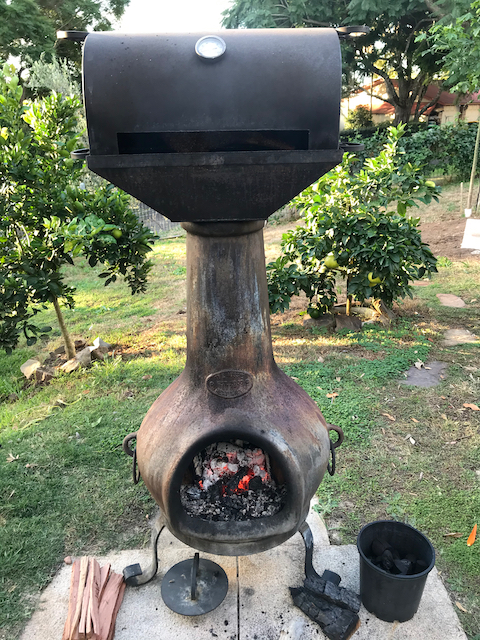
I left it on the kitchen bench for three hours to come up to room temperature. Then I built a fire in my patio heater:
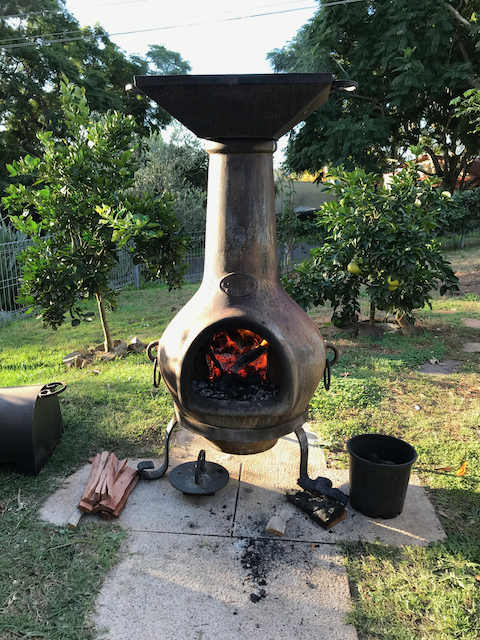
When the kindling had burned away and the coals were well alight, I put the grill on top of the patio heater:
then the beef on the grill:
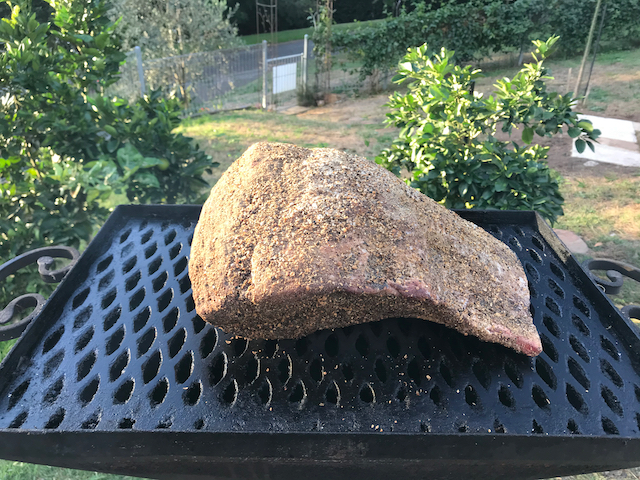
put the hood over that:
and stoked the fire for three hours to maintain an indicated temperature between 110 C and 125 C.
I took the beef off when its internal temperature hit 55 C. Owing to the exigency of circumstances, I also did everything else except cook the beans, which had not been my plan. Anyway, the beef came out looking like this:
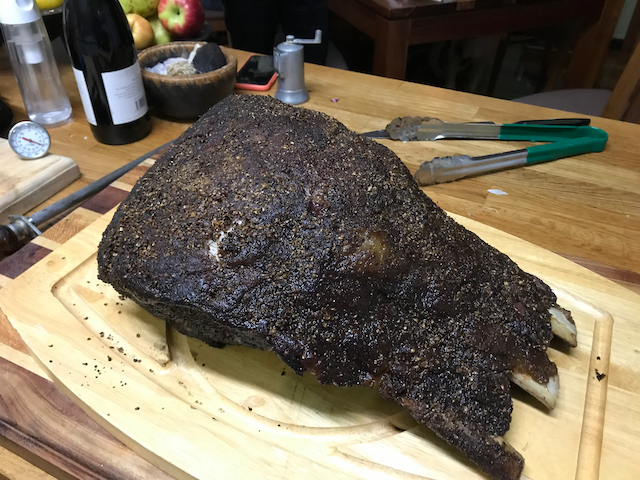
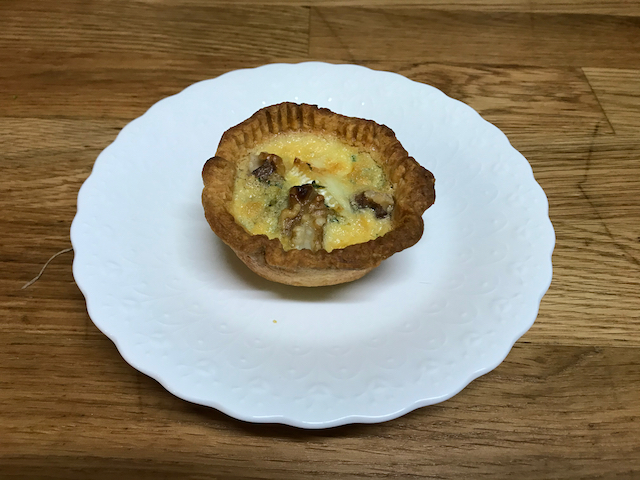
The entrée was Brie and walnut individual quiches in cheese-pastry tart cases, which I served with a tabbouleh that I made with rocket (arugula) in place of the mint (not shown) and a bottle of Mount Adam Chardonnay.
The beef was medium-rare: 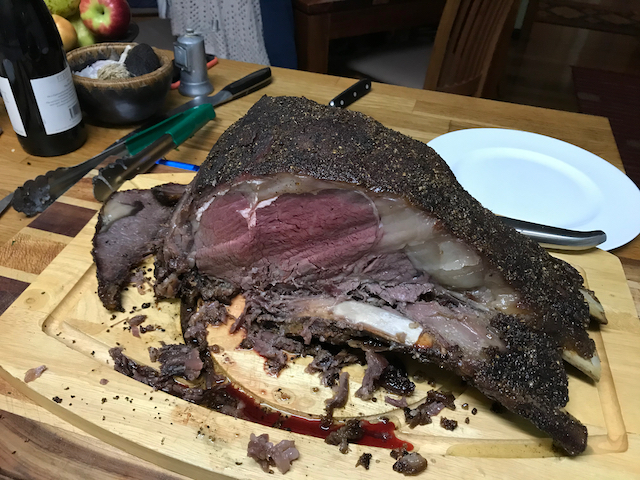
I served it with crispy potatoes which I first boiled and then fried in olive oil (my mother’s method), green beans that my sister first blanched and then sautéed in butter with garlic and fresh curry leaves, and a reduction of rich beef stock made earlier. My brother-in-law supplied a 1993 Penfold’s Bin 389, which was really excellent.
Then we finished off with a lemon-myrtle Bavarois served with a lime and fresh ginger syrup.
It was a good meal. The beef was the best I have ever cooked, and quite possibly the best I have ever eaten.
The little chart that came with our digital meat thermometer says that that (or the Fahrenheit equivalent) is right in between Rare and Medium Rare, and by the look of it that’s about where you got it. That’s my idea of properly cooked beef.
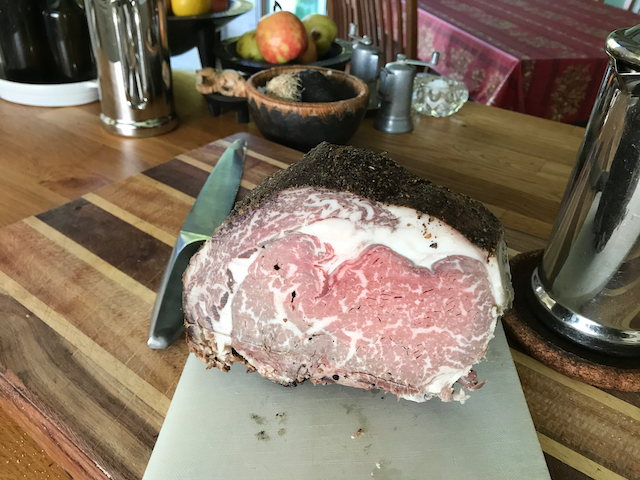
And the culmination of all that: cold roast beef the next day!
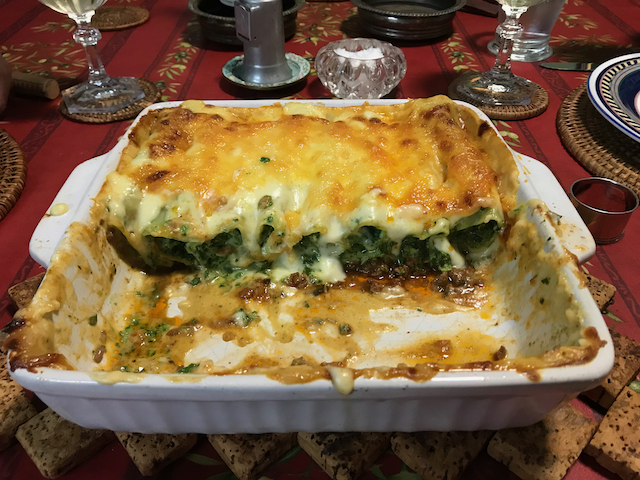
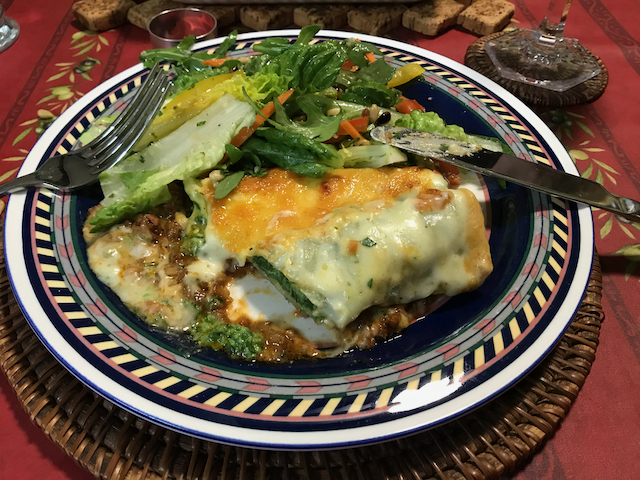
Tonight I made cannelloni alla Bolognese